

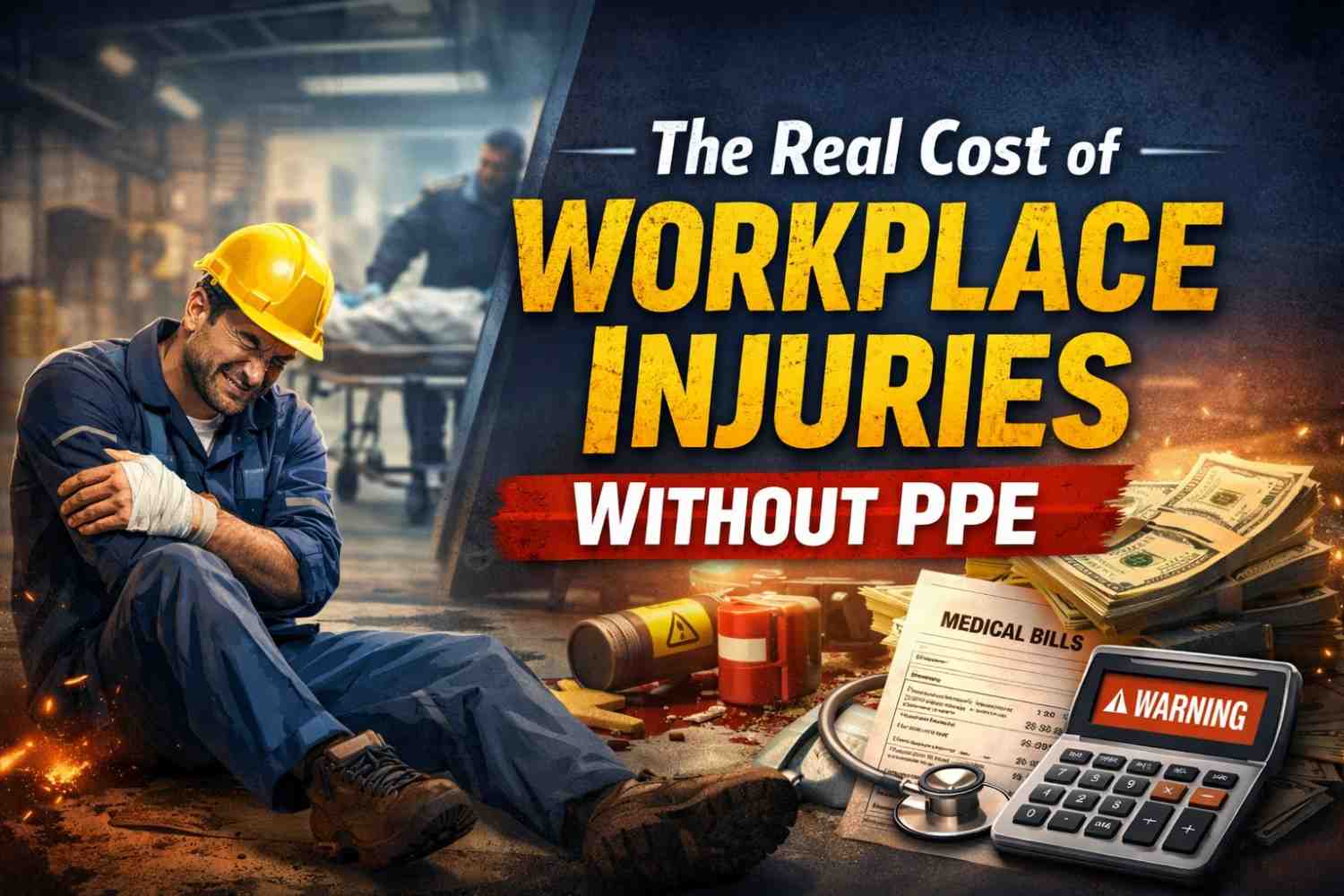
Workplace injuries cost US firms billions of dollars each year. Many of these injuries occur when workers do not employ sufficient personal protective equipment. Some firms aim to cut short-term costs by reducing safety investments. However, reducing PPE expenditures frequently results in far higher financial losses later. Medical expenditures, workers’ compensation claims, OSHA penalties, and productivity losses can quickly pile up. This article will teach you how occupational injuries affect organizations financially and how investing in PPE lowers long-term recovery costs.
Workplace Injuries Are More Expensive Than You Think
Many business owners focus solely on direct medical expenses. However, the true cost of a job injury extends far beyond medical treatment. When a worker is wounded, employers must cover emergency care, rehabilitation expenditures, and wage replacement.
In addition to medical bills, businesses frequently incur indirect costs. These include overtime payments, project delays, equipment damage, and administrative time. Multiple claims may result in an increase in insurance premiums. These hidden costs cause long-term financial stress.
The majority of these injuries are avoidable. Companies can mitigate risk by investing in appropriate PPE and safety training.
The Average Cost of Workplace Injuries in the U.S.
Every year, workplace injuries put significant financial pressures on firms in the United States. According to the 2025 Liberty Mutual Workplace Safety Index, the top ten causes of significant workplace injuries cost businesses more than $50.87 billion per year in medical and lost-wage expenses. These expenses reflect the direct financial burden of debilitating injuries that cause workers to miss days of work.
Likewise, figures from OSHA and safety research suggest that U.S. employers pay more than $1 billion every week in workers’ compensation for crippling non-fatal workplace injuries.
Eye injuries, one of the most common preventable occurrences, are also very expensive. According to recent estimates, workplace eye injuries cost companies over $300 million per year in medical treatment, compensation, and lost productivity.
Other research indicates that serious individual injuries can cost tens of thousands of dollars. For example, the average workers’ compensation claim for eye and face injuries might exceed $33,000 per case, which includes medical care and indemnity payments.
These data demonstrate how costly workplace accidents can be, particularly when contrasted to the cost of suitable PPE, which can range from a few dollars to several hundred dollars per worker depending on the equipment.
Direct Financial Costs of Workplace Injuries
Medical treatment for workplace injuries can be very costly. A single eye damage may necessitate surgery and several months of follow-up care. You can also look at the financial costs of eye injuries to see why proper eye protection is worth paying for it. Chemical burns may necessitate long-term skin therapy. Head injuries may cause lasting impairment.
For example, adequate eye protection dramatically minimizes the risk of eye injury. Workers in construction and industry should wear authorized goggles. Businesses can use our information on Types of Safety Goggles and Their Applications to learn how eye protection reduces costly mishaps.
Similarly, chemical splashes can result in severe burns. Employees working with liquids or hazardous products should wear protective face shields. More information can be found in our blog post, Safety Face Shields and Their Applications in Workplace Safety.
Preventive equipment is significantly less expensive than emergency therapy.
Lost Productivity and Operational Delays
When employees delay work due to injury, productivity suffers. Skilled personnel require time to recover. Projects may lag or halt completely. Other team members must complete additional tasks.
Small and medium-sized firms are disproportionately affected. A single catastrophic injury might affect the entire workflow. Clients may lose faith if deadlines are missed.
Safety equipment is essential for ensuring consistent output. Protective equipment lowers accidents and keeps employees engaged on the job.
Workers’ Compensation and Insurance Premiums
Workplace injuries frequently result in workers’ compensation claims. Insurance companies thoroughly inspect safety records. A high injury rate raises insurance premiums over time.
Frequent allegations indicate harmful working conditions. This increases running costs. Companies that have effective safety systems typically have cheaper insurance rates.
For example, providing adequate protective equipment in high-risk industries helps reduce injury claims. Our blog, Industrial Aprons and Their Applications, describes how protective clothes prevent burns and chemical exposure.
cheaper injury rates lead to cheaper insurance costs and fewer financial surprises.
OSHA Fines and Legal Risks
OSHA mandates companies to supply proper protective equipment. Failure to observe these regulations may result in significant fines. Repeated infractions result in much higher penalties.
Aside from fines, harmed workers may pursue legal claims. Lawsuits can be costly, ranging from thousands to millions of dollars. Legal settlements can outweigh the cost of long-term PPE investments.
Businesses that adhere to safety requirements shield themselves from compliance concerns. Our comprehensive reference to 20 Types of PPE Across Industries illustrates how various safety equipment aids in OSHA compliance.
Providing approved PPE is both a legal requirement and a financial safeguard.
The Hidden Cost of Long-Term Recovery
Workplace injuries have an impact on more than just financial matters. They also have an impact on the lives of their employees. Some injuries require months of healing. Others produce permanent health problems.
During the recovery period, organizations lose experienced employees. Hiring and training replacements takes time and money. Employee morale may suffer as a result of feeling unsafe at work.
Investing in preventive safety measures benefits both employees and the company culture.
In healthcare settings, for example, protective equipment lowers the risk of infection and long-term sickness. Our blog on Healthcare PPE shows how medical face shields protect against major health risks.
PPE as a Financial Protection Strategy
Many employers regard PPE as a cost. In truth, it’s a cost-effective investment. Quality safety equipment lowers the frequency and severity of accidents.
Consider some simple examples:
- Safety goggles protect against eye damage.
- Face shields defend against splashes and debris.
- Chemical-resistant aprons lessen the danger of burns.
- Hard hats protect against head trauma.
Each of these preventative items is significantly less expensive than healthcare expenses or legal claims.
Prevention Costs Less Than Recovery
The numbers speak for themselves. Prevention is always cheaper than therapy. A financial gap between prevention and rehabilitation is obvious. A pair of approved goggles may cost a little sum. Eye surgery costs thousands of dollars. A protective apron is significantly cheaper than treating serious chemical burns.
Companies that implement excellent safety procedures frequently realize increased productivity and a stronger reputation. Clients favor businesses that adhere to safety requirements. Employees feel assured in safe work surroundings.
Building a Safer and More Profitable Workplace
Lowering injury rates boosts both safety and profitability. Businesses should undertake regular hazard assessments. They should identify high-risk regions and supply appropriate safety equipment. Employees must also be trained on how to use personal protective equipment properly. Equipment only works when workers use it properly.
Regular inspection and replacement of damaged PPE ensures ongoing protection. Safety should be a continuous focus, not a one-time expense. When businesses invest in safety equipment, they safeguard their personnel and financial stability.
Final Thoughts
The true cost of industrial injuries extends well beyond medical treatment. Injuries raise insurance prices, impede business, harm reputations, and pose legal dangers. Many of these costs are due to preventable accidents caused by a lack of personal protective equipment (PPE).
Investing in personal protective equipment protects employees, lowers recovery costs, and improves business performance. For employers in the United States, PPE is more than just a regulatory necessity. It is a wise financial option that will ensure long-term success.