

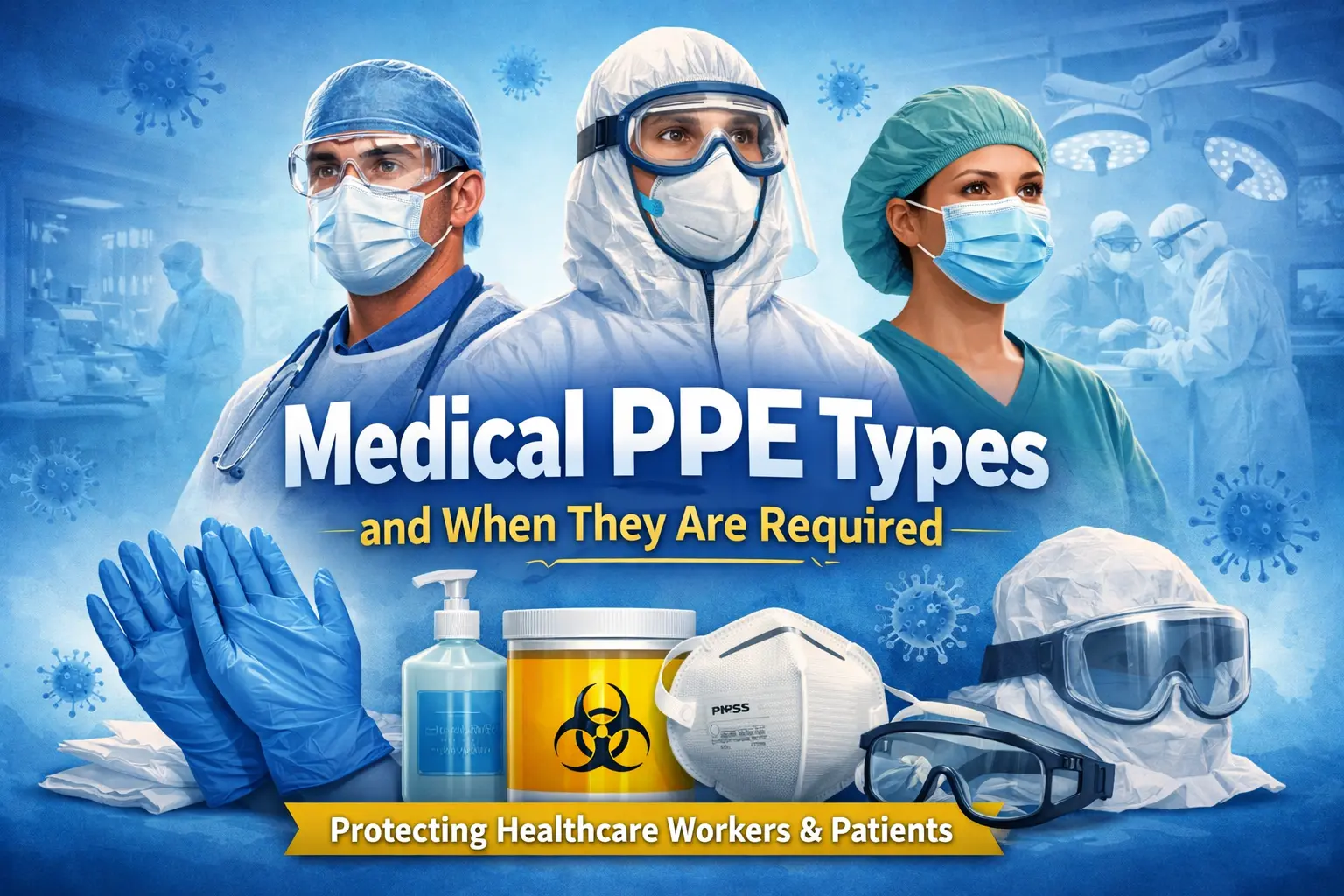
Healthcare personnel are constantly exposed to pathogens, bodily fluids, and toxic materials. Doctors, nurses, lab technicians, cleaners, and support workers all operate in workplaces where safety is a top priority. They use Personal Protective Equipment (PPE) to mitigate dangers.
Medical personal protective equipment (PPE) separates the healthcare worker from potential risks. It protects the skin, eyes, nose, mouth, and clothing against contamination. When used correctly, PPE helps to prevent the spread of infections in hospitals, clinics, laboratories, and emergency rooms.
This article will teach you about the many types of medical PPE and when they are required. The purpose is straightforward: to protect healthcare personnel and patients while ensuring a safe medical environment.
What Is Medical PPE?
Medical PPE consists of protective gear and equipment that minimizes exposure to infectious pathogens. These agents include viruses, bacteria, bloodborne infections, and toxic fluids.
Healthcare settings commonly deal with:
- Respiratory infections
- Blood and bodily fluids.
- Contaminated surfaces
- Chemical disinfectants.
- Lab samples
PPE helps to mitigate these hazards. It works well in conjunction with hygienic procedures including handwashing and surface cleaning.
Main Types of Medical PPE and Their Uses
1. Medial Gloves
Medical gloves shield hands from exposure to blood, fluids, chemicals, and contaminated surfaces. They are among the most regularly utilized PPE products in healthcare.
Types of Medical Gloves
- Disposable examination gloves.
- Surgical gloves
- Heavy-Duty utility gloves.
When Gloves are Required
Healthcare personnel use gloves when:
- Touching blood or bodily fluids.
- Handling Laboratory Samples
- Perform surgical treatments.
- Cleaning Contaminated Areas
- Caring for Infected Patients
Gloves prevent direct contact with dangerous substances. Workers must replace gloves between patients. They should never re-use disposable gloves. Proper glove removal is also important. Incorrect removal might lead to the spread of contaminants.
2. Medical Masks
Medical masks shield the nose and mouth against droplets and respiratory particles. They also limit the transfer of infection from the wearer to others.
Types of Medical Masks
- Surgical masks
- Respirator masks like the N95
- Procedure masks
When Masks are Required
Healthcare staff use masks when:
- Treating individuals with respiratory infections.
- Performing processes that generate droplets.
- Working in congested clinical settings
- Entering isolation rooms.
Respirator masks offer more protection than regular surgical masks. Doctors frequently utilize respirators during aerosol-generating operations.
Masks must fit properly to be effective. Workers should promptly replace any damaged or damp masks.
3. Face Shields and Goggles
Face shields and safety goggles protect your eyes and face from splashes and drips. The eyes can enable viruses and germs into the body.
When Eye Protection is Required.
Healthcare personnel wear eye protection when:
- Perform procedures with splash risk.
- Suctioning Fluids
- Handling Blood Samples
- Working in emergency rooms.
- Caring for infectious patients.
Face shields cover the entire face. Goggles solely protect the eyes. Many workers combine them with masks for added protection.
Clean your eye protection after each use, unless it is disposable.
You Make Like – A Simple Guide to Reusable and Disposable Face Shields
4. Medical Gowns
Medical gowns keep clothing and exposed skin safe from contamination. They form a barrier during patient care and medical procedures.
Types of Medical Gowns
- Disposable isolation gowns.
- Surgical gowns
- Fluid-resistant gowns
When Gowns are Required
Healthcare employees wear gowns when:
- Treating patients in isolation
- Performing surgery.
- Handling enormous amounts of bodily fluids.
- Working in high-risk infection areas
Gowns serve to keep diseases from spreading to uniforms and personal clothes. Workers should carefully remove their gowns to avoid contamination.
Single-use gowns should be disposed of after use.
5. Protective Coveralls
Coveralls offer full-body protection. They cover the limbs, legs, chest, and even the head.
During high-risk disease outbreaks, healthcare staff wear coveralls. They provide greater coverage than robes.
When Coveralls are Required
- Managing contagious disease epidemics.
- Working in high-risk isolation units.
- Handling dangerous biological materials.
Coveralls are common during pandemics. They limit exposure in high-transmission settings.
6. Shoe Covers
Shoe covers prevent shoes from infection. Hospital floors frequently harbor infectious materials.
When Shoe Covers are Required
- Inside operating rooms.
- In isolation ward
- During outbreak control.
- In lab environments
Shoe covers minimize cross-contamination between regions. Workers remove them before leaving the controlled zones.
7. Head Covers and Caps
Head covers keep hair clean and limit the spread of bacteria.
When Headcovers Are Required
- During surgery.
- Sterile environments
- In high-risk infectious zones.
Caps are used by surgeons and operating room workers to keep the environment sterile.
When Is Medical PPE Required?
Healthcare facilities adhere to infection control requirements. The use of PPE is determined by the level of risk and the task at hand. Healthcare staff use normal precautions with all patients. They view every patient as potentially infectious.
Workers take typical precautions:
- When dealing with bodily fluids, wear gloves.
- Use masks for respiratory care.
- Practice stringent hand hygiene.
Standard safeguards protect both employees and patients.
Transmission-Based Precautions
Hospitals take special precautions against certain infections.
Contact Precautions – Used to treat illnesses that spread through contact. Workers don gloves and gowns.
Droplet Precautions – Used to treat illnesses spread by droplets. Employees use masks and eye protection.
Airborne Precautions – Used for illnesses that spread by microscopic airborne particles. Employees wear respirators such as N95 masks.
These steps serve to control disease spread within healthcare institutions.
Importance of Proper Training
PPE only works when used properly. Healthcare staff should understand:
- When to wear each item?
- How to put it on properly.
- How To Remove It Safely
- How to dispose of it?
Improper removal may spread contaminants. Training lowers this risk.
Hospitals should schedule frequent PPE training courses. Refresher training helps to maintain safety standards.
Common Mistakes in PPE Use
Some employees make unnecessary mistakes. This includes:
- Wearing damaged PPE.
- Touching your face while wearing gloves
- Reusing throwaway things.
- Removing PPE in the incorrect sequence
These errors increase the chance of infection. Simple awareness can help prevent them.
Balancing Safety and Comfort
Healthcare professionals frequently wear personal protective equipment for extended periods of time, and comfort has a direct impact on compliance. If workers are uncomfortable wearing PPE, they may modify it frequently, increasing the risk of contamination. Manufacturers are now designing PPE with greater breathability and fit to allow extended use. Hospitals should select PPE that meets safety requirements while also providing comfort to healthcare workers.
PPE During Public Health Emergencies
Pandemics increase the demand for personal protective equipment, and during outbreaks, healthcare personnel rely significantly on masks, gowns, gloves, and face shields for protection. Strong supply chains are vital because shortages put frontline workers at danger. Prepared healthcare systems keep emergency personal protective equipment (PPE) on hand to keep employees safe during crises.
Final Thoughts
Medical personal protective equipment (PPE) is crucial for healthcare safety. It safeguards physicians, nurses, and patients against infection and pollution. Gloves protect the hands; masks protect the nose and mouth; goggles and face shields protect the eyes; and gowns and coveralls protect the body. Each item serves a specific purpose in avoiding the spread of disease.
Healthcare professionals should use PPE that is appropriate for the task and level of danger. Proper training and regular inspections improve safety and minimize errors. Safety in healthcare is not an option, and PPE promotes safe treatment while limiting pathogen spread. When healthcare personnel are properly protected, patients receive better care, which is the true goal of medical PPE.
Thank you Nik for this essential PPE guide! Key types: gloves, masks (surgical/N95), face shields/goggles, gowns, coveralls, shoe covers, head covers. Used for standard precautions + contact/droplet/airborne isolation. Proper use, training, and removal critical. Protects healthcare workers and patients. Keep writing more!
Thank you! I’m pleased to know that you found it helpful.