

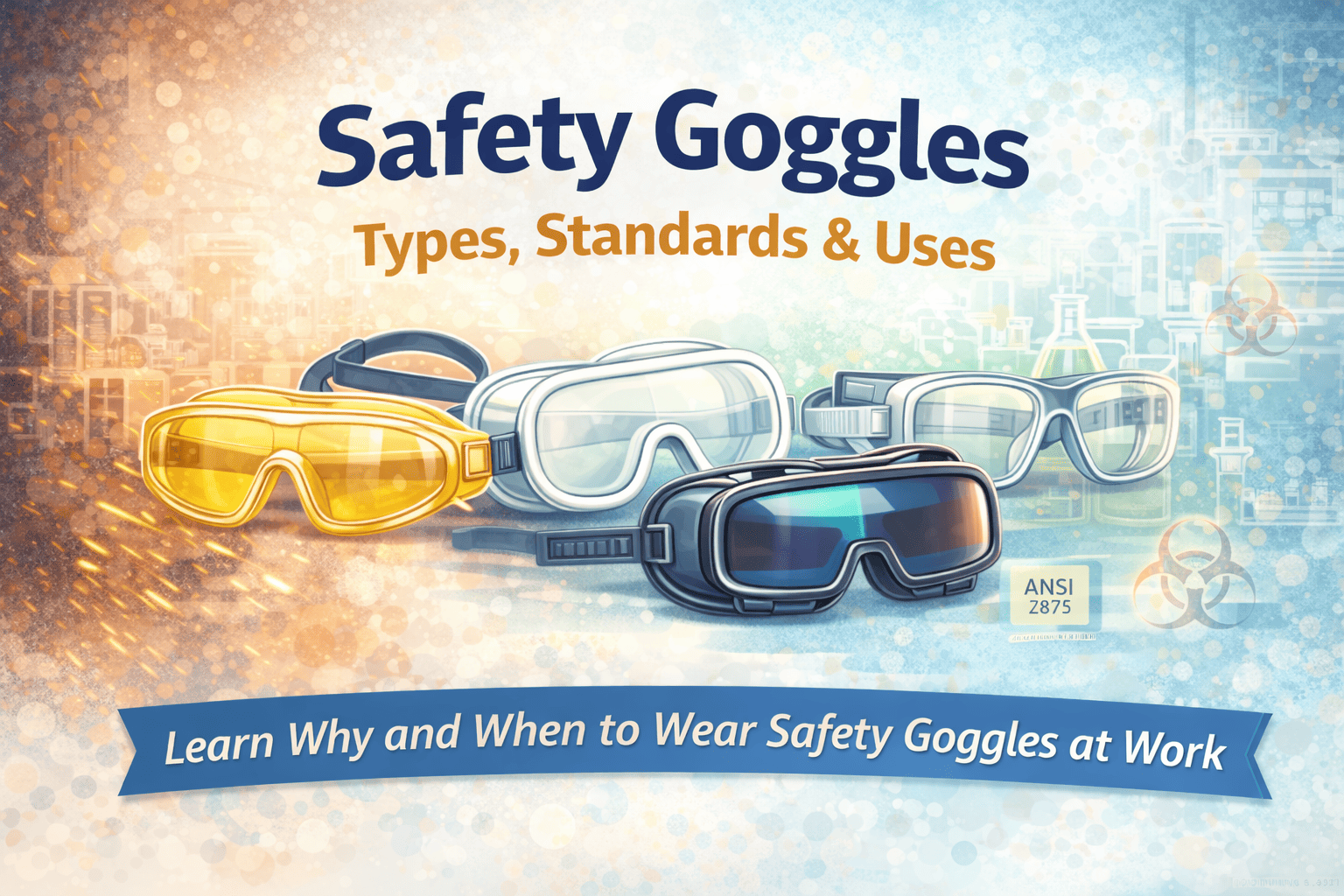
Safety goggles are crucial eye protection equipment used in workplaces, laboratories, construction sites, and industrial settings throughout the United States. Eye injuries can occur in seconds as a result of flying debris, chemical spills, dust, sparks, or hazardous radiation. This blog discusses why workers should wear safety goggles, the various varieties available, the ANSI safety requirements, and how to select the best eye protection for specific job tasks. Understanding these information enables companies and employees to lower harm risks while remaining compliant with US safety requirements.
Why Eye Protection Is Important in the Workplace
Eye injuries are still one of the most common working mishaps. Small particles, chemical drops, and excessive sun exposure can all cause substantial harm. Many of these injuries can be avoided with appropriate protective eyewear. When workers wear safety goggles, they provide a protective seal around their eyes, preventing dust, debris, and liquid spills.
Employers in the United States are required to follow OSHA standards for eye and facial protection. Protective eyewear lowers medical expenditures, eliminates missed work time, and enhances the overall safety culture in industrial and laboratory environments.
Types of Safety Goggles Used in Different Industries
Safety Goggles are designed to protect against specific threats. Some types guard against chemical splashes, while others are designed to withstand impact or radiation. The most popular varieties include chemical splash goggles, dust goggles, welding goggles, and laboratory goggles.
Science goggles are widely used in educational and research settings where chemical exposure is possible. Eye protection is required in educational institutions and research facilities when performing experiments with liquids or reactive compounds.
Safety Goggles for Science and Laboratory Protection
Chemicals, glass breakage, and spills from reactions all pose hazards in laboratory settings. Science lab goggles are specifically intended to defend against these risks. They offer side protection and a snug fit to prevent exposure from different angles.
Many schools and research organizations require safety goggles for science lab operations to safeguard students and workers. These goggles frequently contain ventilation systems that prevent fogging while yet providing chemical splash protection.
Prescription and Over-the-Glasses Options
Workers who require vision correction frequently require specialized protective eyewear. Prescription safety goggles feature built-in corrective lenses, allowing workers to keep good vision while remaining protected. These goggles eliminate the need to use regular glasses below.
Another typical approach is to wear safety goggles over glasses. These variants are larger and intended to fit comfortably over standard prescription eyewear. They offer complete eye coverage without sacrificing comfort or visibility.
Welding and Specialized Industrial Goggles
In welding and metal fabricating situations, strong lighting and sparks pose substantial eye dangers. Auto darkening welding goggles are designed to automatically change lens darkness when exposed to bright arcs. This feature shields the eyes from damaging UV and infrared light.
These goggles increase efficiency because workers do not have to lift the shield repeatedly. Clear vision before and after welding jobs promotes safety and efficiency.
Impact Protection and High-Risk Work Environments
Construction sites, industrial facilities, and machinery workshops frequently demand stronger eye protection. Impact-resistant eyewear defends against flying debris, metal shards, and high-speed particles. These goggles are built of tough polycarbonate materials that can bear significant stress.
Depending on the amount of risk, some workplaces may require impact-resistant or high-impact safety glasses in place of full goggles. The correct decision is determined by hazard assessment and OSHA rules.
Understanding ANSI Z87.1 Safety Standards
In the United States, protective eyewear must adhere to ANSI performance criteria. The ansi z87 1 certification for safety goggles means that the product meets impact and splash protection specifications set by the American National Standards Institute.
Similarly, ansi z87 1 safety glasses meet the minimum impact requirements for occupational and educational eye protection. Ansi z87+ safety glasses have been certified for high impact resistance to provide increased protection. Employers should always check compliance markings when acquiring protective eyewear.
Difference Between Goggles and Safety Glasses
Many individuals confuse goggles and safety glasses. Goggles create a solid seal over the eyes while protecting against splashes, dust, and mist. Safety glasses do not provide a full seal, but they do protect against frontal impact dangers.
Impact-resistant safety glasses are appropriate for situations with low splash dangers. However, when liquid or chemical exposure is possible, goggles are frequently the safest option.
Hazard assessments establish whether goggles or glasses offer enough protection. OSHA requires businesses to assess occupational dangers before selecting protective equipment.
Can Safety Goggles Be Stylish and Comfortable?
Yes, Modern protective eyewear mixes safety and design enhancements. Fashion safety goggles now come in lightweight styles with adjustable straps and anti-fog coatings. These versions provide more comfort during long work shifts.
Compliance is heavily influenced by personal comfort. Workers are more inclined to wear protective gear on a regular basis when it fits comfortably and does not hinder their view.
How to Choose the Right Safety Goggles
The appropriate safety goggles are chosen based on workplace dangers and job responsibilities. Consider the following factors:
- Hazard types for example, chemical splash or impact.
- Required ANSI certification level
- Ventilation to reduce fogging.
- Compatible with helmets and respirators.
- Requirements for prescription lenses
Proper training ensures that staff know when and how to use protective eyewear.
You make like – 10 Key Features to Look for in Industrial Safety Glasses in 2026
OSHA Requirements for Eye Protection in the USA
OSHA requires employers to provide appropriate eye and facial protection when dangers exist. Protective equipment must comply with ANSI requirements and be appropriate for the specific job danger. Employers must also train employees on proper operation and maintenance.
Regular inspection of goggles is necessary. Scratched or broken lenses limit visibility and safety. Replacing worn equipment helps to keep safety standards high and lowers the chance of injury.
Final Thoughts
Safety goggles are an essential component of workplace safety in the United States. They provide protection against chemical splashes, impact dangers, radiation, and airborne particles. Proper eye protection lowers injuries and helps OSHA compliance in laboratories and on construction sites.
Choosing the correct eyewear keeps workers safe, productive, and confident on the job. Investing in approved protective eyewear improves workplace safety initiatives and helps to reduce preventable eye injuries.