

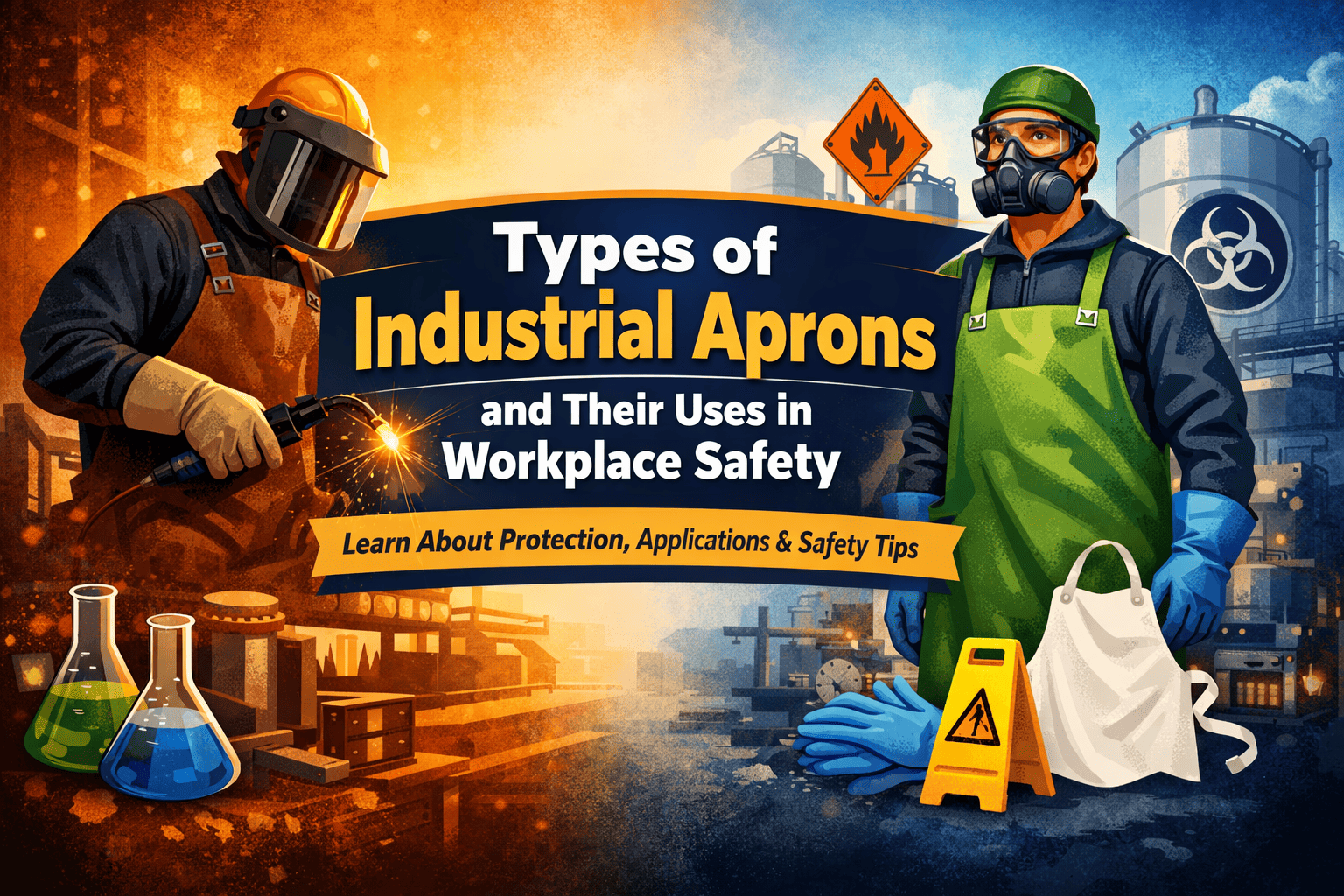
Industrial aprons are an essential piece of personal protective equipment in many workplaces. They keep workers safe from frequent hazards like heat, sharp instruments, chemical splashes, and liquid spills. This blog discusses the various types of industrial aprons used throughout sectors and how each style contributes to worker safety. Employers and employees can select the best apron for their specific task requirements by studying apron materials, applications, and selection criteria. This information contributes to injury reduction, increased comfort, and workplace safety compliance.
What Is an Industrial Safety Apron?
An industrial safety apron is a protective garment worn over ordinary workwear to protect the front of the body from occupational hazards. It is frequently used in workplaces where employees are exposed to heat, chemicals, liquids, or sharp objects. Industrial aprons serve as a protective barrier, reducing direct contact with hazardous substances and helping to prevent burns, wounds, and skin irritation. Many companies use safety aprons into their PPE programs to give an additional layer of protection during regular operations.
Why Industrial Aprons Are Important for Workplace Safety
Industrial aprons are crucial in preventing industrial injuries. They help to protect workers’ torsos and upper legs from job-related risks. Aprons also keep work clothes clean, which is more comfortable during lengthy shifts. When workers feel safe, they can concentrate better on their tasks, lowering the likelihood of an accident. In many circumstances, using safety aprons helps firms meet OSHA workplace safety regulations in the United States.
Leather Aprons and Their Industrial Applications
Leather aprons are renowned for their toughness, durability, and heat resistance. They are typically employed in high-temperature situations that contain sparks, molten metal, or sharp equipment. Welders, metal fabricators, and foundry workers frequently use leather aprons to protect their body from burns and flying debris. Leather aprons are ideal for rigorous industrial activities that require long-lasting protection.
PVC Aprons for Liquid and Splash Protection
PVC aprons are lightweight, water-resistant, and simple to maintain. They are intended to protect employees against liquid spills and light chemical splashes. These aprons are commonly used in food processing factories, cleaning activities, and chemical handling facilities. PVC aprons promote cleanliness while lowering the danger of skin contact with liquids, making them an ideal choice for damp or muddy work settings.
Rubber and Chemical-Resistant Aprons
Rubber and chemical-resistant aprons offer excellent protection from acids, oils, and caustic substances. Manufacturers offer these aprons to withstand chemical penetration while remaining flexible for extended use. Workers in laboratories, pharmaceutical units, chemical factories, and waste treatment facilities use these aprons to protect their skin from chemical burns and exposure. Choosing the right chemical-resistant apron is critical for handling dangerous substances safely.
Cotton and Fabric Aprons for Low-Risk Work Areas
Cotton and fabric aprons are appropriate for workplaces with lesser hazards. They provide basic protection from dust, debris, and minor spills while staying comfortable and breathable. Fabric aprons are commonly used for everyday chores on assembly lines, in maintenance, and in light manufacturing operations. Although they do not protect against heat or chemicals, they do help workers stay clean and tidy in regulated conditions.
Flame-Resistant Aprons for Heat Protection
Workers must wear flame-resistant aprons when working near fire, sparks, or severe heat. These aprons are resistant to ignite, lowering the danger of serious burns. Welders, oil and gas workers, and heavy industry workers all utilize them when working near open flames. Flame-resistant materials serve to avoid fires and support workplace safety regulations.
Disposable Industrial Aprons and Hygiene Control
Disposable industrial aprons are utilized when hygiene and short-term protection are most important. They are lightweight and designed for single use, which helps to reduce cross-contamination. Disposable aprons are commonly used to preserve cleanliness in food handling facilities, healthcare support areas, and laboratories. Workers use these aprons in jobs that require frequent apron changes.
How to Choose the Right Industrial Apron
Choosing the appropriate industrial apron necessitates an understanding of workplace dangers and job responsibilities. Before deciding on an apron type, employers should consider the dangers of exposure. Important aspects to consider are:
- The sort of risk, such as heat, chemicals, or liquids.
- The apron’s material and resistance level
- Ideal fit and comfort for daily use.
- Easy to clean or replace.
- Compliance with occupational safety requirements.
Choosing the right apron enhances worker safety and promotes consistent use.
OSHA Requirements for Industrial Aprons
OSHA mandates that businesses provide personal protective equipment when employees face hazards. When chemicals, heat, or hazardous substances pose a danger of injury, industrial aprons are essential. Employers must verify that the apron type corresponds to the stated hazard and give training on proper use. Regular examination and replacement of damaged aprons helps to ensure OSHA compliance and workplace safety.
Final Thoughts
Industrial aprons are an essential component of worker safety in many sectors. Each type of apron serves a distinct purpose, such as heat protection, chemical resistance, or hygiene control. Understanding these variations enables companies and employees to make more educated safety decisions. Choosing the correct industrial apron decreases accident risks, boosts productivity, and promotes a safer workplace.