

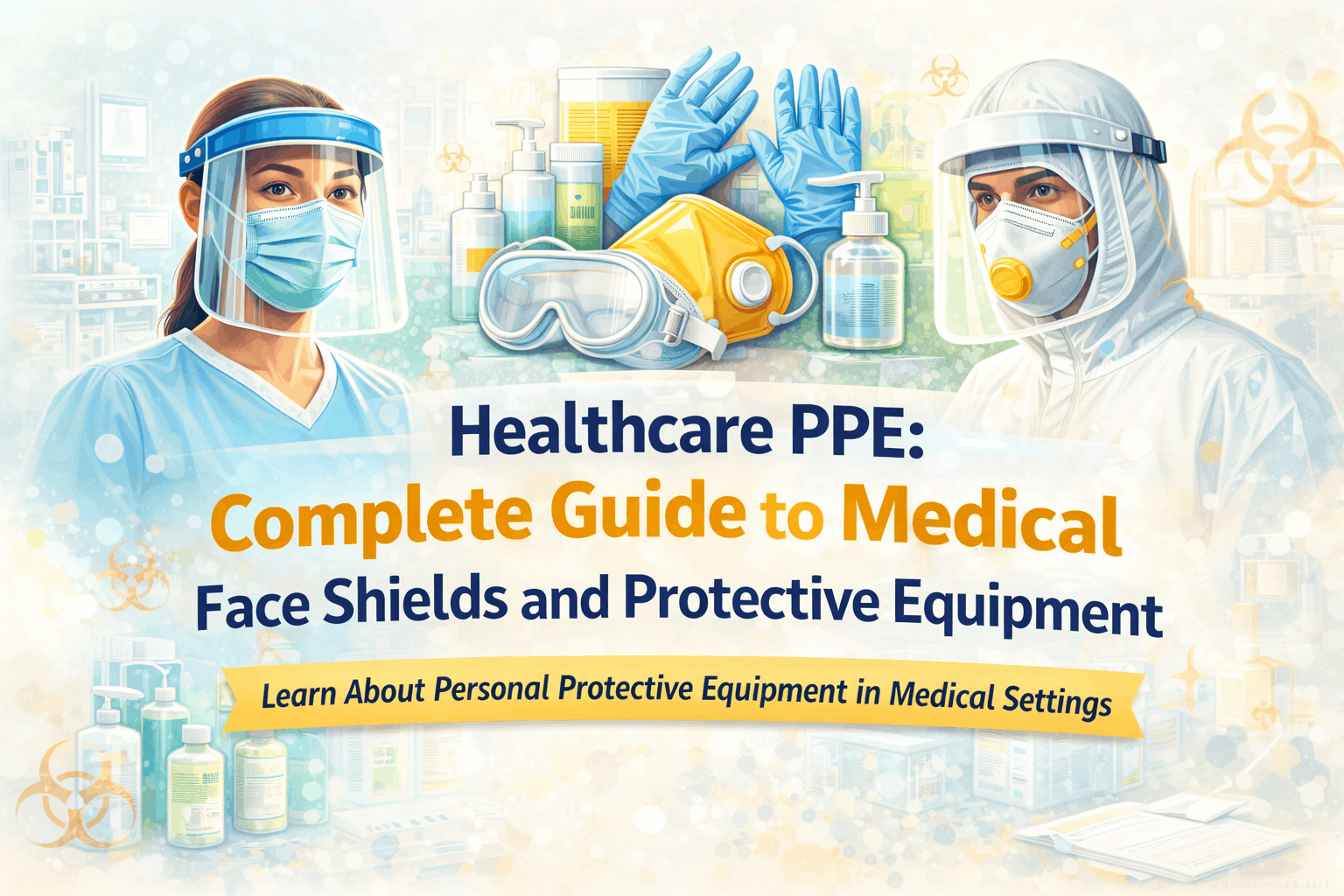
Workers in healthcare environments face substantial health dangers on a daily basis. Doctors, nurses, lab workers, and emergency responders frequently come into touch with infectious fluids, airborne particles, and contaminated surfaces. Because of these concerns, healthcare personal protective equipment (PPE) is vital to preserving safety in hospitals, clinics, laboratories, and emergency care units.
This post describes how protective equipment works in medical settings, why face shields are necessary, and how various types of protective gear lower infection and Hazard risks. Understanding these safety tools enables healthcare practitioners and facility managers to make more informed decisions about worker protection and compliance.
What Does PPE Mean in Medical Terms?
Many people want to know what PPE means in medical terminology. PPE in healthcare refers to specific protective gear and equipment used to reduce biological dangers. These risks may include viruses, bacteria, bloodborne infections, and respiratory droplets.
Medical workplaces require a higher level of protection than many other sectors. Even little exposure occurrences can cause illness. That is why healthcare personnel adhere to tight regulations when donning protective equipment. PPE acts as a barrier between healthcare workers and hazardous substances.
Understanding PPE in Health Care Settings
PPE is utilized in several fields of health care based on the danger of exposure. Emergency rooms, surgical units, dentistry clinics, diagnostic labs, and isolation wards all require unique safety precautions.
Gloves, masks, respirators, gowns, eye protection, and face shields are all common types of protective equipment. Each piece serves a different purpose. Gloves protect your hands from contamination. Masks and respirators protect the respiratory system. Gowns protect both clothing and flesh. Face shields cover the complete face.
Prior to allocating protective gear, healthcare facilities undertake risk evaluations. This ensures that workers employ equipment appropriate for the level of hazard in their specific job position.
Core Components of Medical Personal Protective Equipment
Medical personal protection equipment is intended to prevent infectious illness transmission. It must meet stringent safety requirements and provide both protection and comfort.
The main components are:
- Disposable medical gloves.
- Surgical masks and respirators.
- Fluid-resistant gowns
- Eye protection
- Face shields
The exposure type determines the selection of each item. For example, treating respiratory infections may necessitate more filtration protection, but surgical treatments may necessitate fluid-resistant barriers.
Proper donning and doffing practices are required. Improper removal of personal protective equipment might increase contamination risk. That is why training is essential in healthcare safety programs.
The Importance of Medical Face Shield in Clinical Protection
A medical face shield offers complete facial coverage, including the eyes, nose, and mouth. It is usually constructed of clear, impact-resistant plastic and linked to an adjustable headband.
Face shields serve to prevent splashes of blood, saliva, and other bodily fluids. They also limit exposure to respiratory droplets during close patient interactions. Face shields, unlike goggles, cover a larger region of the face, providing greater protection.
Healthcare practitioners frequently utilize face shields in conjunction with masks to provide multilayer protection. This combination greatly lowers infection risk during high-contact operations.
Why Face Shields for Healthcare Workers Matter
Face shields for doctors and nurses are especially useful during infectious disease epidemics. When people cough, sneeze, or have certain medical procedures, droplets can spread quickly.
Face shields are routinely used by emergency department staff and ICU professionals to provide additional protection. These shields allow for unobstructed visibility while providing a protective barrier. They are light, comfy, and designed for extended shifts.
Reusable models can be disinfected following medical norms, whilst disposable models are employed in high-contamination areas.
You Make Like – A Simple Guide to Reusable and Disposable Face Shields
Face Shields for Medical Workers During High-Risk Procedures
Face shields for medical professionals are frequently utilized during operations, dental treatments, intubation procedures, and laboratory tests. In these cases, exposure to bodily fluids and aerosol particles is more likely.
The barrier minimizes direct contact with hazardous items and aids in infection prevention. Proper fitting is required to ensure complete coverage. To provide optimal protection, the shield should extend below the chin and wrap around the sides of the face.
Hospitals must inspect protective equipment on a regular basis to ensure it is in good condition and clear for safe visibility.
Types of Medical PPE Equipment Used in Healthcare Facilities
Medical PPE equipment differs according to the risk level. Healthcare facilities divide procedures into three categories: low-risk, moderate-risk, and high-risk.
- For low-risk tasks, gloves and masks may be required.
- Moderate-risk treatments may necessitate gowns and eye protection.
- High-risk procedures often require respirators, full-face shields, and enhanced body protection.
Equipment selection is determined by infection control rules and regulatory regulations. To minimize shortages during an emergency, healthcare management must keep adequate inventory on hand.
Personal Protective Equipment for Healthcare Workers and Compliance Standards
Personal protection equipment for healthcare personnel is subject to occupational safety rules in the United States. Employers must analyze risks and offer appropriate equipment at no cost to employees.
Training programs ensure that employees understand
- When PPE is required.
- How to wear it properly.
- How To Remove It Safely
- How to dispose of or disinfect it
Compliance helps to reduce occupational injuries and limit the spread of infection within healthcare institutions.
Role of Healthcare Personal Protective Equipment in Infection Prevention
Healthcare personal protective equipment contributes to overall infection prevention initiatives. It complements hand hygiene, sanitation standards, and patient isolation techniques.
Protective equipment creates a controlled barrier, reducing cross-contamination between patients and personnel. During a public health emergency, proper PPE use is even more vital.Healthcare must continually update safety protocols to reflect increasing medical research and illness trends.
Importance of Personal Protective Equipment in Medical Settings
Personal protection equipment (PPE) in medical settings protects both healthcare workers and patients. It slows the spread of illnesses and preserves faith in healthcare institutions.
Without adequate protection, healthcare facilities would experience higher infection rates, worker shortages, and safety concerns. PPE guarantees that front-line staff can carry out their tasks safely while providing exceptional patient care.
Final Thoughts
Protective equipment is not only a requirement. It is the cornerstone of modern healthcare safety. From gloves and gowns to face shields and respirators, each item is essential for infection control.
Understanding healthcare PPE enables healthcare personnel to select the appropriate protective gear based on risk exposure. Proper training, compliance, and continuous use result in safer workplaces for all parties involved.
When health care providers use protective equipment correctly, they safeguard themselves, their patients, and the general public.
Excellent article, Nik!
Your guide on Healthcare PPE is clear, practical, and highly informative. You effectively explained the importance of medical face shields, compliance standards, and infection prevention in a way that supports both healthcare professionals and administrators.
Keep writing more impactful and educational articles, Nik—your work truly contributes to safer healthcare practices.
Thanks a lot! I’m really glad you found it helpful