

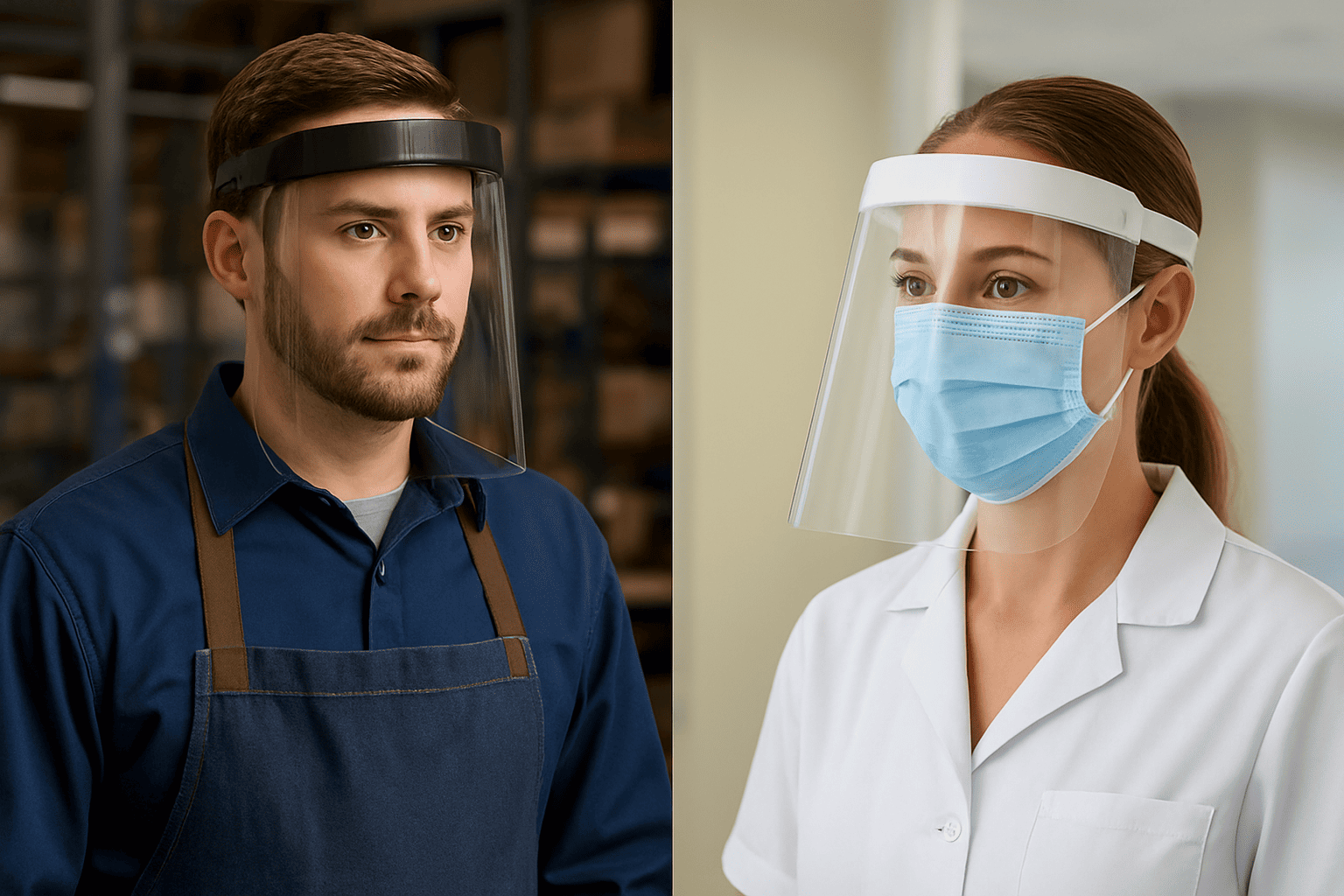
Face shields have emerged as an important protective item in recent years. They provide a clear barrier that covers the entire face, keeping raindrops, splashes, and particles away from the eyes, nose, and mouth. They are widely used in healthcare, laboratories, industrial operations, cleaning, and public settings. There are two primary types of face shields available today: reusable and disposable. Both perform the same goal, although they are designed for distinct requirements. Understanding the distinctions allows customers to select the best alternative for safety, comfort, and cost.
In this guide, we go over both categories in detail. We evaluate materials, durability, comfort, application areas, maintenance, and value. This blog is intended to help regular users, professionals, and office buyers make informed decisions.
What Are Face Shields and Why Are They Used?
A face shield is a clear visor affixed to a headband or headgear. It covers the entire face from the brow to the bottom of the chin. The shield protects against drips, splashes, sprays, dust, and debris. Many individuals pair them with masks or goggles to provide extra protection. Face shields are popular because they provide great visibility and a larger area of covering than goggles or glasses.
Face shields are commonly used in the healthcare, food processing, construction, cleaning, laboratory work, and customer-facing industries. They create a physical barrier that prevents direct contact with hazardous particles.
Reusable Face Shields: Construction and Key Features
Reusable face shields are intended for long-term use. They often come with a sturdy visor composed of polycarbonate or PET plastic. These materials can withstand impact, abrasion, and heat. The headgear is usually adjustable and made of sturdy plastic or lightweight composite.
Many reusable shields have features such as:
- A replacement visor.
- Cushioned forehead padding
- Adjustable straps
- Anti-fog coating.
- Strong headband or crown support.
Some reusable shields provide full-face coverage and have a curved design. This design provides improved visibility and protection. Reusable models are widespread in businesses that prioritize durability and comfort.
Benefits of Reusable Face Shields
- Durable and long-lasting
Reusable shields can survive heavy use. They don’t bend or break easily. The visor can withstand multiple cleaning cycles without losing clarity.
- Improved Protection Quality
Many reusable shields are made from thicker, tougher materials. This provides improved protection against debris and splashes. They are dependable under stressful situations.
- Sustainability
Environmentally friendly Reusable shields reduce waste. They reduce the quantity of throwaway things discarded every week.
- Custom Fit and Comfort.
Most reusable designs have adjustable straps and plush padding. This allows people to use them for extended periods of time without becoming uncomfortable.
- Replacement Parts
Some models allow you to adjust the visor without changing the complete shield. This ensures that the shield remains functional for a long period.
Limitations of Reusable Face Shields
Reusable safety face shields must be cleaned after each use. They must be adequately sterilized to avoid contamination. They are also more expensive at the point of purchase. Due to the sturdy materials, these shields may seem slightly heavier. Some users require time to adjust to the increased weight.
Disposable Face Shields: Construction and Features
Disposable face shields are intended for temporary or single-use applications. They are lightweight plastic sheets, with a foam forehead pad and an elastic strap. These shields are simple to wear and remove. They provide basic facial protection without requiring upkeep.
Disposable shields are commonly used in healthcare ppe, food service, cleaning, and other environments where cross-contamination is a concern.
Benefits of Disposable Face Shields
- Lightweight and Comfortable
Disposable shields are fairly lightweight. They cause no strain on the head or face. Many people choose them for short chores.
- No Cleaning Required
Users can discard them after use. This eliminates the need to clean or sanitize. It is effective in locations where hygiene is a high emphasis.
- Cost-effective for Large Teams
Disposable shields are inexpensive. Companies can purchase these in quantity for staff members.
- Lower risk of contamination
Users reduce the possibility of spreading germs from one location to another by discarding the shield after each use.
Limitations of Disposable Face Shields
Disposable shields are less durable. The visor’s material is thin and easily bent or scratched. These shields are unsuitable for high-impact job conditions. Replacing them frequently generates more waste.
Reusable vs. Disposable Face Shields: A Detailed Comparison
- Protection Level
Reusable shields often offer more protection. Their visors are more resistant to impacts and splashes. Disposable face shields provide basic covering but are not designed for heavy-duty applications.
- Comfort and Fit
Disposable shields are lightweight but not as adaptable. Reusable shields are adjustable and incorporate padding to enhance comfort.
- Hygiene and Cleanliness
Disposable shields are perfect for tasks that require single-use equipment. When you can clean reusable shields well after each use, they work best.
- Cost Efficiency
Disposable shields cost less per unit, but frequent replacement raises long-term costs. Reusable shields are more expensive upfront, but they last longer.
- Eco-Friendly
Reusable shields are better for the environment because they generate less waste. Disposable shields produce more garbage but help to limit cross-contamination.
- Workplace Suitability
Reusable shields perform well in industrial and construction settings. Disposable shields are suitable for medical, cosmetic, hospitality, and light cleaning tasks.
Who Should Choose Reusable Face Shields?
Reusable models fit users who work in:
- Construction
- Laboratories
- Industrial sites
- Manufacturing
- Carpentry
- Dental clinics
- Maintenance work
These consumers require substantial protection, long-lasting durability, and consistent visibility. People who wear face protection for long periods of time can benefit from reusable shields as well.
Who Should Choose Disposable Face Shields?
Disposable shields are ideal for:
- Medical staff
- Cleaning teams
- Beauty service workers
- Food industry workers
- Customer service staff
- Classroom and educational settings
They are suitable for anyone who requires a new shield every time they work. Disposable shields aid in cleanliness in changing circumstances.
How to Maintain Reusable Face Shields
Reusable shields require regular cleaning. Users should clean the visor with moderate soap and water. After rinsing, dry the visor with a soft towel. Some models include disinfecting wipes. Avoid using powerful chemicals that could damage the coating. Inspect the visor for scratches or clouding, which decreases visibility. Replace worn visors as needed.
Final Thoughts
Face shields, both reusable and disposable, are crucial for personal protection. Your ideal choice depends on the task, work setting, cost, and safety demands. Reusable shields provide durability, comfort, and long-term value. Disposable shields offer convenience, hygiene, and lightweight portability. Understanding the distinctions allows users to choose the best shield for safe, efficient, and comfortable everyday use.