

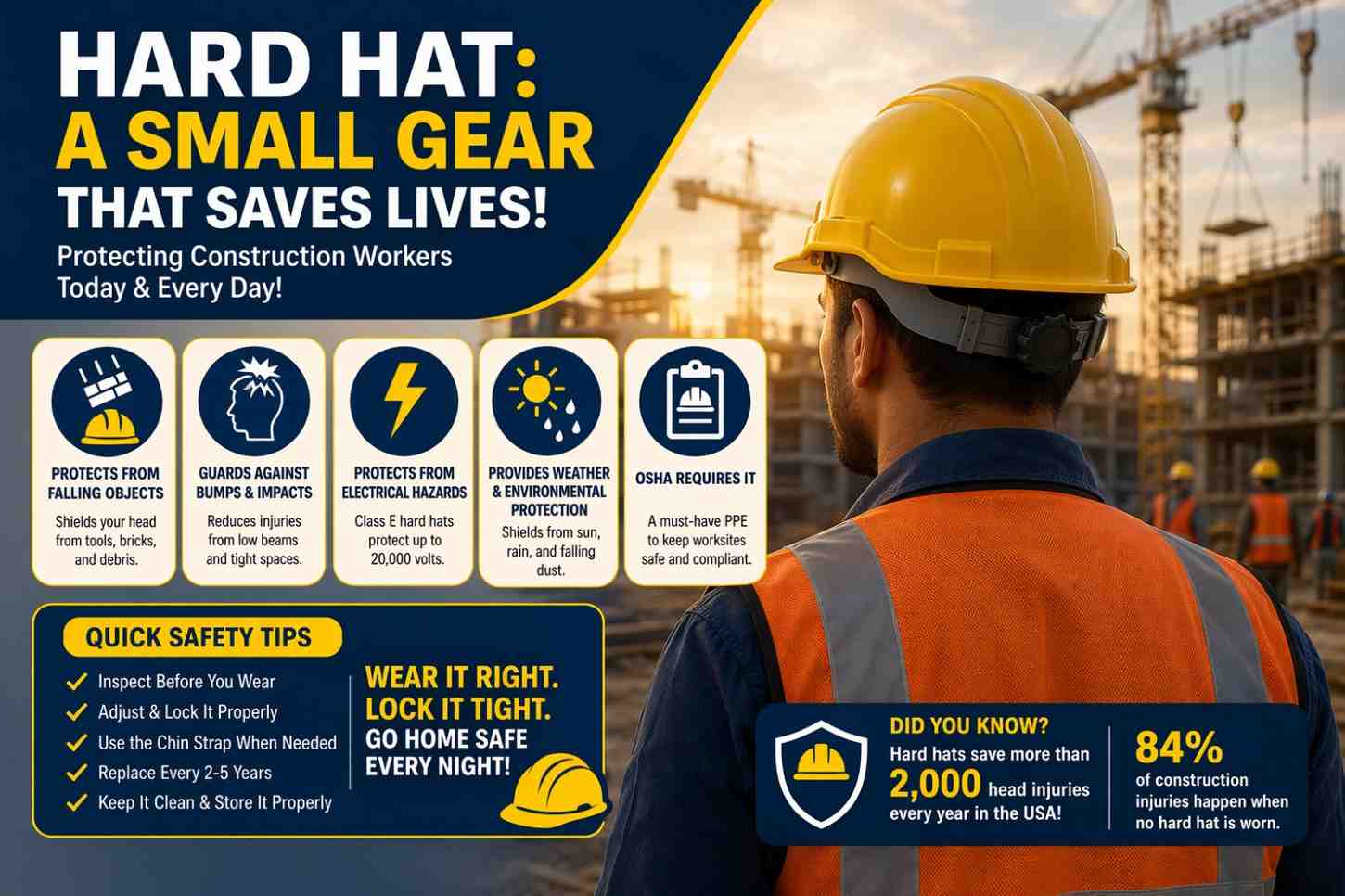
A hard hat is an essential item of personal protection equipment (PPE) for any construction worker. It protects the head from falling objects, bumps, electrical hazards, and a variety of other hazards seen on construction sites every day. A worker’s life can be in danger if he or she does not wear a good hard hat, thus wearing it correctly is more than just a rule; it is a question of life and safety.
What Is a Hard Hat?
A hard hat is a durable, rigid safety helmet designed to protect a worker’s head from injuries caused by falling items, impact, rain, and electrical shock. It is one of the first and most fundamental safety items provided to any construction worker before they enter a working site.
Importance of Hard Hat on a Construction Site
Construction sites are one of the most dangerous working sites in the world. Every day, workers face hazards such as tools falling from heights, moving machinery, low-hanging beams, exposed electrical wires, and more. A hard helmet serves as the first barrier of protection between a worker’s head and these hazardous hazards.
According to safety statistics, the majority of head injuries on construction sites occur when workers do not wear a hard hat or wear one that does not fit properly. The significance of a hard hat extends beyond a rule; it is the difference between a worker returning home safely and a fatal catastrophe.
Protection from Falling Objects
Workers at any construction site work at various heights, including scaffolding, ladders, cranes, and rooftops. Tools, bricks, bolts, and trash could fall at any time. A hard hat absorbs and spreads the force of impact, protecting the skull and brain. Even a little bolt falling from a few meters above might be lethal without sufficient head protection.
Protection from Bumps and Impacts
Workers frequently navigate tight places with low beams, pipes, or overhanging constructions. Without proper protection, bumping your head against a metal beam or concrete wall can result in catastrophic injuries. A hard hat softens these inadvertent blows and protects against cuts and concussions.
Electrical Hazard Protection
Many construction workers work with electrical wiring and equipment. Some hard helmets (Class E — Electrical) are specifically intended to protect against high-voltage electrical shocks up to 20,000 volts. This is vital for workers in electrical construction, utility work, or any other location where live wires exist.
Weather and Environmental Protection
Hard helmets also protect workers from the heat, rain, and debris in their environment. A hard helmet on outdoor construction sites in India and other hot countries can protect workers from direct sunlight and lower the danger of heatstroke during lengthy working hours.
Did you know? According to studies, workers who continuously wear hard hats minimize their risk of major head injuries by more than 85%. It is one of the most basic but effective safety precautions that any worker may follow every day.
Key Features of a Hard Hat
Not every hard hat is the same. A good hard hat includes a few key elements that make it useful and comfortable for regular usage on construction sites. Here are the most significant ones:
Outer Shell
This hard outer shell is made of high-density polyethylene (HDPE) or ABS plastic and is intended to withstand impact while protecting the skull.
Hard Hat Suspension System
The internal suspension system maintains the hat lifted off the head, absorbing shock and directing impact force away from the skull.
Ventilation Slots
Many current hard hats have ventilation openings or vented designs to keep workers cool during hot weather working conditions.
Accessories & Slots
Modern hard helmets have spaces for connecting face shields, ear muffs, lights, and cameras, making them a comprehensive safety platform.
Color Coding
Different hard hat colors indicate worker duties on-site: white for supervisors, yellow for general workers, red for fire safety officers, and blue for guests.
Electricity Rating
Class E hard helmets provide electrical insulation protection, which is essential for working near power lines or electrical systems.
OSHA Guidelines for Hard Hats
The Occupational Safety and Health Administration (OSHA), the primary authority on occupational safety in the United States, has established clear and stringent requirements for hard hats in construction. These principles are adopted and referenced by safety professionals all across the world, including India, as global best practices.
OSHA Hard Hat Requirements
- All workers must wear hard hats in situations where there is a risk of head injury due to collision, falling items, or electrical risks.
- Hard helmets must comply with ANSI/ISEA Z89.1 requirements for type and class protection.
- Employers are required to provide adequate hard helmets to all employees at no cost.
- Hard helmets must be inspected on a regular basis and replaced if they are cracked, dented, or otherwise damaged.
- Workers must not drill holes, paint, or modify the hard hat in any way that may impair its protection.
- Hard helmets with suspension systems must be maintained and replaced when they wear out.
- Workers must wear hard hats correctly: level on the head, not slanted or worn backwards (unless the manufacturer permits reverse wear).
OSHA classifies hard hats into two types and three classes:
- Type I – Protects only the top of the head against impacts.
- Type II – Protects the top and sides of the head.
- Class G (General) – Protects against a 2,200 volt electrical hazard.
- Class E (Electrical) – Protects against 20,000 volts; used by electricians.
- Class C (Conductive) – Has no electrical protection and is only used for general physical protection.
Where Are Hard Hats Used?
Hard helmets aren’t simply for building construction. They are necessary in a variety of industries and work situations where overhead or impact hazards are present. Hard hats are commonly worn and utilized in the following places:
- Building and civil construction locations
- Road and highway construction projects.
- Mining and tunneling operations.
- Oil and gas drilling locations and refineries
- Electrical utility and power line work.
- Shipbuilding and Marine Construction
- Industrial facilities, factories, and warehouses
- Demolition sites
- Bridge and infrastructure construction.
You May Like – Bump Cap vs Hard Hat
How to Use and Lock a Hard Hat Properly
Wearing a hard hat is simple, but it must be worn properly to provide complete protection. Many accidents occur when workers wear their hard hats incorrectly, too loosely, or do not lock them properly. Follow these steps every time.
Step 1: Inspect Before Wearing.
Always check your hard hat before putting it on. Look for cracks, dents, or damage to the exterior shell. Check that the suspension system inside isn’t ripped or frayed. A damaged hard hat must be replaced immediately — do not wear it.
Step 2: Adjust the Suspension System.
The hard hat suspension system is the internal harness that keeps the hat from touching your skull. Adjust the hat so that it sits firmly and pleasantly on your head. There should be around 2.5 to 4 cm (1-1.5 inches) between your head and the shell. This gap is what absorbs shocks.
Step 3: Set and Lock the Headband.
Most hard hats have an adjustable ratchet or slide-lock headband in the back. Turn the ratchet wheel or press the adjustment buttons to tighten the headband until the hat fits snugly and securely. It should sit level on your head, without being too tight.
Step 4 — Attach chin strap if necessary.
In high-wind settings, on scaffolding, or when working at heights, always use the chin strap to secure the hard helmet. This keeps the hat from blowing away or falling when you look up or bend forward.
Step 5: Wear it at all times on site.
Once on site, you must wear your hard hat at all times. Even a simple journey across the workplace can expose you to falling debris and overhead risks. Develop the practice of never removing your hat until you are completely off the building site.
Quick Guide to Hard Hat Safety
- Always inspect your hard hat before each shift for cracks, dents, or damage.
- Replace hard helmets every 2-5 years or right after any big impact.
- Store hard helmets away from direct sunshine and excessive heat, because UV exposure degrades the shell.
- Never hang your hard hat on the rear-view mirror of a car because heat might ruin it.
- Do not write on, paint, or apply stickers to disguise fractures or damage.
- Clean your hard hat regularly with mild soap and water.
- Replace the suspension system every 12 months, even if the outside shell appears fine.
- Ensure that your hard hat is the appropriate class for your work area.
Final Words
A hard hat may appear to be a little, simple piece of equipment, yet it bears immense responsibility. Every construction worker, from the newest assistant to the most experienced site manager, must wear the suitable hard hat at all times on the job site. The hard hat suspension system, exterior shell, class rating, and suitable locking mechanism all work together to protect your head—and your life.
OSHA requirements exist for a reason: to avoid head injuries on construction sites. Following these guidelines, examining your equipment, and educating others to do the same fosters a culture of safety that benefits everyone. Never compromise on head protection. One instant of negligence is all it takes — but one properly worn hard hat is all that is required to keep safe.
Wear it right. Lock it tight. Go home safe every night.
[…] certified hard hat is necessary in construction workplaces that may involve falling objects, collision, or electrical exposure. Unlike bump caps, hard helmets […]