

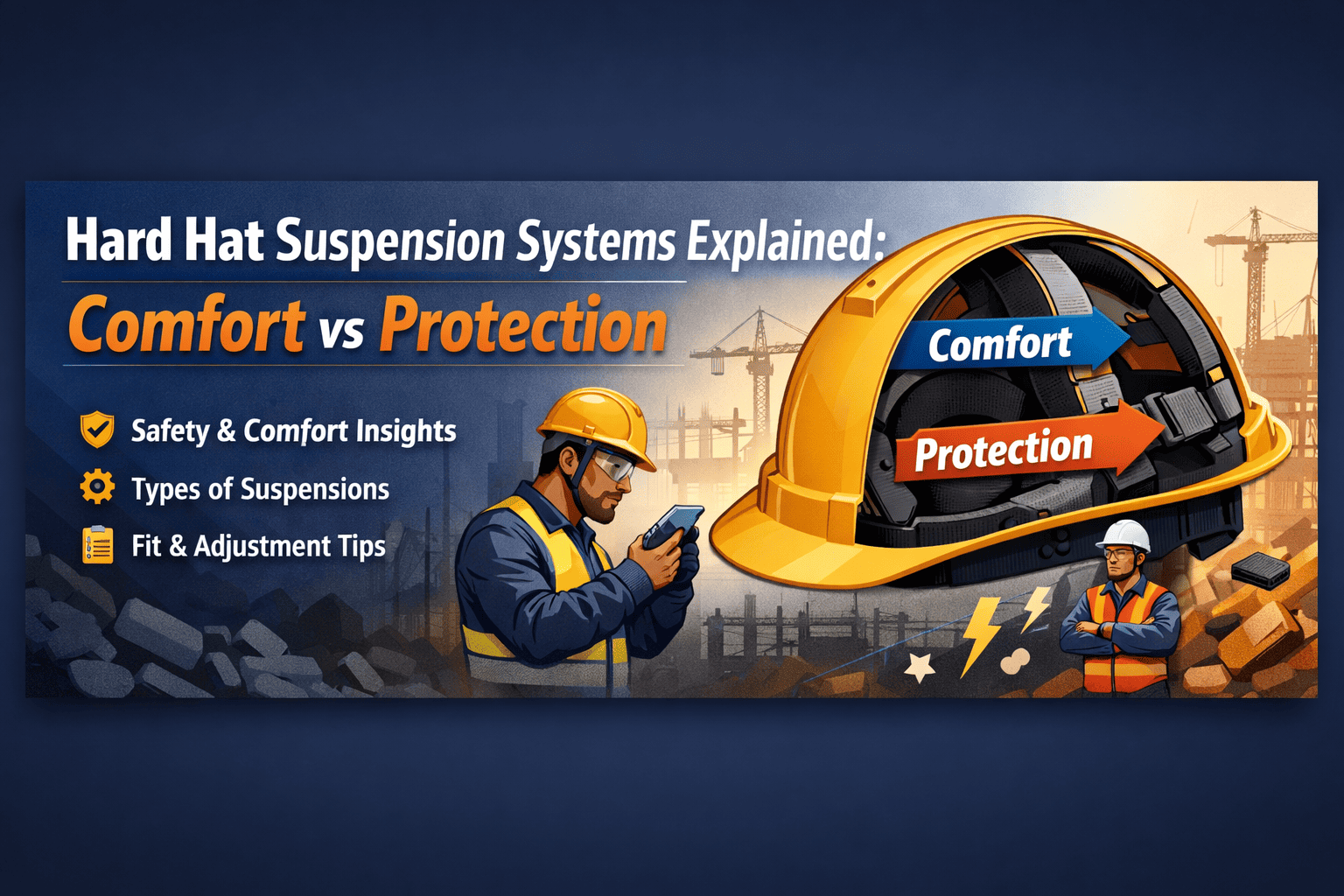
Hard hats are an essential piece of personal protection equipment in hazardous workplaces. This blog describes hard hat suspension systems in an understandable and descriptive manner. You will learn how suspension systems promote comfort while also increasing head protection. The blog also discusses the necessity of personal protective equipment, how to reduce head injuries, the distinctions between bump caps, and how to fit hard hats. By the conclusion, you’ll understand how appropriate suspension promotes safety and everyday comfort.
What Is a Hard Hat Suspension System
A hard hat suspension system is the internal support framework of a helmet. It rests between the wearer’s skull and the hard outer shell. The device absorbs impact energy from falls or overhead impacts. It also leaves a space between the shell and the head. This gap lowers the force transmitted to the skull during an impact. Suspension systems additionally contribute to the helmet’s stability during movement and long working hours.
Main functions of a suspension system include:
- The main functions of a suspension system are:
- Absorbing and spreading impact energy.
- Maintaining a safe distance between the head and shell.
- Increasing helmet stability during movement.
- Reducing pressure on certain head areas
- Increasing comfort for extended wear.
Importance of Suspension Systems in PPE
Personal protection equipment (PPE) is intended to reduce occupational harm hazards. Head protection is critical in construction and industrial settings. Hard helmets keep workers safe from falling items and impact risks. The suspension system enhances this protection by distributing impact forces throughout the head. A hard helmet cannot provide reliable protection unless it has a properly functioning suspension mechanism.
Why do suspension systems matter in PPE?
- They increase overall head protection.
- They minimize the severity of head trauma.
- They promote compliance with safety standards, promote regular use of personal protective equipment, and enhance worker productivity and comfort.
How Hard Hats Reduce the Risk of Head Injury
Hard hats protect the head with a multilayer safety design. The outer shell protects against puncture and deflects falling items. The suspension system absorbs shocks and distributes impact forces equally. This lowers the direct force on the skull and brain. The proper usage of hard helmets considerably reduces the incidence of major head injuries in dangerous work conditions.
Hard helmets decrease the following risks for head injuries:
- Falling or flying objects
- Accidental head bumps.
- Overhead structural impacts.
- Minor Electrical Contact Hazards
- Debris-induced injuries
Comfort vs Protection in Suspension Design
Comfort and protection must be combined in hard hat design. Uncomfortable helmets are frequently worn incorrectly or removed during work. Suspension systems combine cushioning and solid head support. Good design eliminates pressure points and reduces fatigue. Comfortable helmets promote longer wear and improved safety compliance.
Features that provide comfort without sacrificing protection:
- Soft and durable webbing straps
- Even weight distribution.
- Designs for ventilated suspensions
- Mechanisms that allow for adjustable fit
- Moisture-absorbing sweatbands
Types of Hard Hat Suspension Systems
Hard hat suspension systems differ according to attachment locations and adjustment types. Suspensions with four, six, or eight points are common. Six-point systems improve balance and weight distribution. These systems reduce pressure on certain parts of the head. They are commonly used as construction and industrial safety helmets.
The most common suspension system types are:
- Four-point suspension systems.
- Six-point suspension systems.
- 8-point suspension systems
- Ratchet-adjustable suspensions
- Pin-lock suspension systems.
Materials Used in Suspension Systems
Suspension systems rely on strong and flexible materials to provide durability and comfort. Nylon webbing is widely used because of its strength and resilience to wear. Polyester fabrics provide stability with minimal stretching. Padding materials promote comfort and perspiration absorption. The quality of the materials used has a direct impact on helmet performance and lifespan.
The advantages of high-quality suspension materials include:
- Longer service life.
- Better impact absorption.
- Improved wearer comfort.
- Reduced maintenance requirements
- Consistent safety performance.
Safety Bump Cap vs Hard Hat: Understanding the Difference
Bump caps and hard hats have distinct safety functions. Bump caps defend against minor bumps and scrapes in low-risk settings. They do not protect against falling items or severe collisions. Hard hats offer full head protection in hazardous work environments. Bump caps typically lack suspension mechanisms, rendering them unsuitable for high-risk operations.
When to Use Each Option:
- Use bump caps in low-impact regions.
- Wear hard hats when there is a possibility of falling objects.
- Avoid bump caps at building sites.
- Select hard hats for overhead hazards.
- Follow the workplace PPE requirements.
Importance of Proper Hard Hat Fit
A good hard hat fit is necessary for efficient protection. Poor fit degrades suspension system performance. The helmet should sit level on the head, not tilting. Loose helmets may come off upon an impact. Correct fit increases both safety and comfort at work.
The basic hard hat fit guidelines are as follows:
- The helmet sits one inch above the eyebrows.
- Suspension straps provide uniform tension and prevent side-to-side movement.
- Secure but comfortable fit.
- Regular fit inspections during shifts.
Maintenance and Replacement of Suspension Systems
Suspension systems require regular inspections and maintenance. Straps should be checked for wear and damage. Sweatbands should be cleaned and replaced on a regular basis. Damaged suspension systems must be replaced quickly. Proper maintenance provides long-term comfort and safety.
Signs that your suspension system needs to be replaced include:
- Loose or strained straps
- Broken adjustment mechanisms.
- Reduced comfort or stability.
- Visible cracks or damage.
- Exposure to high impact
Final Thoughts
Hard hat suspension systems play an important part in occupational safety. They reduce impact energy and increase helmet comfort. A proper suspension design promotes greater fit and stability. Understanding these systems assists in selecting the appropriate PPE. Correct fitting and frequent maintenance improve safety performance. Hard hats are necessary in dangerous workplaces. Quality suspension systems save lives and reinforce safety culture.
[…] A hard hat should be comfortable and secure, with an adjustable suspension system. […]