

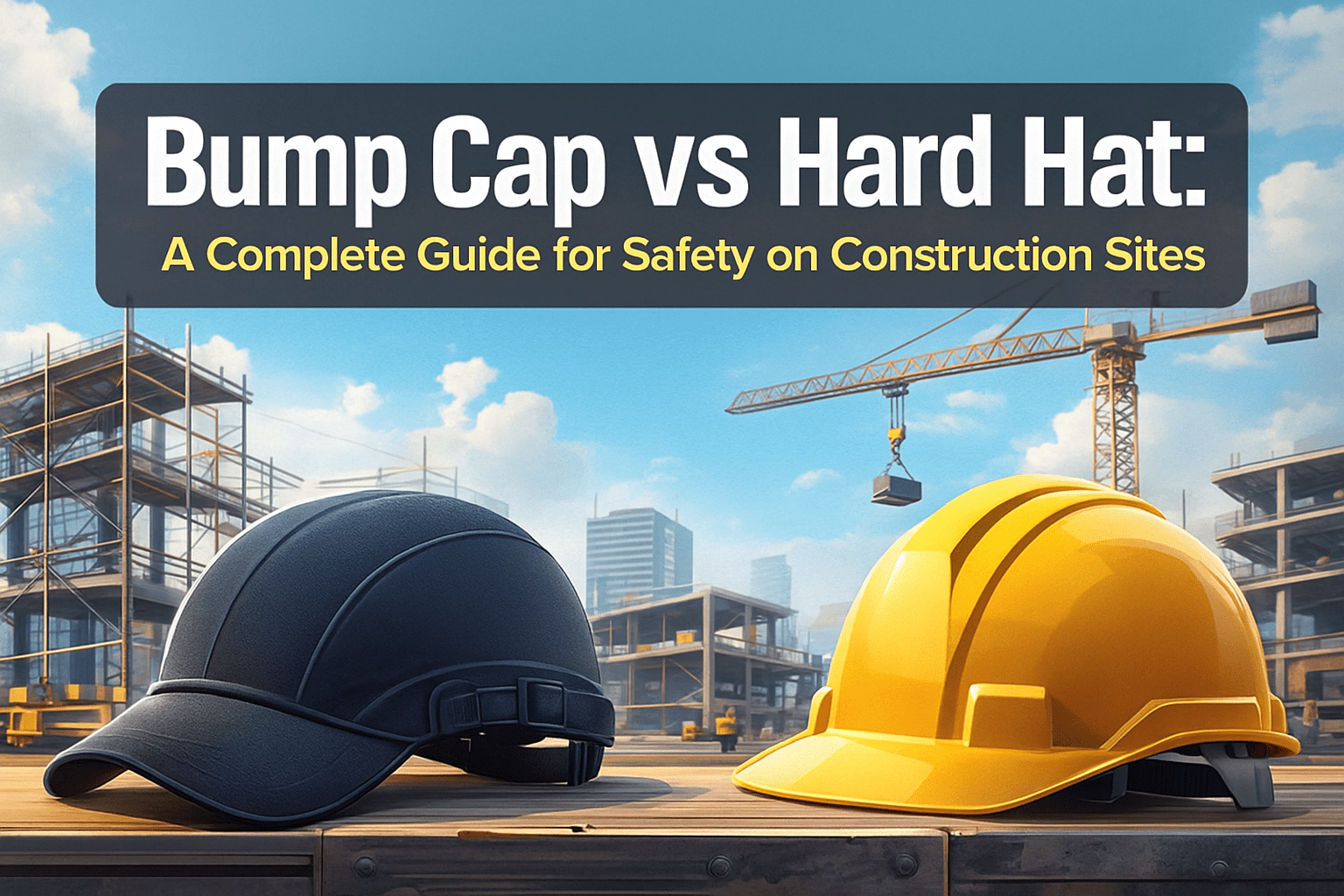
Worker safety is the cornerstone of any successful construction project. Falling objects, sharp equipment, cramped quarters, and unanticipated hazards are all common on job sites. In such environments, head protection becomes the primary line of defense. Safety equipment is rapidly evolving, but two items remain essential: bump caps and hard helmets. Many employees confuse the two, but they serve separate functions. Understanding the differences can save lives and avoid industrial injuries.
In this extensive article, we will look at bump caps and hard hats in a practical and accessible approach. We cover their applications, advantages, limitations, manufacturing requirements, and selection criteria. This enables employees, supervisors, and safety managers to make informed decisions.
What Is a Bump Cap?
A bump cap is a lightweight protective headgear. It keeps the head safe from minor knocks and scrapes. Workers utilize bump caps in regions with a low risk of falling objects. These caps are designed to provide both comfort and mobility. They provide for simple mobility below shelves, cars, equipment, and low ceilings.
Bump caps are commonly worn in warehouses, workshops, industrial facilities, and packaging operations. They want to decrease tiny head injuries caused by unintentional contact with harsh surfaces.
Many people confuse bump caps with baseball caps. Manufacturers frequently create beautiful designs. A bump cap has an interior shell that can cushion mild impacts. These caps are not rated for high-impact protection. Workers should never use them on construction sites with high activity.
Key Features of Bump Caps
Bump caps blend safety with comfort. Workers rely on them to complete daily jobs that require flexibility.
- Common features include:
- Lightweight shell.
- Comfortable foam padding.
- Ventilation holes
- Adjustable strap
- Stylish exterior design.
Some current bump caps additionally have LED lights, reflective strips, and sweat-resistant materials. These characteristics are useful during night shifts and long work hours.
Bump caps are easy to maintain. Workers can easily clean them. They are also reasonably priced, making them excellent for sectors requiring simple head protection for quick activities.
Limitations of Bump Caps
Bump caps have apparent limitations. They do not provide protection against falling tools, heavy materials, or high-impact crashes. Workers must comprehend this distinction. Misuse can lead to significant injury. In high-risk environments, a bump cap should never be used instead of a hard helmet.
They also offer modest side protection. In harsh environments, their material may deteriorate faster. Supervisors should conduct regular inspections of bump caps. Damaged caps must be replaced promptly.
What Is a Hard Hat?
A hard hat is a sturdy and long-lasting helmet built for hazardous industrial settings. Construction workers, electricians, miners, technicians, and industrial staff all use hard hats on a daily basis. These helmets offer protection against falling items, electric shocks, and large collisions.
Hard hats must meet stringent safety requirements, such as ANSI Z89.1 or EN 397. Their goal is to lower the likelihood of fatal injuries. A hard hat consists of a strengthened shell and a suspension mechanism. The suspension distributes impact force over the helmet. This decreases the direct pressure on the skull.
Hardhats are required on construction sites. Many businesses impose stringent safety regulations. A worker without a hard hat is not permitted near active work zones.
Types of Hard Hats
Hard hats vary based on shape, protection level, and material. Users must choose the right type for their tasks.
1. Full Brim Hard Hat
A large brim hard hat provides more shade and better protection from the sun and debris. Workers wear these caps in outdoor settings. The brim covers the head and protects the neck.
2. Cap Style Hard Hat
This looks like a baseball cap. It offers dependable protection and is widely utilized on both indoor and outdoor venues.
3. Class G (General) Hard Hats
These provide protection from low-voltage electrical risks.
4. Class E (Electrical) Hard Hats
They protect against high-voltage exposure. Electricians choose this style.
5. Class C (Conductive) Hard Hats
These provide comfort and ventilation, but do not guard against electrical risks.
Hard Hat Materials
Modern hard hats are made of durable materials that can survive adverse weather conditions. Polyethylene and fiberglass are typical options. Some helmets incorporate polycarbonate for added strength. These materials can withstand weather, heat, moisture, and shock.
Manufacturers rigorously test their hard helmets. Only authorized helmets are allowed on the market. Before using a product, workers should verify the safety label.
Why Hard Hats Are Essential
Construction sites contain genuine hazards. A wrench can fall from scaffolding. A crane can move huge loads. Workers may slide near metallic edges. Hard hats protect against numerous serious injuries.
Hard helmets also guard against electrical sparks and flying debris. In many situations, the hard hat protects the worker from serious injuries. This is why every safety officer insists on wearing a helmet during working hours.
Differences Between Bump Caps and Hard Hats
1. Protection Level
- Bump caps protect against slight bumps.
- Hard helmets defend against severe impacts and falling items.
2. Standards
- Bump caps follow EN 812.
- Hard helmets adhere to ANSI Z89.1 or EN 397 standards.
3. Weight
- Bump caps are lighter.
- Hard hats are heavier and more durable.
4. Work Environment
- Bump caps work in low-risk areas.
- Hard helmets are required in high-risk environments.
5. Design
- Bump caps resemble ordinary caps.
- Hard helmets feature structural shells and suspension mechanisms.
Why Workers Confuse Them
Both products protect the head, albeit in very different ways. Many workers prefer bump caps because they are more comfortable. However, comfort should never come at the expense of safety. Supervisors must train staff to choose the appropriate headwear.
Training programs lower the number of accidents. Workers understand where to wear bump caps and where hard hats are required. A quick briefing can help prevent major incidents.
How to Choose the Right Head Protection
The choice of headgear is determined by the employment requirements. Work hazard analysis is crucial. A hard hat is usually required when working with heavy equipment. A warehouse laborer could require a bump cap.
Consider the following factors:
- Work height and impact risk
- Electrical exposure.
- Temperature
- Shift Duration
- Mobility requirements
A skilled safety manager considers all of these criteria before supplying protective equipment.
Maintenance and Inspection Tips
Head protection is only effective when properly maintained.
Please follow these guidelines:
- Clean your gear periodically.
- Check for cracks.
- Replace the worn cushioning.
- Keep helmets in a dry area.
- Avoid direct sunlight when not in use.
Replaced damaged hard hat immediately. Even little cracks can harm the helmet.
Final Thoughts
Bump caps and hard helmets serve diverse purposes in occupational safety. A bump cap protects against small accidents. A hard hat guards against life-threatening risks. Both items are important. The best option depends on your work setting. Understanding the distinction increases safety and reduces injuries.
Companies that supply appropriate helmets protect workers and productivity. Safety should always come first. A simple action today could avoid a huge accident tomorrow.
[…] date stamp and suspension condition on a regular basis, along with the rest of your gear such as bump caps and other head protection, is a little practice that ensures protection is reliable when it matters […]