

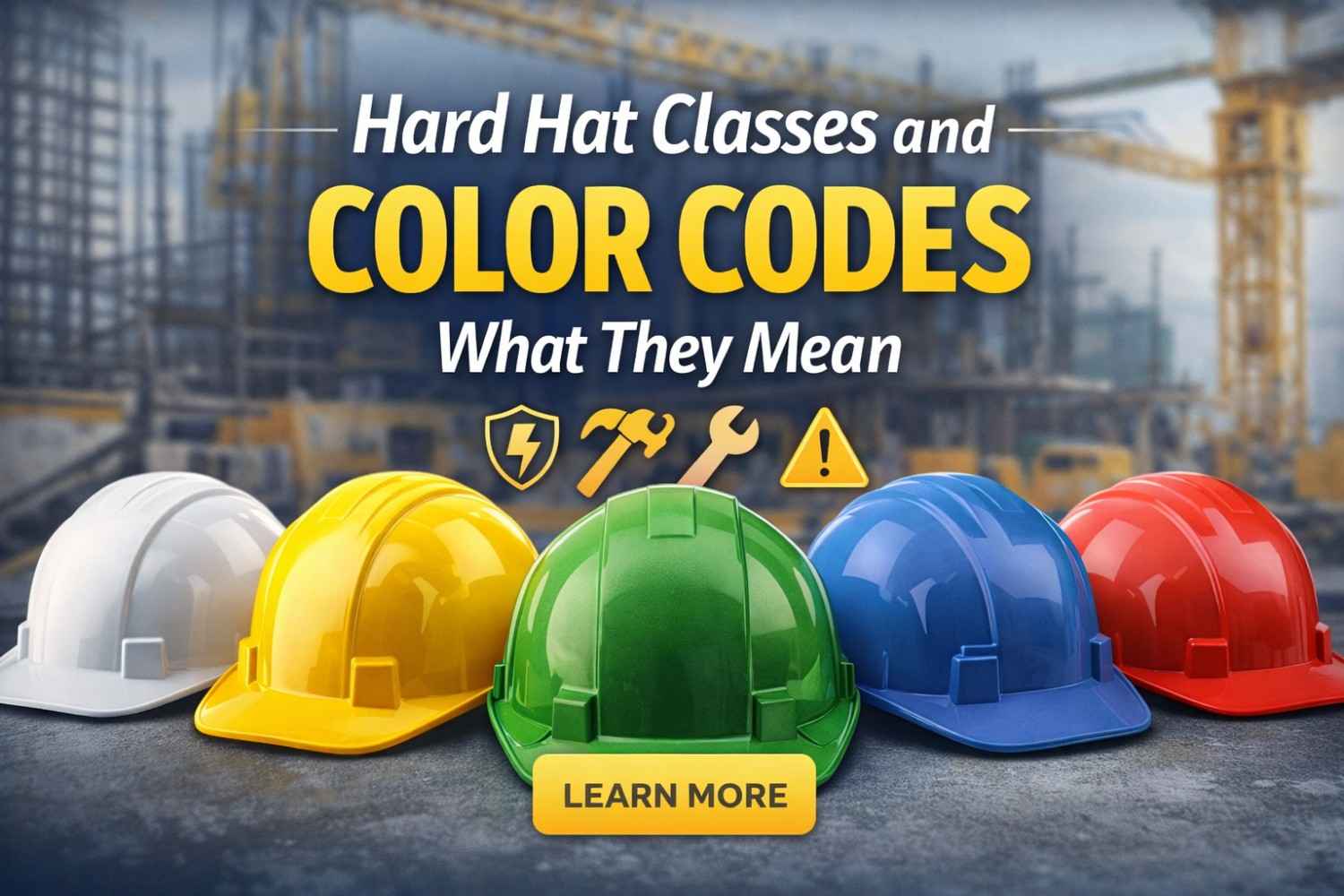
Workplace safety is critical in areas including construction, manufacturing, mining, and electrical work. The hard hat is one of the most commonly utilized items of personal protection equipment (PPE) in these conditions. However, many employees and supervisors are unaware of the various hard helmet classes and color codes, or what they represent.
We have covered hard hat classifications and color codes in simple words. You will discover how hard hats are classed according to their level of protection and what different helmet colors represent on the job site. Understanding these systems enables workers to select the appropriate helmet, enhances workplace communication, and promotes improved safety procedures on construction and industrial sites.
What Are Hard Hats?
Hard hats are safety helmets that protect workers’ heads from injuries caused by falling items, impact hazards, and electrical shocks. They are commonly utilized in industries where head injuries may occur. Hard hats are usually made of tough materials such as:
- High density polyethylene (HDPE)
- Fiberglass
- Thermoplastic Materials
These materials absorb and spread impact energy, lowering the risk of catastrophic injury. Wearing a hard hat is necessary in many workplaces due to occupational safety rules.Hard helmets usually include two primary components:
- The outer shell provides impact resistance.
- The suspension system absorbs shock and maintains the helmet pleasantly positioned on the head.
Read More – How Hard Hats Reduce the Risk of Head Injuries on the Job Site
Why Hard Hat Classes and Color Codes Matter
Not all hard helmets are the same. They are designed to give varying levels of protection based on job dangers.
These discrepancies can be identified using two major systems:
- Hard Hat Classes – show the helmet’s level of electrical protection.
- Hard Hat Color codes – assist workers identify their roles and duties on the working site.
Together, these technologies increase workplace safety by ensuring that workers wear appropriate protective equipment for their activities and enabling prompt identification of persons during operations.
Hard Hat Types vs Hard Hat Classes
Before addressing classes, it is important to note that hard helmets are divided into two categories based on the direction of protection.
Type I Hard Hats
Type I hard hats provide protection from above-ground impacts such as falling tools, materials, and debris. These are widely utilized in industries such as:
- Construction
- Manufacturing
- Warehousing
Type II Hard Hats
Type II hard hats offer protection against impacts from both above and below.
These are frequently utilized in hazardous conditions, such as:
- Mining
- Oil and gas operations
- Heavy industrial sites
Once the type has been decided, the hard helmet is classified according to its electrical protection level.
Hard Hat Classes Explained
The hard hat classes reflect how much electrical protection the helmet offers. These classifications are based on safety criteria that are often utilized in the workplace.
There are three primary categories of hard hats.
Class G Hard Hats (General Protection)
Class G hard helmets are intended for general workplace safety and have limited electrical resistance. These helmets can guard against low-voltage electrical threats of up to 2,200 volts.
Key Features:
- Basic Electrical Protection
- Protection against falling objects.
- Frequently used in construction sites.
Typical Users
- Construction workers
- Carpenters
- Mechanics
- General laborers.
They are the most commonly utilized type of hard hat in construction operations.
Class E Hard Hats (Electrical Protection)
Class E hard helmets provide high-voltage electrical protection and are specifically designed for use in situations with electrical risks. These helmets can tolerate electrical exposures of up to 20,000 volts.
Key Features:
- High electrical insulation.
- Protection against impact dangers.
- Designed for the electrical environment.
Typical Users:
- Electricians
- Power line technicians
- Utility workers
- Electrical engineers working on site.
These helmets are essential in workplaces where employees may come into touch with live electrical equipment or wiring.
Class C Hard Hats (Conductive Helmets)
Class C hard helmets are primarily intended for comfort and ventilation, but do not offer electrical protection.
The letter “C” stands for conductive, indicating that they should not be utilized near electrical risks.
Key Features:
- Lightweight and comfy.
- Often designed for ventilation.
- No electrical insulation.
Typical Users
Class C hard helmets are commonly used in locations without electrical risks, such as:
- Manufacturing facilities
- Warehouses
- Road Construction Projects
- Low-risk industrial jobs
Because they lack electrical protection, they should never be utilized in an electrical work environment.
What Do Hard Hat Color Codes Mean?
Hard hat color codes are utilized to easily identify the duties and responsibilities of employees. Many businesses adhere to similar standards even though these colors are not formally defined. Supervisors, safety officers, engineers, and employees may all be clearly identified with different colored hard hats, which enhances coordination, communication, and safety on hectic industrial and construction sites.
Common Hard Hat Color Meanings
White Hard Hats
Supervisors and management staff usually wear white hard helmets.
Typical users consist of:
- Site supervisors
- Engineers
- Architects
- Project managers
This hue makes it easier for employees to recognize technical or leadership staff.
Yellow Hard Hats
One of the most popular colors for hard hats on building sites is yellow.
Usually, they are worn by:
- Workers in general construction
- Workers
- Operators of equipment
Yellow helmets are perfect for busy job sites since they are quite noticeable.
Blue Hard Hats
Technical workers and specialist people frequently wear blue hard helmets.
Typical users include:
- Electricians
- Carpenters
- Temporary workers or trainees in some companies
Green Hard Hats
Safety officers are frequently seen wearing green hard hats.
Usually, these helmets are worn by:
- Officers of safety
- Inspectors of health and safety
- Environmental safety experts
When workers require safety personnel, they assist them in finding them swiftly.
Orange Hard Hats
Workers that need to be highly visible in dangerous situations typically wear orange helmets.
Typical users consist of:
- Workers building roads
- Controllers of traffic
- Operators of heavy machinery
In crowded work areas, their vivid hue enhances visibility.
Red Hard Hats
Fire safety teams and emergency personnel frequently wear red hard helmets.
These could consist of:
- Marshals for fire
- Teams for emergency reaction
- Supervisors of fire safety
Personnel in charge of emergency circumstances can be easily identified with this hue.
Are Hard Hat Colors Standardized?
Hard hat colors are not formally standardized around the world. Helmet colors may be assigned by different firms and job locations based on their individual safety regulations and organizational structures. However, many businesses utilize similar color schemes to aid communication, identification, and coordination on crowded work sites. To minimize confusion, employees should always go to their company’s unique safety rules to determine what each hard hat color symbolizes.
How to Choose the Right Hard Hat
Choosing the right hard hat depends on a number of factors.
Workplace Hazards
Identify potential hazards on the job site, such as:
- Falling Objects
- Electrical dangers.
- Heavy equipment operations.
Required Safety Standards
Ensure that the hard helmet meets all applicable safety certifications and occupational laws.
Proper Fit
A hard hat should be comfortable and secure, with an adjustable suspension system.
Job Role
Some organizations designate distinct helmet colors based on the worker’s position.
Hard Hat Maintenance and Replacement
Hard hats should be inspected on a regular basis to ensure their effectiveness.
Inspect for Damage.
- Check for cracks.
- Dents
- UV damage.
- Worn Suspension Systems
Replace When Necessary.
Hard helmets must be replaced if:
- They experience a significant impact.
- The shell gets damaged.
- The suspension system wears out.
Many manufacturers advocate upgrading hard hats every few years, depending on their use and exposure conditions.
You May Like – Bump Cap vs Hard Hat Guide
Final Thoughts
Hard hat classes and color codes are critical components of occupational safety. Hard hat classes specify the level of impact and electrical protection, whilst color codes let workers identify their roles and duties on the job.