

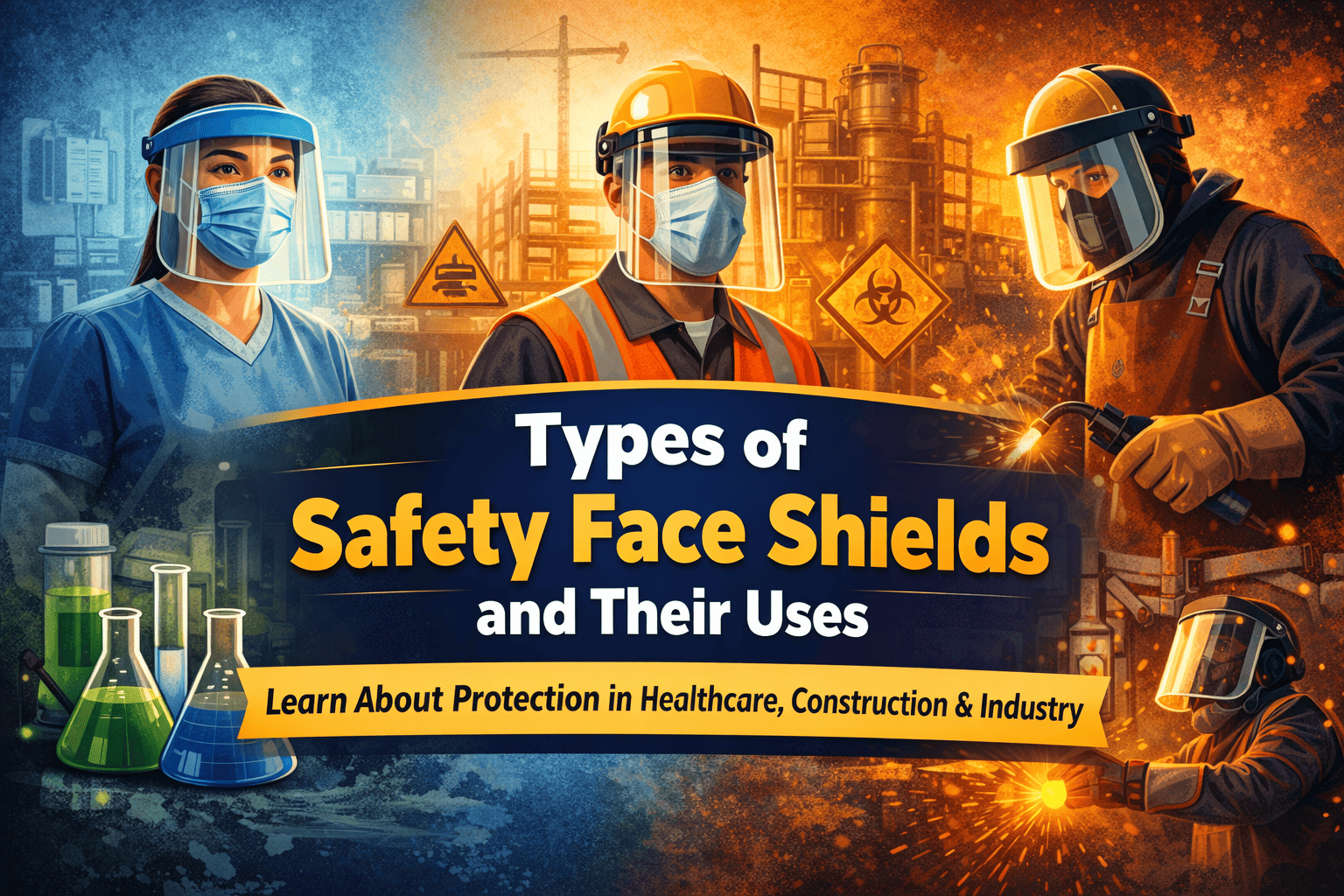
Safety face shields are an essential piece of personal protective equipment in many jobs. They shield the face from flying debris, chemical splashes, heat, and hazardous liquids. Face shields are frequently utilized in several areas, including healthcare, construction, manufacturing, and laboratories. In this article, you will learn about safety face shields, why they are vital, what types are available, and how they benefit workers in a variety of industries. This tutorial will also explain how to choose the best face shield and how it supports occupational safety standards in the United States.
Introduction About Safety Face Shields
A safety face shield is a clear screen that protects the face. It is generally worn over safety glasses or masks to provide further protection. Face shields protect the eyes, nose, and mouth from risks that could result in injuries or illnesses. They are intended to provide a greater level of protection than standard safety goggles. Many workplaces utilize face shields to reduce dangers and keep employees safe while doing daily duties.
Why Face Shields Are Important
Face shields are necessary since numerous job positions expose workers to risks that can injure their faces. These risks include flying particles, chemical splashes, scorching sparks, and bodily fluids. A face shield provides a robust barrier between the worker and these hazards. It protects against eye injuries, facial cuts, burns, and pollution. When workers use face shields, the odds of serious accidents decrease. This makes face shields an essential component of workplace safety initiatives.
Different Types of Safety Face Shields
There are different types of safety face shields for specific job needs. Manufacturers design full-face shields to cover the forehead down to the chin. Some workers use half-face shields to protect the eyes and nose area. Companies make reusable face shields from strong plastic so workers can wash and use them again. Many healthcare facilities use disposable face shields for single use to reduce infection risks. Some models attach directly to safety helmets for construction and industrial work. Each type protects workers from specific workplace hazards.
Also Read – Simple Guide to Reusable and Disposable Face Shields
How Face Shields Help in Industrial Workplaces
Workers in industrial areas frequently encounter hazards such as metal sparks, flying debris, dust, and chemical splashes. Safety face shields protect workers from these threats by covering their full face. They are widely utilized in welding, grinding, cutting, and chemical handling applications. Face shields also serve to limit the risk of injuries, which could result in lost work time. They enable workers to complete activities in a safe and efficient manner by providing excellent vision and sturdy protection.
Face Shields for Healthcare Workers
Healthcare personnel wear face shields to protect themselves from infectious fluids and airborne particles. During medical operations, splashes of blood or body fluids may occur. A face shield helps to keep these fluids from reaching the face. Healthcare face shields are frequently lightweight and comfortable for extended use. They are typically worn in conjunction with masks and gloves to provide complete protection. Face shields play an important role in infection prevention and worker safety in hospitals and clinics.
Face Shields for Construction Sites
Dust, flying debris, wood chips, and sparks are all common hazards on construction sites. Workers who cut materials or use power tools are at significant risk of sustaining eye and facial injuries. Safety face shields protect workers from these hazards by functioning as a sturdy barrier. Many construction face shields attach to hard hats to provide additional protection. This combination protects both the head and the face, making work safer in harsh situations.
Face Shields for Factories and Laboratories
Every day, factories and laboratories work with machinery, chemicals, and minuscule particles. These dangers can result in serious accidents. Workers wear face shields to protect themselves from chemical splashes, hot materials, and machine-related hazards. When working with dangerous liquids or chemical reactions in the laboratory, employees wear face shields. Factory workers utilize them for grinding, polishing, and chemical mixing. Face shields reduce direct contact with hazardous substances, resulting in a safer work environment.
How to Choose the Right Face Shield
Choosing the appropriate safety face protection is determined by the type of work and risks involved. Some significant points to consider are:
- The level of protection required based on job dangers.
- The material used in the shield
- Comfortable and suited for extended work hours.
- Clear sight without distortion.
- Compatible with various safety equipment, such as helmets or masks.
A well fitted face shield promotes regular use and increases overall safety.
OSHA and Safety Face Shields in the USA
In the United States, OSHA requires companies to provide personal protection equipment to employees who face occupational dangers. Face shields are indicated when there is a potential of eye and face injury from flying particles, chemicals, or hazardous fluids. Employers must analyze workplace risks and supply appropriate face shields based on the threats. Workers should also be trained on the proper usage and care of face shields. Following OSHA requirements reduces workplace injuries and promotes a safer working environment.
Final Thoughts
Safety face shields are an essential component of workplace protection in a variety of industries. They keep the face safe from damage caused by particles, chemicals, heat, and fluids. Face shields are available in a variety of styles to fit the needs of various professions, including healthcare, construction, and industry. Selecting the appropriate face protection enhances worker safety, comfort, and productivity. Workplaces can make their environments safer for everyone by utilizing appropriate protective equipment and adhering to safety requirements.