

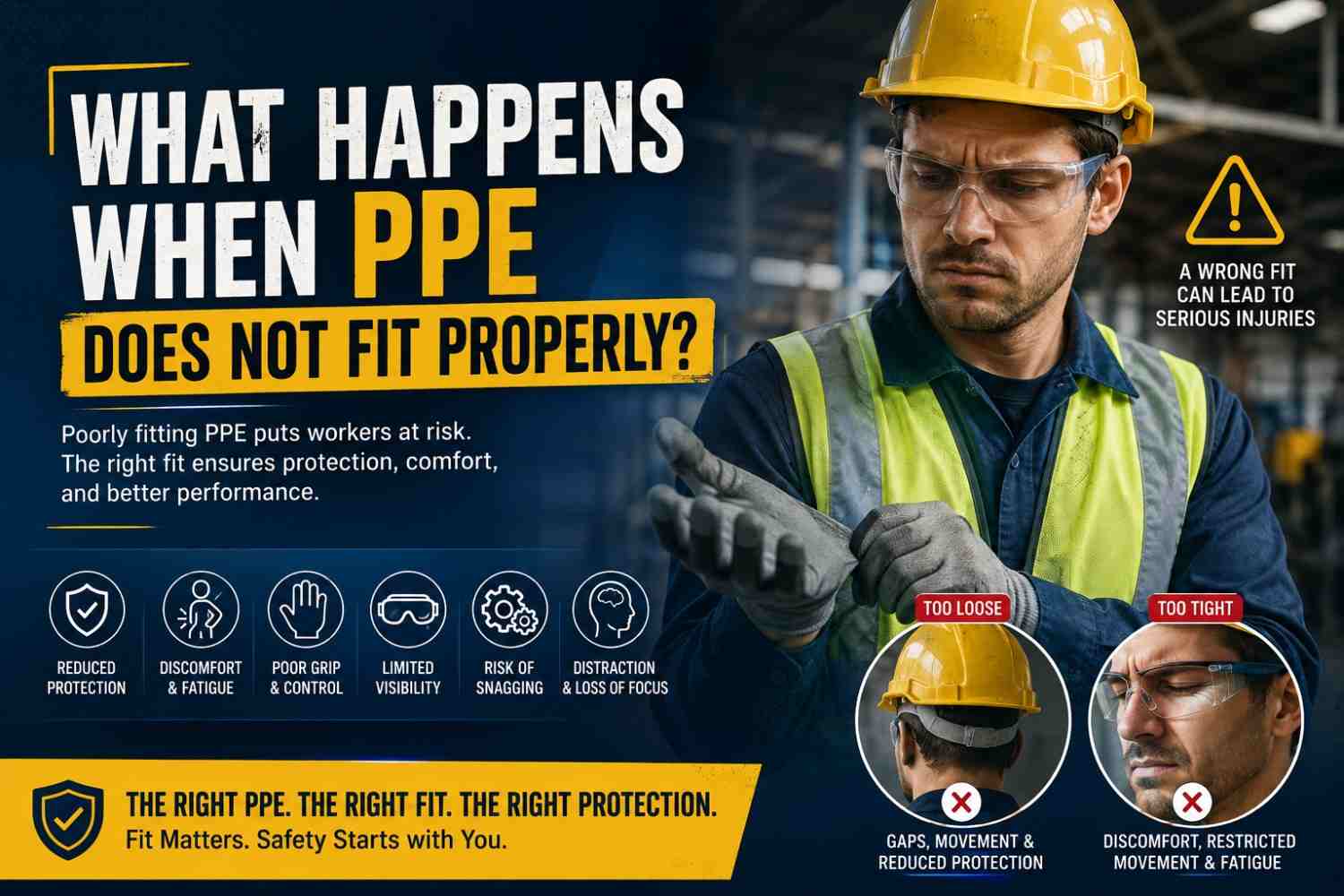
Personal protection equipment (PPE) shields workers against hazards such as chemicals, dust, flying objects, heat, noise, and electrical risks. However, wearing PPE does not always imply a worker is properly protected.
When PPE does not fit properly, it may not provide the intended level of protection. It can also make work uncomfortable, limit movement, restrict visibility, and require workers to modify or remove PPE during a task.
A strong PPE program should therefore do more than just provide safety equipment. The equipment should be the appropriate type, size, and fit for the individual and the job.
Why Does Proper PPE Fit Matter?
Proper fit allows PPE to remain in the correct position while a worker does typical tasks. Throughout their shifts, workers may bend, stretch, walk, climb, lift, or use tools. PPE should be kept secure during these transfers.
A poor fit might result in gaps or movement between the worker and the protective equipment. This reduces the level of protection and may make the equipment more difficult to use.
For example, unfastened safety glasses can drift away from the eyes. Oversized gloves might make it difficult to grasp a tool. A loose safety helmet can shift when a worker bends down. A respirator that does not seal properly may let hazardous air in.
This is why PPE fit is a critical component of workplace safety, not just comfort. Properly fitted PPE can increase worker protection and reduce the chance of workplace injuries, allowing companies to avoid the costs caused with workplace injuries.
What Can Happen When PPE Is Too Loose?
PPE that is too loose may move while working. When this occurs, the equipment may no longer cover the region it was designed to protect.
Loose PPE can also affect how a worker completes a task. Gloves may impair grip, glasses may slip down, and protective clothes may get in the way.
In some cases, unfastened PPE might cause an additional occupational hazard. Loose clothing or equipment might become stuck in moving machinery.
Common issues with loose PPE are:
- PPE going out of position.
- Reduced protection.
- Poor grasp or control.
- Frequent adjustments
- Reduced concentration.
- Increased chances of snagging
The actual danger is determined by the PPE used and the work being performed.
What Can Happen When PPE Is Too Tight?
Too-tight PPE might also be problematic. It may impede movement and cause discomfort over a long work shift.
Tight gloves might make it difficult to move the fingertips. Tight safety footwear might make your feet uncomfortable. Tight protective equipment might make it difficult to bend, reach, and climb.
Discomfort might also influence PPE usage. If a worker finds their PPE irritating or difficult to wear, they may change it frequently or remove it while at work.
The idea is not to have PPE as tight as possible. The goal is to achieve a secure and comfortable fit with no additional pressure or restriction.
Poorly Fitting PPE Can Reduce Protection
The primary objective of PPE is to provide a protective barrier between the worker and the hazard. Poor fit might weaken the barrier.
Consider using safety eyewear around a chemical splash threat. If the goggles do not fit properly, there may be an undesirable space around the face. This may lessen the protection given by the goggles.
The same approach applies to different types of personal protective equipment. To function properly, protective equipment must remain in the correct position.
This is especially true when the PPE is intended to form a seal or cover a specific area of the body.
Poor Fit Can Make Work More Difficult
PPE should protect workers without making routine jobs more complicated.
When equipment does not fit properly, workers may have difficulty using tools, operating machinery, or moving around the workplace.
For example, a worker wearing too-large gloves may struggle to pick up small parts. A worker using poorly fitted safety glasses may have to repeatedly push them back into place.
These minor issues might become annoying when they persist during a whole shift.
A good fit allows workers to focus more comfortably on their tasks while still providing the necessary protection.
Poorly Fitting Gloves
Gloves must provide protection while yet allowing the worker to use equipment and materials.
Gloves that are too big can leave excess material around the fingers. This might make intricate work challenging. Gloves that are too small might limit mobility and cause discomfort.
The appropriate size is especially critical for jobs that demand hand control, such as:
- Machine operation.
- Assembly work.
- Maintenance
- Material Handling
- Electrical job.
- Chemical Handling
The size of the glove isn’t the sole consideration. The glove’s material, design, thickness, and intended purpose should also correspond to the work.
Poorly Fitting Safety Glasses and Goggles
Eye protection should stay steady as the worker moves.
If safety glasses are overly loose, they may slip down or move away from their proper position. If they are too small, they may generate pressure and provide insufficient coverage.
Safety Goggles designed for chemical splash protection must also fit well around the eyes.
Workers should be able to see clearly when using eye protection. If the equipment is constantly moving or causing discomfort, the fit should be reviewed.
Poorly Fitting Respirators
Respirator fit is especially crucial because some respirators require a proper seal against the face.
If a tight-fitting respirator does not seal properly, polluted air might penetrate around the edges.
Several factors can influence fit, including:
- Incorrect size.
- Incorrect placement.
- Facial hair
- Changes in the Face Seal
- Damaged equipment
- Poor adjustment.
Workers who wear tight-fitting respirators may require fit testing as part of their occupational respiratory protection program.
A respirator should not be chosen solely because it feels comfortable. It must also provide adequate protection for the relevant hazard.
Poorly Fitting Safety Helmets
A proper fit Safety helmet and hard hats must remain securely on the worker’s head. A loose helmet may shift when a worker bends or moves their head. If it is overly tight, it may cause discomfort during a lengthy shift. Most safety helmets feature an adjustable or suspension system. Workers should apply these modifications in accordance with the manufacturer’s recommendations.
The helmet should remain stable without exerting undue pressure. Workers should inspect the helmet on a regular basis for cracks, corrosion, or worn components.
Poorly Fitting Safety Footwear
Safety footwear should safeguard the worker while also allowing for comfortable walking and standing. Oversized shoes may allow the foot to slide within. This might compromise stability and produce discomfort. Footwear that is too small might cause pressure and discomfort during long shifts.
The correct safety footwear should also give the necessary job safety. Depending on the work, this could include toe protection, slip resistance, puncture resistance, and other qualities.
Poor PPE Fit Can Affect Compliance
One of the most serious issues with improper PPE fit is that employees may cease utilizing the equipment correctly.
A worker may remove gloves because they make a task more difficult. Someone may push safety glasses onto their head since they are slipping down. Another worker may loosen protective equipment because it causes discomfort.
This causes a problem even when the PPE is appropriate. Workers are more likely to utilize PPE correctly when it fits well, feels comfortable, and allows them to carry out their duties regularly.
As a result, when choosing personal protective equipment, comfort and fit should be considered.
Does One PPE Size Fit Everyone?
No. Workers have varying body types, hand sizes, facial features, and physical requirements. A PPE product designed for one worker may not suit another in the same way. Employers may need to provide varying sizes or models of the same type of PPE.
This is particularly crucial for:
- Gloves
- Safety footwear
- Safety glasses
- Respirators
- Protective clothes
- Safety helmets
Workers should be able to report fit issues and request a suitable substitute as needed.
How Can Workers Check PPE Fit?
Workers should inspect their personal protective equipment (PPE) before beginning work. The device should remain in position throughout regular movement and not cause unnecessary pain or pressure.
A simple fit check can contain the following questions:
- Does the PPE remain in the correct position?
- Can I move normally?
- Can I see clearly?
- Can I hold and control my tools?
- Does the PPE cause unpleasant pressure?
- Are there any undesired gaps?
- Can I properly tweak it?
If the answer to any of these questions is no, the PPE may need to be updated, replaced, or modified.
Workers should not change personal protective equipment (PPE) in any way that might reduce its protective function.
What Should Employers Do About Poor PPE Fit?
Employers should consider fit while choosing PPE. The equipment should provide adequate protection while also being appropriate for the persons who will use it. Workers can provide valuable input because they use the equipment for real-world tasks. If multiple employees report the same fit issue, the PPE selection may need to be revisited. Employers should also instruct employees on how to wear, adjust, inspect, clean, and store PPE.
Replacement PPE may also be required if the equipment becomes damaged or cannot be adjusted appropriately.
PPE Fit Is Especially Important When Using Multiple Items
Workers frequently require more than one form of PPE at the same time. During a single task, a worker may wear safety glasses, a respirator, gloves, protective clothes, and a safety helmet.
These objects should function together. One piece of PPE should not force another out of place. Gloves should be used with protective sleeves. Eye protection should be combined with facial protection. When wearing other equipment, a respirator should still fit properly. PPE compatibility should be examined during the selecting process.
Why Worker Feedback Matters
Workers are frequently the first to detect a PPE fit issue. They may notice that a glove makes it difficult to wield a tool or that safety glasses are slipping. They may also find that protective equipment limits movement.
These concerns need to be treated seriously. A good PPE selection involves more than just choosing equipment with the appropriate level of protection. It is also about selecting equipment that employees can utilize correctly throughout their shift.
Final Thoughts
PPE is a crucial part of workplace safety, but it must fit properly to perform its function.
PPE that is too loose can slip out of place, whereas PPE that is too tight can limit movement and cause discomfort. Both issues might have an impact on workers’ safety and may prompt them to change or remove their equipment.
The most effective technique is to choose PPE based on the hazard, task, and worker. Various sizes and designs may be required for various personnel.
Workers should inspect their PPE before use and report any issues with fit. Employers should take this input seriously and offer appropriate alternatives if needed.
Proper PPE fit is a fundamental aspect of workplace safety, but it may make a significant impact in how effectively protective equipment performs and how frequently workers use it.