

Introduction
In today’s fast-paced industrial landscape, the efficiency of your material handling operations can make or break your bottom line. Whether you are managing a sprawling port facility, a busy manufacturing floor, a steel fabrication yard, or a logistics warehouse, the crane you choose is not just a piece of equipment — it’s the backbone of your entire operational workflow.
Yet, with dozens of crane types on the market and hundreds of manufacturers competing for your business, making the right purchasing decision has never been more challenging. Buyers often struggle with fundamental questions: Should I go with an overhead crane or a gantry crane? What lifting capacity do I need? Which manufacturer can I actually trust for after-sales support?
This guide is designed to cut through the noise and give industrial buyers, procurement engineers, and plant managers a clear, structured path to choosing the right crane — the first time.
Why Crane Selection Is More Critical Than Ever
The global crane market is projected to surpass $48 billion by 2030, driven by booming infrastructure investments, port expansions, and the rapid growth of smart manufacturing. As capital expenditures rise, so does the cost of getting it wrong.
A poorly matched crane leads to:
- Downtime and productivity loss due to underperformance
- Safety hazards from overloading or incorrect structural fit
- High maintenance costs from operating outside design parameters
- Compliance violations that expose businesses to regulatory penalties
Choosing the right crane — matched to your load type, span, duty cycle, environment, and budget — is not a minor operational decision. It’s a strategic one.
Understanding the Industrial Crane Landscape
Before diving into selection criteria, let’s map out the most common crane types used across industries today:
-
Overhead Cranes (EOT Cranes / Bridge Cranes)
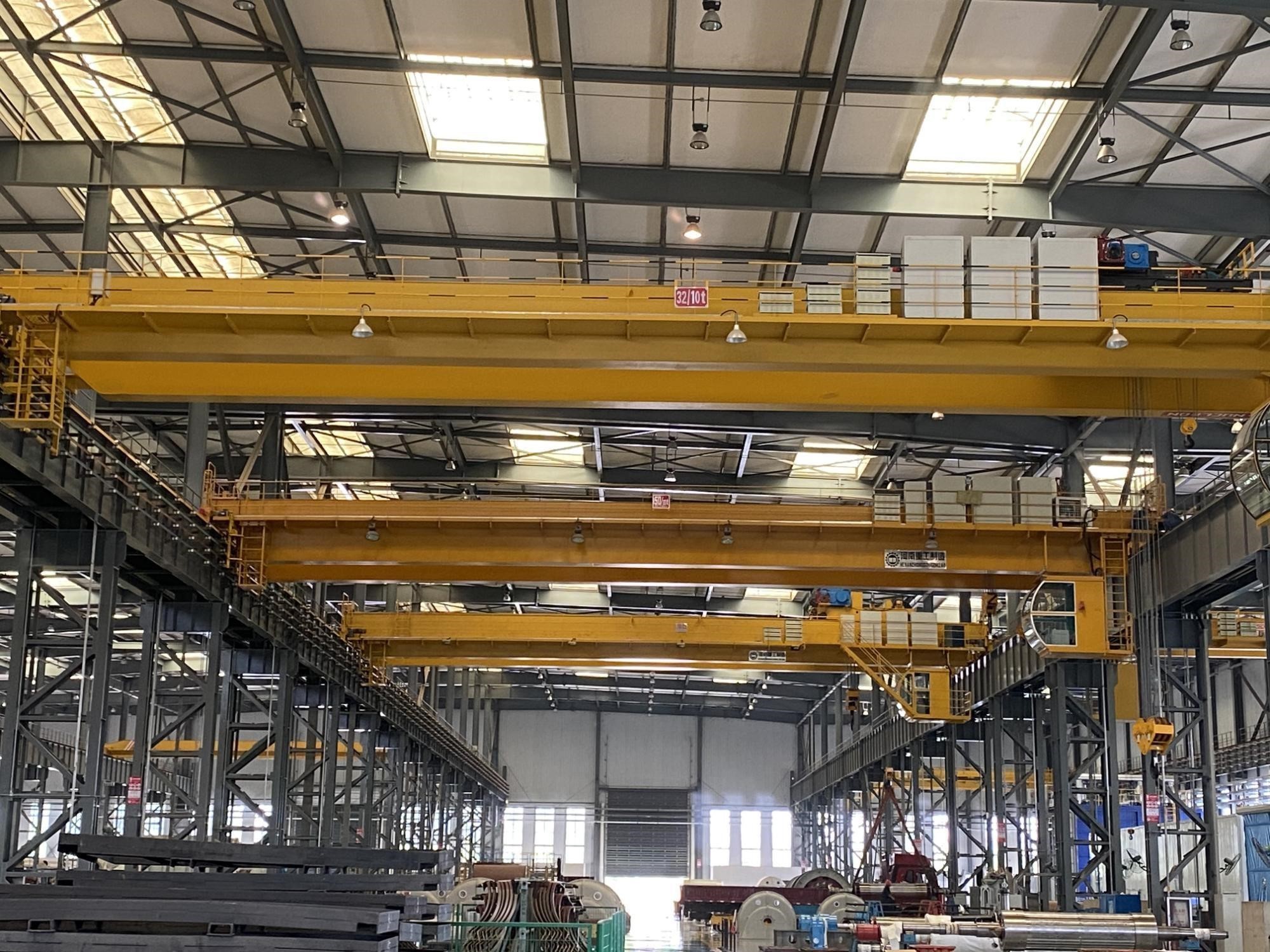
Overhead cranes, also known as Electric Overhead Traveling (EOT) cranes or bridge cranes, are mounted on elevated runways fixed to the building structure. They move along a horizontal beam (bridge) that spans the width of a facility.
Best For:
- Indoor manufacturing plants and workshops
- Steel mills, foundries, and automotive assembly lines
- Facilities where floor space must remain unobstructed
Key Advantages:
- Full floor coverage within a facility
- High lifting capacities (from a few tons to several hundred tons)
- Smooth and precise load control
-
Gantry Cranes
Gantry cranes operate on ground-level rails or rubber-tired wheels, supported by legs on either side. They are the go-to solution for outdoor applications and facilities without structural ceiling supports.
Best For:
- Outdoor yards, shipyards, and container terminals
- Precast concrete plants and rail loading operations
- Facilities unable to support an overhead runway structure
Key Types Include:
- RTG (Rubber Tired Gantry) Cranes — mobile and used extensively in container ports
- RMG (Rail Mounted Gantry) Cranes — fixed rail cranes ideal for automated terminals
- Portable Gantry Cranes — lightweight and repositionable for workshops and maintenance bays
-
Jib Cranes
Jib cranes feature a horizontal arm (jib or boom) attached to a wall or pillar. They are ideal for localized lifting in a fixed work zone.
Best For:
- Machine shops and assembly workstations
- Loading docks and maintenance stations
- Supplementary lifting alongside an overhead crane system
-
KBK Cranes (Light Rail Crane Systems)
KBK cranes are lightweight, modular suspension crane systems that offer flexibility in layout and configuration.
Best For:
- Assembly lines requiring flexible routing
- Light-duty lifting in workshops and warehouses
- Facilities with low ceiling heights
Overhead Crane vs. Gantry Crane: The Core Decision
For most industrial buyers, the first and most critical fork in the road is choosing between an overhead crane and a gantry crane. These two systems represent the dominant share of industrial crane installations worldwide — and they serve fundamentally different operational needs.
The decision isn’t simply about one being “better” than the other. It’s about matching the right structure to your application, facility, and long-term operational goals.
Key factors to consider include:
- Facility Structure: Does your building have the structural integrity to support an elevated runway system? If not, a gantry crane’s self-supporting legs offer a compelling alternative.
- Indoor vs. Outdoor Use: Overhead cranes thrive in controlled indoor environments, while gantry cranes are engineered to operate effectively in open-air yards and ports.
- Coverage Area: Overhead cranes can cover an entire bay end-to-end, whereas gantry cranes offer linear travel along their runway.
- Initial Investment vs. Long-Term ROI: Overhead systems may require structural reinforcement, increasing upfront costs, while gantry cranes often present lower installation costs but may have mobility trade-offs.
- Load Characteristics: Very heavy or irregularly shaped loads (e.g., ship blocks, precast beams, containers) often favor gantry configurations with wider spans.
For a thorough technical breakdown with real-world use cases, load comparisons, and decision frameworks, this overhead crane vs gantry crane guide is an excellent resource that walks buyers through each differentiating factor in detail.
5 Essential Criteria for Evaluating Any Crane Manufacturer
Once you have identified the crane type you need, the next critical step is selecting a manufacturer you can rely on — not just for the initial purchase, but for the entire lifecycle of the equipment.
Here are the five non-negotiable criteria every procurement team should evaluate:
-
Engineering Depth and R&D Capability
A manufacturer’s ability to design and engineer cranes for specific, non-standard applications separates industry leaders from commodity suppliers. Look for companies with dedicated engineering teams, in-house R&D centers, and a proven track record of solving complex lifting challenges.
What to Ask:
- How many engineers does the company employ?
- Do they have the capability to design customized, application-specific crane solutions?
- What is their innovation pipeline?
-
Patent Portfolio and Industry Recognition
Patents are a tangible measure of a manufacturer’s commitment to innovation. A robust patent portfolio signals that the company invests continuously in improving its products — which translates directly into better performance, safety, and reliability for buyers.
Industry association membership is equally telling. Manufacturers that participate in national or international crane industry bodies are held to higher technical and ethical standards.
-
Global Export Experience
A crane manufacturer’s export footprint tells you a great deal about their product quality and service infrastructure. Cranes exported to markets like the United States, Germany, Australia, and Canada must comply with stringent safety standards such as OSHA, CMAA, and FEM. If a manufacturer is successfully exporting to these markets, it’s a strong quality signal.
-
Full-Cycle Service Capability
Your relationship with a crane manufacturer doesn’t end at delivery. Installation, commissioning, operator training, spare parts availability, and ongoing maintenance support are just as important as the crane itself — especially for heavy-duty industrial applications where downtime carries a high cost.
Look for manufacturers who offer:
- On-site installation and commissioning teams
- Comprehensive after-sales service agreements
- Readily available spare parts with fast global logistics
- Responsive technical support (remote and on-site)
-
Verified Customer References Across Industries
The most reliable proof of a manufacturer’s capability is its track record. Seek out companies with verifiable installations across a diverse range of industries — from steel mills and shipyards to logistics centers and construction sites.
Spotlight: ZGC Crane Group — A Legacy of Industrial Lifting Excellence
When evaluating crane manufacturers against the criteria above, few companies in the world can match the depth of experience, engineering capability, and global reach of
Founded in 1983, Zhonggong Group has spent over four decades building one of the world’s most comprehensive crane manufacturing ecosystems. With a facility spanning more than 240,000 square meters and a workforce of over 1,200 employees — including more than 200 dedicated engineers — the group operates at a scale that few competitors can match.
Product Portfolio That Covers Every Application
Through its 9 subsidiaries, ZGC Crane Group offers a complete lineup of industrial lifting solutions:
| Crane Type | Primary Application |
| Overhead / EOT Cranes | Factories, steel mills, assembly lines |
| Gantry Cranes | Outdoor yards, ports, construction sites |
| Container Handling Cranes | Container terminals, logistics hubs |
| RTG Cranes | Rubber-tired port container operations |
| RMG Cranes | Automated rail-mounted terminal operations |
| KBK Cranes | Light-duty modular workshop systems |
| Jib Cranes | Workstation and localized lifting |
| Portable Gantry Cranes | Maintenance bays and mobile lifting |
| Winches & Hoists | Auxiliary lifting across all sectors |
This breadth of product coverage means buyers can work with a single, trusted partner across multiple facilities, crane types, and applications — simplifying procurement, standardizing spare parts, and streamlining after-sales support.
Innovation Backed by 200+ Patents
ZGC Crane Group holds over 200 patents, a direct testament to their commitment to continuous innovation. As a member unit of the Bridge Crane branch of the China Heavy Machinery Industry Association, the group adheres to the highest standards of technical rigor and quality assurance.
Their proprietary “YuZhong” brand has earned the trust of over 1,000 internationally recognized companies across industries as diverse as automotive manufacturing, port logistics, steel production, construction, and energy.
Truly Global Reach
ZGC Crane Group’s cranes operate across six continents. Their products have been successfully exported to: Americas: United States, Canada, Mexico, Brazil Europe: United Kingdom, Germany, Italy, Spain, Poland Asia-Pacific: Indonesia, Vietnam, Philippines, Thailand, Cambodia Middle East & Africa: Saudi Arabia, UAE, Egypt, South Africa Central Asia: Russia, Uzbekistan
This global export record reflects not only manufacturing quality, but also the group’s ability to meet the demanding safety and compliance standards of markets like the US, Germany, and Australia — where certification requirements are among the strictest in the world.
Common Mistakes Buyers Make When Purchasing Industrial Cranes
Even experienced procurement teams fall into avoidable traps. Here are the most common mistakes — and how to sidestep them:
Mistake 1: Underspecifying Duty Cycle
Many buyers focus heavily on lifting capacity but underestimate the importance of duty cycle. A crane rated for 10 tons but classified for light-duty use will fail prematurely in a high-frequency industrial environment. Always specify your crane’s expected number of lifts per hour, hours of operation per day, and load spectrum.
Mistake 2: Ignoring the Total Cost of Ownership (TCO)
A lower upfront price often hides higher long-term costs in maintenance, energy consumption, and spare parts. Evaluate manufacturers based on 10–15 year TCO, not just the purchase price.
Mistake 3: Overlooking Environmental Conditions
Cranes operating in coastal environments, extreme temperatures, chemically aggressive atmospheres, or explosive-rated zones require specialized coatings, sealing, and electrical components. Always disclose environmental conditions to your manufacturer upfront. Failing to do so can result in accelerated corrosion, electrical failures, and catastrophic safety incidents.
Key Environmental Factors to Communicate:
- Ambient temperature range (min/max)
- Humidity and exposure to moisture or rain
- Presence of corrosive chemicals, dust, or abrasive particles
- Altitude (affects motor performance and cooling)
- Seismic zone classification (critical for fixed installations)
- Explosive or flammable material handling (ATEX/IECEx zone requirements)
A reputable manufacturer like ZGC Crane Group will proactively ask these questions during the specification phase — ensuring the delivered crane is purpose-built for your real-world operating environment, not just your ideal one.
Mistake 4: Skipping Site Assessment and Load Path Analysis
Many buyers submit a basic RFQ without conducting a proper site assessment. The result? A crane arrives that doesn’t fit the building’s structural capacity, has insufficient headroom, or conflicts with existing infrastructure like sprinkler systems, lighting rigs, or HVAC ducts.
Before issuing any crane tender, ensure your team (or the manufacturer’s engineering team) has reviewed:
- Structural drawings of the building or outdoor support structure
- Available headroom from floor to ceiling or structural beam
- Existing runway systems and their load-bearing capacity
- Clearance from walls, columns, and adjacent equipment
- Load path from pick point to deposit point
Skipping this step is one of the most expensive mistakes in crane procurement — often requiring costly structural upgrades or, in worst cases, a complete crane redesign after delivery.
Mistake 5: Choosing a Supplier Without After-Sales Infrastructure
It’s tempting to award a crane contract to the lowest bidder without considering what happens after the crane is delivered. For capital equipment expected to operate for 20–30 years, after-sales support is not optional — it’s mission-critical.
Ask every potential manufacturer:
- Where are your nearest service engineers located relative to my site?
- What is your guaranteed response time for critical breakdowns?
- Do you maintain a local spare parts warehouse or distribution network?
- Can you provide a preventive maintenance schedule and service contract?
A manufacturer that cannot answer these questions confidently is a significant operational risk — regardless of how competitive their initial pricing appears.
Key Technical Specifications Every Buyer Must Understand
To communicate effectively with crane manufacturers and evaluate proposals with confidence, every buyer should be familiar with the following technical parameters:
-
Lifting Capacity (Safe Working Load / SWL)
Expressed in metric tons (t) or kilograms (kg), this is the maximum load the crane is rated to lift safely. Always apply a design factor of safety — typically 1.25x to 1.5x your heaviest expected load — to account for dynamic forces, load sway, and future capacity growth.
-
Span
The horizontal distance between the rails or support points on which the crane travels. For overhead cranes, this is the distance between the runway rails. For gantry cranes, it is the distance between the supporting legs. Span directly affects the crane’s structural weight, cost, and deflection under load.
-
Lift Height (Hook Height)
The vertical distance from the floor to the crane hook at maximum elevation. This must account for the height of the tallest load, rigging hardware (slings, shackles, spreader beams), and the hoist itself — leaving sufficient clearance above.
-
Travel Speeds
Cranes have three primary travel motions, each with its own speed:
- Hoist speed: The rate at which the hook lifts or lowers (typically 1–20 m/min for industrial cranes)
- Trolley traverse speed: The cross-travel speed of the hoist unit along the bridge beam
- Bridge travel speed: The longitudinal travel speed of the entire crane along the runway
Higher speeds improve productivity but require more sophisticated controls, drives, and end-stop buffering systems.
-
Duty Class / FEM/ISO Classification
The duty class defines how hard the crane will work over its lifetime. International standards (FEM 1.001, ISO 4301) classify cranes from M1 (lightest) to M8 (heaviest) based on load spectrum and number of operating cycles. Always specify the correct duty class — undersizing this parameter is one of the most common and costly specification errors.
| Duty Class | Typical Application |
| M1 – M2 | Infrequent lifts, maintenance hoists |
| M3 – M4 | Light workshop use, occasional lifts |
| M5 – M6 | General manufacturing, multiple shifts |
| M7 | Intensive use, steel mills, foundries |
| M8 | Continuous heavy-duty, magnet cranes |
-
Power Supply and Control System
Specify the local electrical supply (voltage, frequency, phases) and confirm the manufacturer can supply compatible motors, drives, and control panels. Modern industrial cranes increasingly feature:
- Variable Frequency Drives (VFDs): For smooth acceleration/deceleration and energy efficiency
- Anti-sway control systems: Reducing load oscillation for precision placement
- Load limiters: Preventing dangerous overload conditions
- Remote diagnostics and IoT connectivity: Enabling predictive maintenance via real-time data monitoring
Industry-Specific Crane Requirements: A Snapshot
Different industries place unique demands on crane systems. Here’s a quick-reference overview to help buyers align their specifications with industry norms:
Steel & Metallurgy
- Crane Type: Overhead EOT cranes, ladle cranes, coil handling cranes
- Key Requirements: High-temperature resistance, heavy duty cycles (M7–M8), spark-proof components, redundant safety systems for molten metal handling
Ports & Shipping Terminals
- Crane Type: RTG cranes, RMG cranes, ship-to-shore (STS) cranes, container handling cranes
- Key Requirements: Corrosion-resistant coatings for marine environments, high-speed operations, automation-ready control architecture, wide span capabilities
Construction & Precast Concrete
- Crane Type: Gantry cranes, overhead cranes, portable gantry cranes
- Key Requirements: Outdoor weatherproofing, wide span for large precast elements, durability in dusty and high-UV environments
Automotive Manufacturing
- Crane Type: KBK light rail systems, overhead cranes, jib cranes
- Key Requirements: Precision control for delicate components, clean-room compatibility for paint shops, ergonomic workstation integration, anti-sway systems
Power Generation & Energy
- Crane Type: Overhead cranes, gantry cranes, winch systems
- Key Requirements: ATEX/IECEx certification for explosive environments (oil refineries, gas plants), ultra-high lifting capacities for turbine and generator handling, redundant brake systems
Logistics & Warehousing
- Crane Type: KBK cranes, jib cranes, light-duty overhead cranes
- Key Requirements: Fast cycle times, ergonomic operator controls, integration with warehouse management systems (WMS), compact designs for space efficiency
The Crane Procurement Process: A Step-by-Step Roadmap
To help streamline your purchasing journey, here is a proven procurement roadmap that aligns buyer teams, technical requirements, and supplier evaluation into a clear, repeatable process:
Step 1: Define the Application
Document every aspect of your lifting task — load type and weight, pick and deposit points, frequency of lifts, environmental conditions, and any special handling requirements (hazardous materials, fragile loads, high temperatures, etc.).
Step 2: Conduct a Site Survey
Either personally or with the assistance of a qualified engineer, survey the proposed installation site and capture all structural, dimensional, and infrastructure data relevant to the crane installation.
Step 3: Develop a Technical Specification
Translate your application data and site survey into a formal technical specification document. This document governs the entire procurement process and should clearly define:
- Crane type, capacity, and span
- Duty class and lifecycle expectations
- Electrical specifications
- Safety systems and certifications required
- After-sales service requirements
Step 4: Issue a Request for Quotation (RFQ)
Issue your technical specification to a shortlist of 3–5 qualified manufacturers. Ensure each bidder responds with a fully compliant technical proposal — not a generic catalogue quote.
Step 5: Evaluate Proposals on a Weighted Scorecard
Avoid selecting on price alone. Use a weighted evaluation matrix that scores manufacturers across:
- Technical compliance with specification (30%)
- Manufacturing quality and certifications (20%)
- After-sales service capability (20%)
- Global reference projects (15%)
- Price and commercial terms (15%)
Step 6: Conduct Factory Acceptance Testing (FAT)
Before the crane ships, require a Factory Acceptance Test (FAT) at the manufacturer’s facility. This verifies that the crane meets all specified parameters — load testing, speed verification, safety system checks, and electrical certification — before it leaves the factory.
Step 7: Manage Installation and Commissioning
Work with the manufacturer’s technical team to oversee on-site installation, runway alignment, load testing, and operator training. Ensure all commissioning records and test certificates are formally documented and archived.
Step 8: Establish a Preventive Maintenance Program
From day one, implement a structured preventive maintenance schedule aligned with the manufacturer’s recommendations and local safety regulations. This maximizes crane lifespan, minimizes unplanned downtime, and keeps your operations in regulatory compliance.
Questions to Ask Before Signing Any Crane Contract
Before committing to any crane purchase, make sure you have clear, documented answers to the following questions:
- Is the crane fully compliant with applicable local and international safety standards (e.g., OSHA, CMAA, FEM, ISO, CE, AS)?
- What is the guaranteed delivery timeline, and what are the penalties for delays?
- What warranty coverage is provided, and what does it specifically include/exclude?
- Are spare parts guaranteed to be available, and for how long after the crane is delivered?
- What is the crane’s expected service life, and what major overhauls will be required at what intervals?
- Does the manufacturer carry adequate product liability insurance?
- Can the manufacturer provide references from similar applications in my region or industry?
- What training is provided to operators and maintenance personnel?
A reputable, world-class manufacturer will answer every one of these questions with transparency and detailed documentation. If a supplier is evasive or vague on any of these points, treat it as a serious red flag.
The Future of Industrial Cranes: Smart Lifting Is Here
The crane industry is undergoing a profound transformation, driven by automation, digitalization, and sustainability imperatives. Forward-thinking buyers should be aware of the key technology trends shaping the next generation of industrial lifting systems:
Automation and Semi-Automation
Modern RTG and RMG cranes at major container terminals are increasingly operating autonomously — using laser positioning, machine vision, and AI-driven control systems to stack and retrieve containers without human intervention. Even in general industry, semi-automated overhead cranes are reducing operator fatigue and improving cycle times.
IoT-Enabled Predictive Maintenance
Smart cranes equipped with vibration sensors, temperature monitors, load cells, and operational counters can transmit real-time data to cloud platforms — enabling predictive maintenance algorithms to identify potential failures before they cause downtime. This shift from reactive to predictive maintenance is saving industrial operators millions in unplanned shutdown costs annually.
Energy Recovery and Green Crane Technology
Modern crane drives increasingly incorporate regenerative braking systems that capture and return energy to the grid during lowering operations — reducing energy consumption by up to 30% in high-cycle applications. Combined with LED lighting systems and energy-efficient motors, today’s cranes are dramatically more sustainable than their predecessors.
Digital Twin Technology
Leading manufacturers are developing digital twin models of their crane systems — virtual replicas that allow operators and engineers to simulate load scenarios, test control parameter changes, and plan maintenance interventions without touching the physical crane. This technology is rapidly moving from research labs into real-world industrial applications.
Make Your Crane Investment Count
Selecting an industrial crane is a long-term capital investment that will directly impact your operational efficiency, safety record, and bottom line for the next 20–30 years. The stakes are simply too high to approach this decision casually.
The most successful buyers are those who invest time upfront — clearly defining their application, rigorously evaluating manufacturers, and selecting a partner with the engineering depth, global experience, and service infrastructure to support them throughout the crane’s entire lifecycle.
When it comes to trusted global crane manufacturers with a track record spanning more than four decades, ZGC Crane Group stands in a class of its own — combining world-class engineering, a comprehensive product portfolio, over 200 patents, and proven performance across 1,000+ global customers in virtually every major industrial sector.
If you’re at the early stage of evaluating your crane options and are wrestling with the foundational question of which crane architecture is right for your facility, start with this detailed overhead crane vs gantry crane guide — it provides a comprehensive, side-by-side technical comparison that will sharpen your thinking and give your procurement team a solid foundation for the decisions ahead.
The right crane, from the right manufacturer, with the right support — that’s not just a purchase. That’s a competitive advantage.