

Food safety is a critical component of any kitchen at home, in restaurants, or in large food processing plants. Many people believe that all disposable gloves are the same, however gloves used for cooking and food preparation frequently fulfill various functions. Understanding these distinctions helps to prevent contamination, maintains food quality, and creates a safer environment for everybody.
In this article, we’ll go over the distinctions between cooking gloves and food prep gloves, when to use each type, and why selecting the appropriate gloves is important for food safety.
What Is the Difference Between Gloves for Cooking and Gloves for Food Prep?
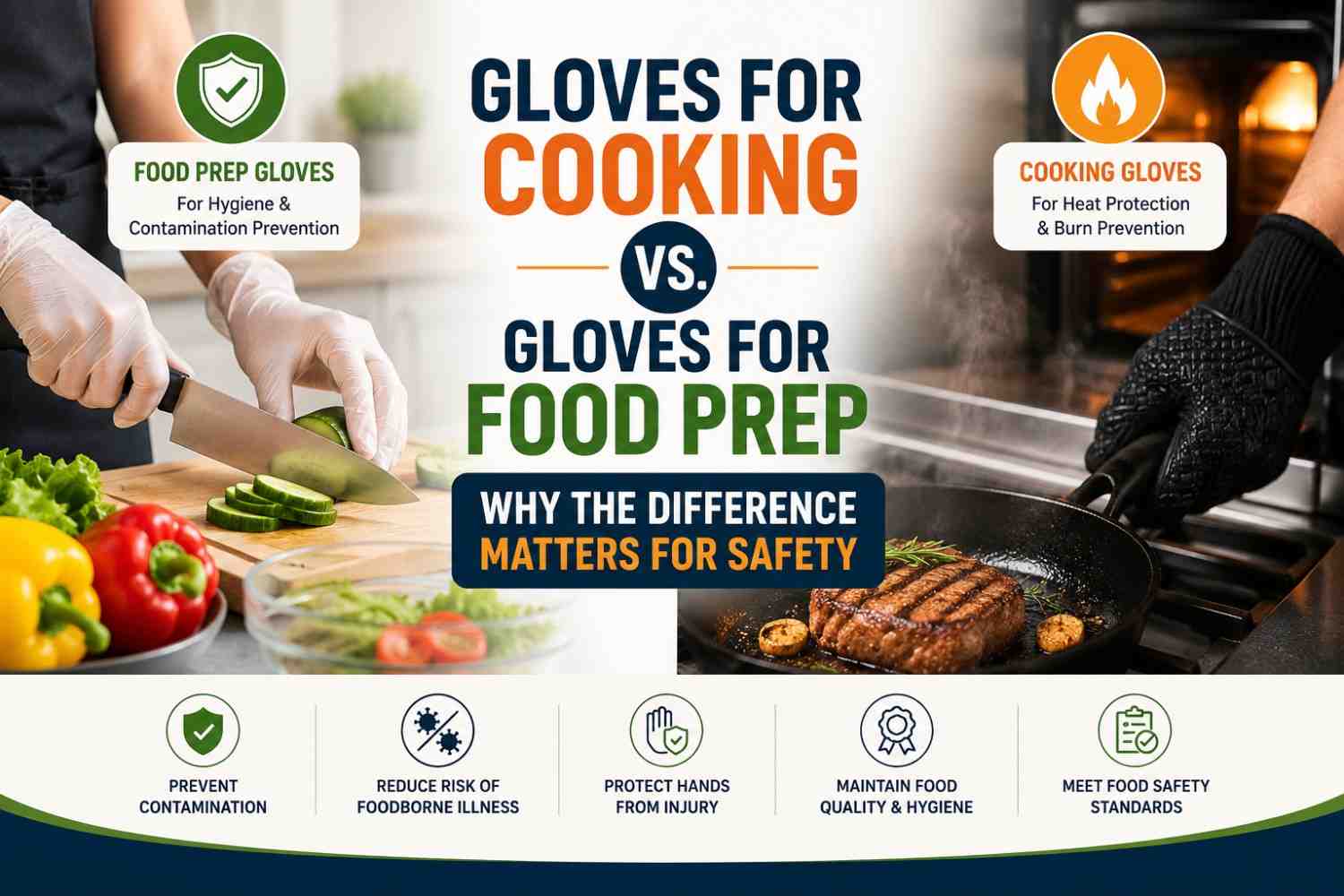
The key difference is that food prep gloves are intended for contamination when handling raw or ready-to-eat items, whereas cooking gloves are primarily used to protect hands from heat, grease, and burns during the cooking process.
Food prep gloves emphasize hygiene and food safety. Cooking gloves are designed to withstand heat and protect your hands. Using the incorrect sort of glove increases the danger of cross-contamination or harm.
You May Like – Why Gloves Are Your Best Friend for Food Safety?
Why Does the Difference Matter for Safety?
The distinction is significant since each stage of food poses specific dangers. Food preparation necessitates hygiene, while cooking necessitates heat and hot surface protection.
Using the right gloves helps:
- Reduce bacterial contamination.
- Avoid cross-contamination between raw and cooked meals.
- Protect your hands from burns and hot oil droplets.
- Maintain food safety and hygiene.
- Maintain food safety requirements in commercial kitchens.
Even high-quality heat-resistant gloves may be unsuitable for direct food handling, and lightweight disposable food prep gloves provide little heat protection.
What Are Food Prep Gloves?
Food prep gloves are disposable gloves intended to preserve cleanliness and prevent the spread of bacteria, oils, and pollutants during food handling.
They are typically used for:
- Washing and chopping vegetables.
- Preparing salads.
- Handling raw meat, poultry, and seafood.
- Making sandwiches and ready-to-eat meals.
- Packaging food goods.
These gloves are often lightweight, allowing workers to maintain dexterity and accuracy.
Common Materials Used in Food Prep Gloves
Nitrile Gloves
Nitrile gloves are popular because of:
- latex-free.
- More resistant to punctures than latex.
- Offer a comfortable fit.
- Provide high food safety performance.
You May Read – Can You Use Nitrile Gloves for Food Prep?
Vinyl Gloves
Vinyl gloves are:
- Cost-effective.
- Ideal for low-risk tasks.
- Commonly used for short-term food preparation.
Read – Are Vinyl Gloves Food Safe?
Poly Gloves
The polyethylene gloves are:
- Loose and lightweight.
- Perfect for fast chores.
- Often found at bakeries and deli shops.
What Are Cooking Gloves?
Cooking gloves are designed to protect hands from extreme heat, hot equipment, and grease splashes when cooking.
They are typically used for:
- Remove trays from ovens.
- Handling grills and barbecue equipment.
- Work with hot pots and pans.
- Frying food.
- Smoking meat.
Cooking gloves, as opposed to disposable food preparation gloves, are heat-resistant and reusable.
Common Materials Used in Cooking Gloves
Silicone Gloves
Silicone gloves.
- High temperatures are difficult to tolerate.
- Provide a nonslip grip.
- They are easy to clean.
- Works effectively in both residential and commercial kitchens.
Aramid Fiber Gloves
Aramid gloves:
- Provides great heat resistance.
- Are frequently used for grilling and BBQ cookery.
- Offer flexibility and durability.
Cotton Gloves with Heat-Resistant Layers
The gloves:
- Increase comfort.
- Sweat can be absorbed.
- Protect your hands from moderate heat.
Can You Use Food Prep Gloves for Cooking?
No, disposable food prep gloves should not be used for cooking tasks that require heat since they can melt, tear, or fail to protect the hands from burns.
Disposable gloves are designed for cleanliness, not heat resistance.
Problems that can arise include:
- Burns and injuries.
- Melting of the glove material.
- Reduced grip on hot utensils.
- Food could be contaminated.
Nitrile gloves, for example, can withstand heated temperatures but should not be used in direct contact with hot pans or ovens.
Can Cooking Gloves Be Used for Food Preparation?
Cooking gloves are not suggested for direct food preparation since they are difficult to sterilize and may transfer pollutants.
Reusable gloves:
- If not thoroughly cleaned, microorganisms may become trapped.
- Contamination can spread from raw to cooked foods.
- Are frequently bulkier and less precise.
For handling ready-to-eat meals, disposable food-grade gloves are a safer option.
Food Preparation Risks Without Proper Gloves
Using improper gloves during food preparation raises the risk of contamination and foodborne illness.
- Bacteria found in raw meat can spread to plants, fruits, and cooked foods.
- Hands naturally contain bacteria that can contaminate food.
- Cross-contact with allergies such as nuts, dairy, or shellfish is possible if gloves are not changed appropriately.
- Some gloves that are not designed for food contact may introduce dangerous compounds into meals.
Cooking Risks Without Proper Gloves
Workers who do not wear heat-resistant gloves are more likely to get burned or injured.
Common hazards include:
- Hot oil splashes.
- Steam burns.
- Contact with the oven racks.
- Handling cast iron cookware.
- Exposure to barbecues and smokers.
Proper cooking gloves increase grip and prevent mishaps in busy kitchens.
When Should You Change Food Prep Gloves?
To avoid contamination, food preparation gloves should be replaced often.
Replace the gloves:
- After handling raw meat.
- Before handling cooked food.
- When switching jobs.
- If gloves are torn or damaged.
- After handling rubbish or cleaning products.
- After handling phones or non-food surfaces.
Wearing the same gloves for too long loses their purpose.
Best Practices for Safe Glove Use
Safe glove use entails choosing the appropriate glove type and properly applying it throughout the cooking and preparation procedure.
- Wash your hands before wearing gloves.
- Choose food-grade gloves.
- Change Gloves Frequently.
- Never wash disposable gloves.
- Use Heat-Resistant Gloves on Hot Equipment
- Keep your reusable gloves clean.
Gloves for Cooking vs. Gloves for Food Prep: Quick Comparison
| Feature | Food Prep Gloves | Cooking Gloves |
| Main Purpose | Hygiene and contamination prevention | Heat protection |
| Material | Nitrile, vinyl, polyethylene | Silicone, aramid, insulated fabric |
| Disposable | Usually yes | Usually no |
| Heat Resistance | Low | High |
| Suitable for Raw Food | Yes | Not ideal |
| Suitable for Ovens and Grills | No | Yes |
| Protection from Burns | Minimal | Excellent |
| Main Users | Food handlers, chefs, processors | Cooks, grill operators, bakers |
Which Gloves Should Commercial Kitchens Use?
Commercial kitchens frequently require both food prep and cooking gloves since various duties necessitate different levels of safety.
- A complete kitchen safety system usually includes:
- Disposable nitrile gloves for food preparation.
- Cooking gloves that can withstand high temperatures.
- Cut-resistant gloves for slicing.
- Cleaning gloves for sanitation work.
Using task-specific gloves increases safety, efficiency, and adherence to food safety laws.
You May Like – Which Disposable Gloves Are Truly Safe for Food? Nitrile vs Latex vs Vinyl
Final Thoughts
Cooking gloves and food preparation gloves cannot be used interchangeably since they serve various safety functions. Food preparation gloves prevent contamination, whereas cooking gloves protect against heat and burns.
Choosing the appropriate gloves for each task eliminates food safety hazards, protects workers, and contributes to good hygiene standards. Whether you are cooking at home or running a commercial kitchen, understanding these distinctions is critical for ensuring a safer and healthier food environment.
By wearing the proper gloves at the appropriate time, you not only protect yourself but also ensure that the food on the table is safe and of good quality.