

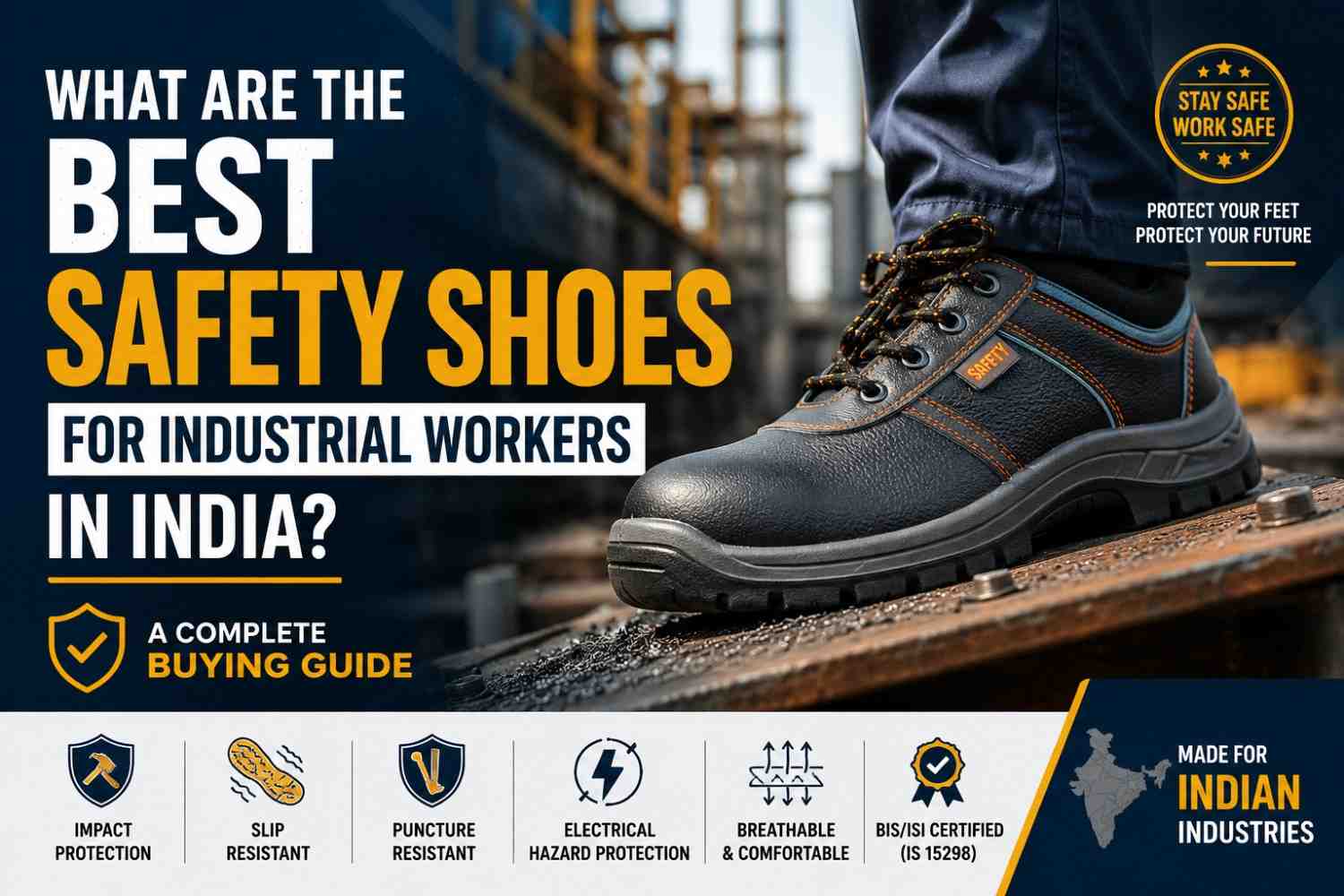
Industrial workplaces are some of the most demanding situations in the world. Every day, workers in manufacturing plants, building sites, warehouses, logistics facilities, mining operations, oil and gas projects, and engineering workshops face hazards that can cause catastrophic foot injuries. Workers face a variety of hazards on a daily basis, including falling tools, heavy machinery, sharp objects, slippery surfaces, electrical hazards, and chemical exposure.
This is why safety shoes are an essential item of personal protective equipment (PPE). A high-quality pair of safety shoes can help workers avoid injuries, improve comfort during long shifts, boost productivity, and assist employers in maintaining workplace safety compliance.
Many workers and employers in India continue to purchase safety footwear solely based on pricing. However, choosing the correct safety shoes necessitates a grasp of workplace risks, safety regulations, shoe materials, toe protection options, sole technology, and comfort features.
Our comprehensive reference covers everything industrial workers need to know about safety shoes, including their benefits, types, features, industry uses, safety regulations, maintenance practices, and how to select the best pair for each work environment.
What Are Safety Shoes?
Safety shoes are protective footwear that is specifically developed to lower the risk of foot injuries in hazardous work conditions.
Compared to conventional footwear, safety shoes are made of reinforced materials and protective components that protect workers against collisions, compression, punctures, slides, electrical dangers, chemicals, and harsh working conditions.
Modern safety shoes combine protection, durability, and comfort, making them ideal for workers who spend long periods standing, walking, climbing, lifting, or operating machinery.
Safety shoes are frequently used in:
- Construction Sites
- Manufacturing plants
- Warehouses
- Logistics Facilities
- Mining operations.
- The oil and gas industries
- Engineering Workshops
- Power generation facilities
- Automobile manufacture
- Chemical Processing Plants
Why Are Safety Shoes Important for Industrial Workers?
Safety shoes are important because they keep workers safe from industrial risks that might result in significant foot injuries and lost productivity.
Foot injuries are among the most common working hazards across all industrial sectors. A simple accident can lead to medical bills, lost workdays, decreased efficiency, and long-term health problems.
Safety shoes help to prevent:
- Crushed toes
- Puncture wounds.
- Slips and Falls
- Electric shocks
- Chemical burns.
- Foot tiredness.
- Ankle injuries.
Employers benefit from supplying suitable safety footwear because it reduces workplace accidents and helps them comply with occupational safety standards.
How Do Safety Shoes Protect Workers?
Safety shoes provide workers with protection through reinforced construction, impact-resistant toe caps, anti-slip bottoms, puncture-resistant midsoles, and specialist protective materials.
Different components of safety shoes offer various levels of protection.
Toe Protection
Protective toe caps protect workers from falling objects and compression injuries.
Slip Resistant
Specialized sole designs provide better traction on wet, greasy, and uneven surfaces.
Puncture Resistance
Steel or composite midsoles keep nails, metal fragments, and sharp items from penetrating the shoe.
Electrical Protection
Electrical hazard safety shoes lower the risk of electric shock.
Chemical Resistance
Certain safety shoes are intended to withstand exposure to oils, acids, and industrial chemicals.
Which Industries Require Safety Shoes?
Safety shoes are necessary in industries where workers are exposed to physical, mechanical, electrical, or chemical threats.
Construction Industry
Construction workers frequently encounter:
- Falling Tools
- Sharp materials.
- Concrete debris.
- Steel bars
- Heavy equipment.
Safety shoes serve to prevent injuries caused by these dangers.
Manufacturing Industry
Manufacturing environments include:
- Moving machinery.
- Heavy materials.
- Metallic components
- Sharp Objects
Workers need sturdy footwear with toe and sole protection.
Warehouses and Logistics
Warehouse workers work with heavy items and equipment all day.
- Safety shoes offer protection against:
- Dropped products
- Forklift-related accidents
- Slippery flooring
Mining Industry
Mining environments are among the most dangerous workplaces.
Workers need safety shoes with:
- Impact resistance
- Slip resistance.
- Waterproof protection.
- Puncture resistance.
Oil and Gas Industry
Oil and gas operations include:
- Chemical Exposure
- Slippery surfaces
- Fire Hazards
- Heavy equipment.
Specialized safety footwear is vital for worker safety.
What Features Should You Look for in Safety Shoes?
The best safety shoes combine protection, durability, comfort, and adherence to accepted safety requirements.
Why is slip resistance important in safety shoes?
Slip-resistant soles lessen the likelihood of slipping, tripping, and falling on wet, oily, or uneven surfaces. Many industrial mishaps occur due to insufficient traction. A high-quality anti-slip outsole helps workers stay stable while walking and operating machinery.
Why Is Comfort Important in Safety Shoes?
Comfort is vital because workers frequently wear safety shoes for 8 to 12 hours per day.
The comfort features include:
- Cushioned insoles.
- Shock Absorption
- Breathable lining.
- Ergonomically designed
Comfortable footwear increases productivity and decreases fatigue.
Why Is Breathability Important in safety shoes?
Breathable safety shoes keep feet cool and dry during lengthy working hours.
Given India’s hot and humid climate, ventilation is a key consideration while purchasing safety footwear.
Breathable fabrics help to reduce:
- Excessive sweating
- Odor
- Skin irritation.
- Discomfort
Why is waterproofing important in safety shoes?
Waterproof safety shoes keep workers safe in rainy settings. Workers in the construction, mining, and outdoor industries frequently face water and dirt. Waterproof footwear promotes comfort while preventing moisture-related issues.
How Can Employers Choose the Right Safety Shoes for Workers?
Employers should choose safety shoes based on workplace dangers, job responsibilities, comfort preferences, and safety compliance requirements.
Step 1: Conduct a Hazard Assessment.
Identify:
- Hazards associated with impact
- Slip hazards
- Electrical dangers.
- Chemical risks
Step 2: Match Footwear with Risks
Different risks necessitate different safety measures.
Step 3: Verify safety certifications.
Always ensure that you are in conformity with relevant requirements.
Step 4: Consider worker comfort.
Workers who are comfortable are more inclined to wear personal protective equipment on a regular basis.
How Should Safety Shoes Fit?
Safety shoes should fit snugly without causing discomfort or limiting mobility.
Proper fit helps prevent:
- Blisters
- Foot tiredness.
- Pressure points
- Reduced circulation.
Workers should have enough toe room to maintain a stable heel fit.
How Long Do Safety Shoes Last?
Most industrial safety shoes have a lifespan between 6 months and 2 years, depending on usage.
Factors that influence lifespan include:
- Work Environment
- Daily wear duration
- Exposure to chemicals
- Maintenance practices
Regular inspections assist identifying when replacement is required.
How Should Safety Shoes Be Maintained?
Proper maintenance increases the life of safety footwear and assures ongoing protection.
Clean your shoes on a regular basis
After each shift, remove all dirt, debris, and chemicals.
Dry properly.
Allow the shoes to air dry naturally.
Inspect Frequently.
Look for:
- Sole damage
- Cracks
- Loose stitches
- Toecap injury
- Replace worn components.
Insoles and laces should be replaced as needed.
When Should Safety Shoes Be Replaced?
Safety shoes should be replaced when their protective features are damaged or become ineffective.
Signs include:
- Worn soles
- Cracked uppers
- Damaged toecaps
- Reduced grip
- persistent discomfort
Never continue to wear compromised safety footwear.
What Are the Benefits of Investing in High-Quality Safety Shoes?
High-quality safety shoes offer increased protection, comfort, durability, and long-term cost benefits.
Benefits include:
- Fewer workplace injuries.
- Increased worker productivity.
- Reduced absenteeism
- Better compliance.
- Lower replacement frequency
Premium footwear may have a higher initial cost, but it frequently provides better long-term value.
Conclusion
Safety shoes are one of the most important types of personal protection equipment for industrial workers in India. Workers in construction, manufacturing, warehousing, mining, logistics, oil & gas, and engineering are exposed to regular risks that can cause catastrophic foot injuries.
The proper safety footwear protects against impacts, punctures, slips, electrical hazards, and environmental threats while also providing comfort throughout long working hours. Employers should prioritize safety shoes that are certified, durable, and comfortable, satisfy established safety standards, and are appropriate for the working dangers.
Investing in quality safety footwear is about more than simply compliance; it’s about protecting workers, increasing productivity, lowering injury rates, and making the workplace safer for everyone.
Looking for Safety Shoes for Your Workforce?
We can assist you in finding the appropriate safety shoes for construction, manufacturing, warehousing, logistics, or industrial operations in India. Email us at admin@safetyloom.com with your specifications, and our team will recommend appropriate safety footwear for your personnel.