

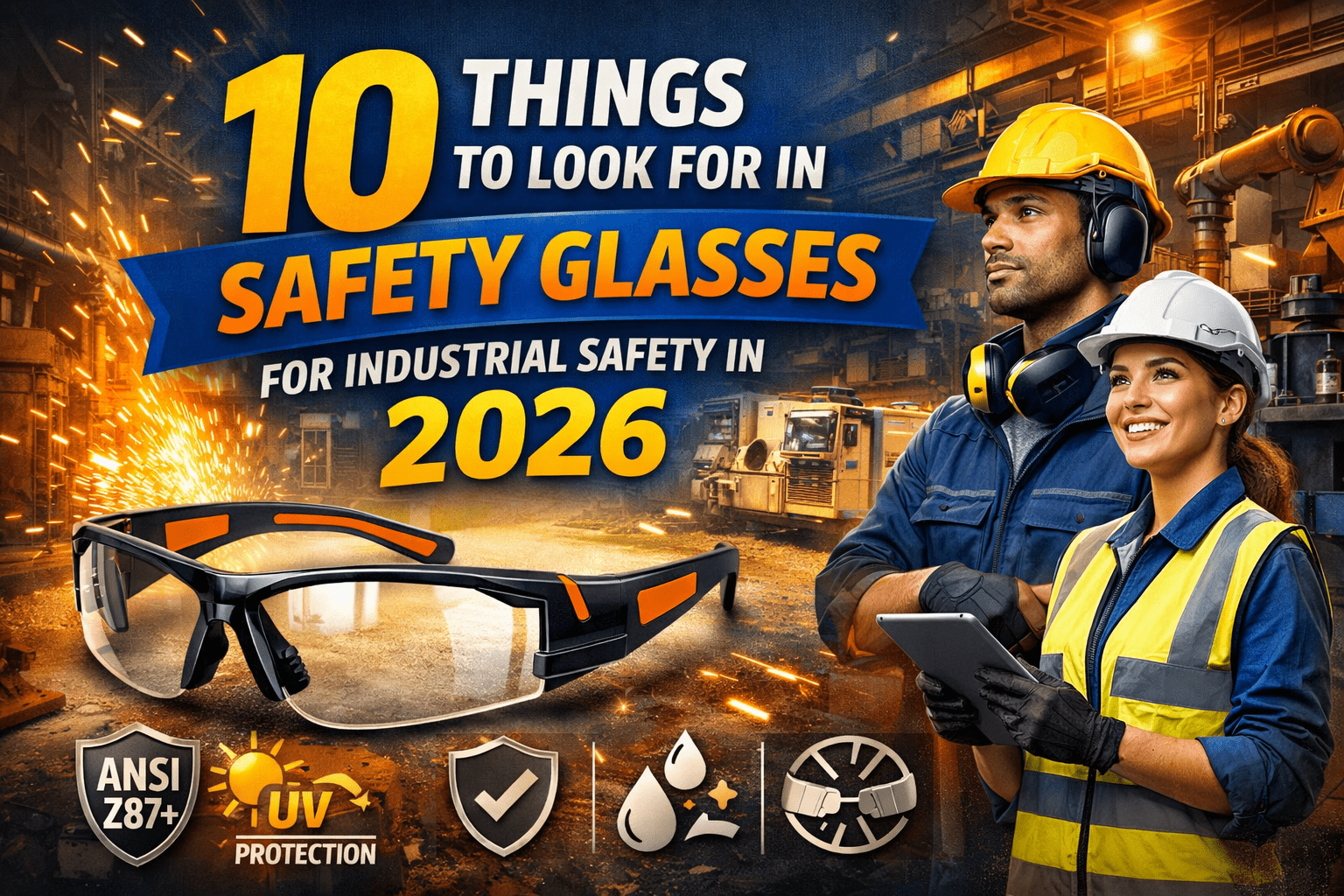
Safety glasses are an essential component of PPE (personal protective equipment) in industrial settings where eye dangers are widespread. This article outlines what to look for in industrial safety glasses in 2026 and how the correct eye protection can help you avoid injuries, increase visibility, and promote long-term eye health. You will learn about safety standards, lens materials, comfort features, coatings, fit, and job-specific needs, allowing you to confidently select safety glasses that are appropriate for your work environment and safeguard your eyes every day.
Why Does Eye Protection Matter in Industrial Workplaces?
Workers in industrial environments face hazards such as flying debris, dust, metal fragments, chemical splashes, sparks, and strong light. Even a little particle entering the eye can result in significant injury, infection, or permanent vision loss. Eye injuries can cause lost work time and long-term health problems. Safety glasses operate as a protective barrier, limiting direct exposure to these threats. Wearing appropriate eye protection is more than just following safety standards; it is also about preserving vision and maintaining constant productivity in challenging work conditions.
- Look for Safety Standards and Certifications
One of the most crucial factors to consider when purchasing safety glasses is certification. Industrial safety glasses should comply with ANSI Z87.1 standards, which confirms that they have passed impact and durability tests. Certified safety glasses are intended to protect against high-speed particles and blunt-force blows. Choosing approved items assures that the glasses give actual protection rather than just visual coverage. Before making a purchase, always check the label or product specifications to ensure that it meets safety regulations.
-
Lens Material and Impact Resistance
The lens material has a significant impact on how well safety glasses protect your eyes. Polycarbonate lenses are commonly used in industrial safety glasses due to its lightweight, durability, and great impact resistance. These lenses can tolerate flying debris and unexpected strikes without fracturing. Polycarbonate lenses also provide UV protection, making them appropriate for both inside and outdoor industrial applications. Avoid conventional plastic or glass lenses because they are not built to withstand industrial risks.
-
Lens Coatings That Improve Safety and Performance
Lens coatings improve the performance and durability of safety glasses. Anti-scratch coatings prevent lenses from damage caused by dust, debris, and excessive cleaning. Anti-fog coatings are especially crucial in humid situations or during temperature changes since fogged lenses limit visibility and increase the risk of an accident. UV-protective coatings protect the eyes from harmful ultraviolet rays, which are critical for outdoor industrial operations. These coatings provide better clarity and comfort during the workday.
-
Optical Clarity and Vision Accuracy
Clear vision is vital for industrial safety and precision. Safety glasses should have distortion-free lenses that retain consistent clarity across the viewing area. During long shifts, poor optical quality can lead to eye strain, headaches, and impaired focus. High-quality lenses improve depth perception and precision, which is essential while operating machinery or using tools. Choosing safety glasses with good optical clarity reduces tiredness and promotes improved job performance.
-
Comfort and Proper Fit for Long Working Hours
Workers use safety glasses on a regular basis and are heavily influenced by their comfort. Ill-fitting glasses can put pressure on the nose, ears, or temples, causing pain with prolonged wear. Look for safety glasses with adjustable nose pads, flexible temples, and light frames. A perfect fit guarantees that the glasses do not slip during movement. Comfortable safety glasses encourage frequent use, which is critical for ongoing eye protection.
-
Frame Design and Overall Durability
The frame style of safety glasses influences both protection and durability. Durable frames composed of durable materials can sustain continuous use in industrial settings. Flexible frames can absorb shock while preserving their structure. Wraparound frame designs provide increased protection by covering a larger region around the eyes. A well-designed frame increases stability, comfort, and long-term reliability, making it appropriate for tough industrial environments.
-
Side Protection and Eye Coverage
Side protection is an important aspect of industrial safety glasses. Many risks approach the eyes from the sides, rather than immediately in front. Safety glasses with side shields prevent dust, flying particles, and chemical splashes from entering the eyes. Some models contain built-in side shields, while others have removable ones. Proper side covering enhances overall eye safety in industrial environments.
-
Prescription Safety Glasses for Vision Correction
Employees who require vision correction should wear prescription safety glasses rather than normal glasses at work. Prescription safety glasses are intended to meet occupational safety standards while maintaining clear, corrected vision. Regular prescription eyeglasses do not provide adequate protection from impact or debris. Prescription safety glasses provide both eye protection and visual acuity, allowing employees to complete duties effectively and safely.
-
Ventilation and Anti-Fog Design
Ventilation features of safety glasses enhance airflow and reduce fogging. Proper ventilation improves comfort throughout extended periods of wear, particularly in hot or humid situations. In dusty or toxic environments, indirect ventilation is favored because it permits airflow while keeping dangerous particles out of the eyes. Balanced ventilation improves visibility while maintaining safety.
-
Cost vs Quality
While price is an important consideration, quality should never be overlooked when purchasing safety glasses. Cheaper choices may not be properly certified or durable. Investing in high-quality safety eyewear lowers the likelihood of eye injuries and long-term vision issues. Quality safety glasses offer increased comfort, clarity, and protection, making them an excellent long-term investment.
-
Ease of Cleaning and Maintenance
Safety glasses should be simple to clean and maintain in order to provide clear vision and cleanliness. Lenses that can be washed with mild soap and water without harm are appropriate for industrial applications. Regular cleaning eliminates dust, oil, and residue, which can impair visibility. Proper maintenance extends the life of safety glasses and provides constant protection over time.
Choosing Safety Glasses Based on Work Environment
Different industrial jobs provide distinct eye hazards, thus safety glasses should be chosen depending on the unique work conditions. Construction workers frequently demand high-impact protection from debris, whereas chemical workers require splash-resistant designs. Anti-fog lenses may be useful in manufacturing situations owing to temperature variations. Understanding the threats in your workplace allows you to select safety glasses that offer the appropriate level of protection.
Importance of Wearing Safety Glasses Correctly
All types of safety glasses cannot protect your eyes unless they are worn correctly. Glasses should fit securely on the face with no gaps or slippage. They should completely protect the eyes and remain stable while moving. Regular inspection for scratches, cracks, and loose pieces is essential. To ensure continued protection, damaged safety glasses should be replaced immediately.
Final Thoughts
Selecting the appropriate safety glasses necessitates careful consideration of safety requirements, lens material, coatings, comfort, fit, and job risks. Proper eye protection reduces injuries, increases work efficiency, and promotes long-term eye health. Understanding the features described in this book will help you make an informed decision and ensure reliable eye protection in any industrial setting.