

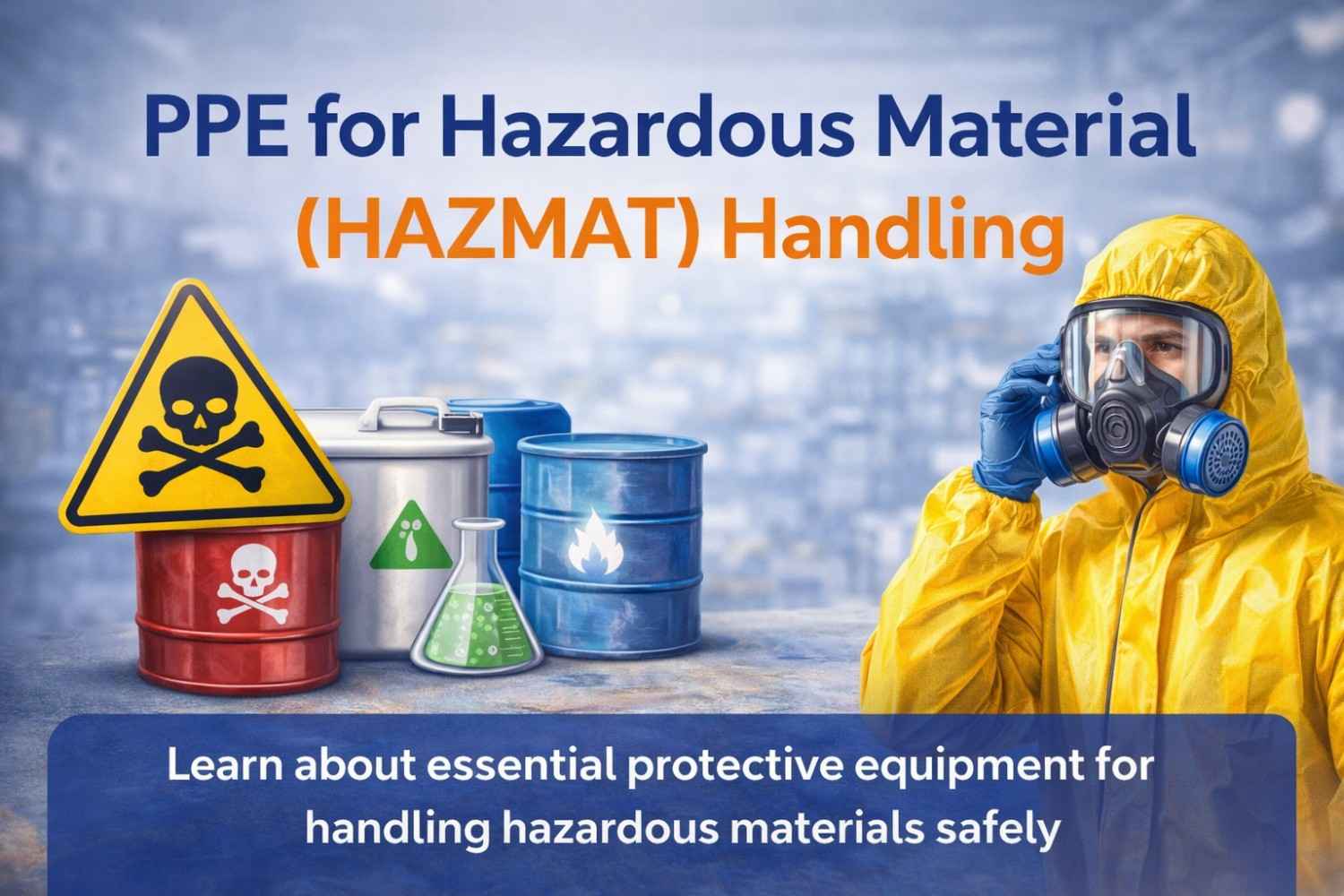
Hazardous materials can cause serious harm in a variety of job settings. They can burn the skin, harm the eyes, impair breathing, or cause long-term health issues. Workers at chemical plants, laboratories, hospitals, warehouses, industries, and emergency response teams frequently work with these hazardous compounds. Chemicals, hazardous liquids, gasses, biological agents, caustic products, and flammable things are some examples of these materials.
PPE for hazardous material handling helps to reduce exposure to these toxic compounds. It forms a protective barrier between the worker and the hazard. This improves safety, reduces injuries, and promotes workplace confidence. In this article, we will explain what HAZMAT PPE is, why it is important, the many varieties, and how to select the appropriate protection.
What Is HAZMAT Handling?
HAZMAT stands for Hazardous Materials. These are compounds that may endanger persons, property, or the environment. HAZMAT handling refers to the proper storage, movement, use, cleaning, and disposal of these hazardous materials. It includes cautious measures to avoid exposure and prevent occupational mishaps.
Hazardous materials might be liquids, solids, gasses, or vapors. Some may catch fire fast, while others may gradually injure the body. Workers may come into contact with hazardous materials on a daily basis or in an emergency.
Why PPE Is Important for HAZMAT Handling
PPE is one of the most significant safety measures for hazardous material work. It aids in the reduction of direct exposure when other safety measures are insufficient to eliminate the risk completely.
Hazardous compounds can enter the body in several ways. They can come into contact with the skin, get into the eyes, inhale, or accidentally swallow. PPE helps to block these entrance sites.
Good personal protective equipment (PPE) can safeguard workers from:
- Chemical burns
- Skin irritation
- Eye injury
- Breathing problems
- Poisoning
- Infections
- Fire-related injuries
- Long-term health damage
In many workplaces, personal protective equipment helps to ensure legal compliance. For dangerous jobs, safety regulations frequently mandate the use of appropriate protective equipment. Employers should evaluate the hazards before selecting PPE. Workers should also be trained before using it.
Main Types of PPE for HAZMAT Handling
Different risks necessitate different types of PPE. In many circumstances, workers combine several products for maximum protection.
1. Protective Gloves
Protective gloves shield hands from hazardous substances during HAZMAT activity. They reduce direct exposure to chemicals, oils, and polluted surfaces. Different gloves defend against different threats, hence the glove material is quite important. Chemicals and oils are commonly handled with nitrile gloves, although stronger substances may require neoprene or butyl gloves. Workers should always choose gloves that are appropriate for the substance they are working with.
Common advantages of protective gloves are:
- They minimize skin contact.
- They reduce burn risks.
- They support safe handling.
- They improve grip in certain tasks.
- They help with the spill reaction.
- They guard against pollution.
- They are available in various materials.
2. Safety Goggles and Face Shields
Hazardous liquids and particles can harm the eyes quickly. Some substances can cause serious harm in seconds. Because of this, eye and facial protection is required.
Safety goggles ensure a secure fit around the eyes. They provide protection from splashes, fumes, dust, and flying particles. Face shields protect the entire face. They are frequently paired with goggles for further protection.
Goggles and face shields are practical because:
- They protect the fragile eye tissue.
- They reduce splash injuries.
- They promote safer pouring tasks.
- They help with mixing procedures.
- They defend against flying debris.
- They create a barrier for the face.
- They increase safety during transfer work.
3. Respiratory Protection
Respiratory protection helps workers avoid inhaling dangerous dust, fumes, vapors, and gases. These dangers can harm the lungs and pose a serious risk. The appropriate respirator depends on the nature and level of risk. Dust masks may be useful in low-risk dust environments, but they do not protect against poisonous gasses. Workers in high-risk jobs may require half-face or full-face respirators, motorized air-purifying respirators, or self-contained breathing apparatus.
Respiratory protection is useful because:
- It reduces inhalation dangers.
- It protects your lungs.
- It facilitates work in contaminated air.
- It assists with the spill response.
- It may provide protection against hazardous fumes.
- It aids emergency entry work.
- It improves safety in enclosed spaces
4. Protective Clothing and Coveralls
Hazardous materials may splash over the body or settle on garments. Protective clothing serves to limit skin exposure and prevent contamination from spreading.
Coveralls, chemical suits, gowns, and aprons are popular options. Some are suitable for low-risk occupations. Others are completely sealed against major risks. The apparel should be appropriate for the task, chemical type, and exposure amount.
Protective gear provides numerous benefits:
- It protects vast bodily areas.
- It lowers skin exposure.
- It helps to control contamination.
- It promotes safe cleanup work.
- It can protect against light splashes.
- It could be disposable or reusable.
- It promotes overall bodily safety.
5. Safety Boots and Shoe Covers
Feet may potentially be exposed during HAZMAT handling. Leaks, drips, and spills may spread swiftly to the floor. Standard shoes may not provide adequate protection.
Chemical-resistant boots protect your feet from harmful liquids and contaminated surfaces. Shoe covers are also utilized in some businesses to keep contaminants from migrating outside the work area. Also Read – How to Choose the Best Safety Shoes
Safety shoes are significant because:
- It protects your feet from spillage.
- It decreases slip chances.
- It promotes safe walking.
- It assists with cleanup activities.
- It guards against polluted floors.
- It provides protection in moist situations.
- It promotes workplace hygiene.
6. Head Protection
Some hazardous work sites also have impact risks, falling objects, and splash threats from above. In certain circumstances, head protection may be necessary.
Hard helmets protect against physical impact. Chemical-resistant hoods can be utilized for jobs involving splash or vapor exposure. Full-body suits may also have a head covering.
Head protection is beneficial because:
- Protecting against overhead risks
- Reducing the risk of head injuries
- Supporting full-body coverage.
- Helping in high-risk areas
- Adding splash protection.
- Improving overall PPE coverage.
- Supporting emergency tasks.
Levels of HAZMAT PPE
HAZMAT PPE is sometimes classified into protection levels. These levels assist match protection to the severity of the hazard.
Level A
Level A provides the most effective skin and respiratory protection. It is utilized in extremely risky conditions. Workers may wear completely enclosed chemical suits that include self-contained breathing equipment.
Level: B
Level B provides more respiratory protection but less skin protection than Level A. It is utilized when there are considerable respiratory dangers but minimal skin exposure.
Level: C
Level C is utilized when the hazard is identified and air-purifying respirators are appropriate. Chemically resistant clothing is also used.
Level: D
Level D provides the least protection. It is utilized in work environments with no significant respiratory or skin hazards. Standard work attire and basic PPE may be sufficient.
These levels should only be chosen after a thorough hazard evaluation.
How to Choose the Right PPE for HAZMAT Work
PPE selection should never be based on guesswork. The improper equipment might offer a false sense of security.
Before making a decision, several considerations should be taken into consideration:
Identify the Hazards
First, learn the content. Is it corrosive, poisonous, flammable, contagious, or reactive? A clear hazard assessment is required.
Check the Exposure Type
Will the worker be exposed to splashes, fumes, dust, direct contact, or accidental spills? The type of exposure influences the selection of personal protective equipment.
Review the work Duration
Longer tasks may necessitate more comfortable PPE. Employees must be able to move, breathe, and work safely.
Consider the work Environment
Heat, humidity, restricted spaces, and poor ventilation can all have an impact on PPE effectiveness and worker comfort.
Read safety data Sheets
Safety Data Sheets give valuable information about the chemical, its hazards, and recommended precautions.
Ensure proper Fit
Loose or poorly fitted PPE may fail while in use. Gloves, goggles, respirators, and suits should all fit properly.
Train the Workers
Workers should understand how to properly wear, remove, inspect, clean, and store personal protective equipment (PPE).
Common PPE Mistakes in HAZMAT Handling
Even good equipment might fail when handled incorrectly. Many job injuries result from minor mistakes.
Common mistakes include:
- Wearing the incorrect glove material.
- Using damaged PPE.
- Reusing disposable PPE.
- Wearing loose-fitting goggles.
- Using the incorrect respirator type.
- Skipping fit tests
- Removing personal protective equipment in a hazardous area
- Touching the face with infected gloves.
- Ignore cleaning methods.
- Storing PPE in bad circumstances.
These mistakes can lead to increased exposure and decreased safety.
PPE Maintenance and Care
PPE should remain clean and in good shape. Dirty or broken equipment may not provide adequate worker protection.
Workers should thoroughly inspect their personal protective equipment prior to each use. Check the gloves for any holes or cracks. Goggles should be inspected for scratches and loose seals. Respirators should be inspected for filter integrity and face seal fit. Suits and footwear should also be inspected for wear.
Good PPE care involves the following:
- Inspect before use.
- Clean after use.
- Replace the damaged items.
- Store in a dry place.
- Follow the maker’s directions.
- Keep the PPE away from sunlight.
- Remove contaminated equipment safely.
Reusable PPE should be cleaned and disinfected as needed. Disposable PPE should be discarded after use if it is not intended for reuse.
PPE Is Only One Part of HAZMAT Safety
PPE is extremely important, however it is not the sole safety measure. Safe HAZMAT handling necessitates planning, training, and workplace safeguards.
Other key safety measures are:
- Clear hazard labels.
- Secure storage systems
- Good ventilation.
- Spill response plans
- Emergency Showers
- Eyewash stations
- Worker training
- Safe garbage disposal.
- Restricted access places
When PPE is paired with these measures, the workplace becomes significantly safer.
Who Needs PPE for Hazardous Material Handling?
Many businesses employ personal protective equipment (PPE) for dangerous tasks. This comprises workers in:
- Chemical plants
- Laboratories
- Hospitals
- Pharmaceutical Units
- Waste Management Sites
- Warehouses
- Cleaning Services
- Manufacturing plants
- Agriculture
- Emergency Response Teams
Depending on the materials used, each workplace may require a different type of PPE.
Conclusion
Personal protective equipment (PPE) is critical for worker safety when handling dangerous materials. Dangerous compounds can cause harm to the skin, eyes, lungs, and other organs. Proper PPE reduces this risk and promotes safe daily work. Gloves, goggles, face shields, respirators, protective clothes, boots, and head protection are all essential tools.
No single PPE item is sufficient for all tasks. Workers should select PPE based on the hazard, exposure level, and working conditions. They should also know how to properly check, wear, remove, maintain, and store personal protective equipment (PPE). When suitable equipment is used in conjunction with good training and workplace safety guidelines, HAZMAT handling becomes safer and easier to manage.