

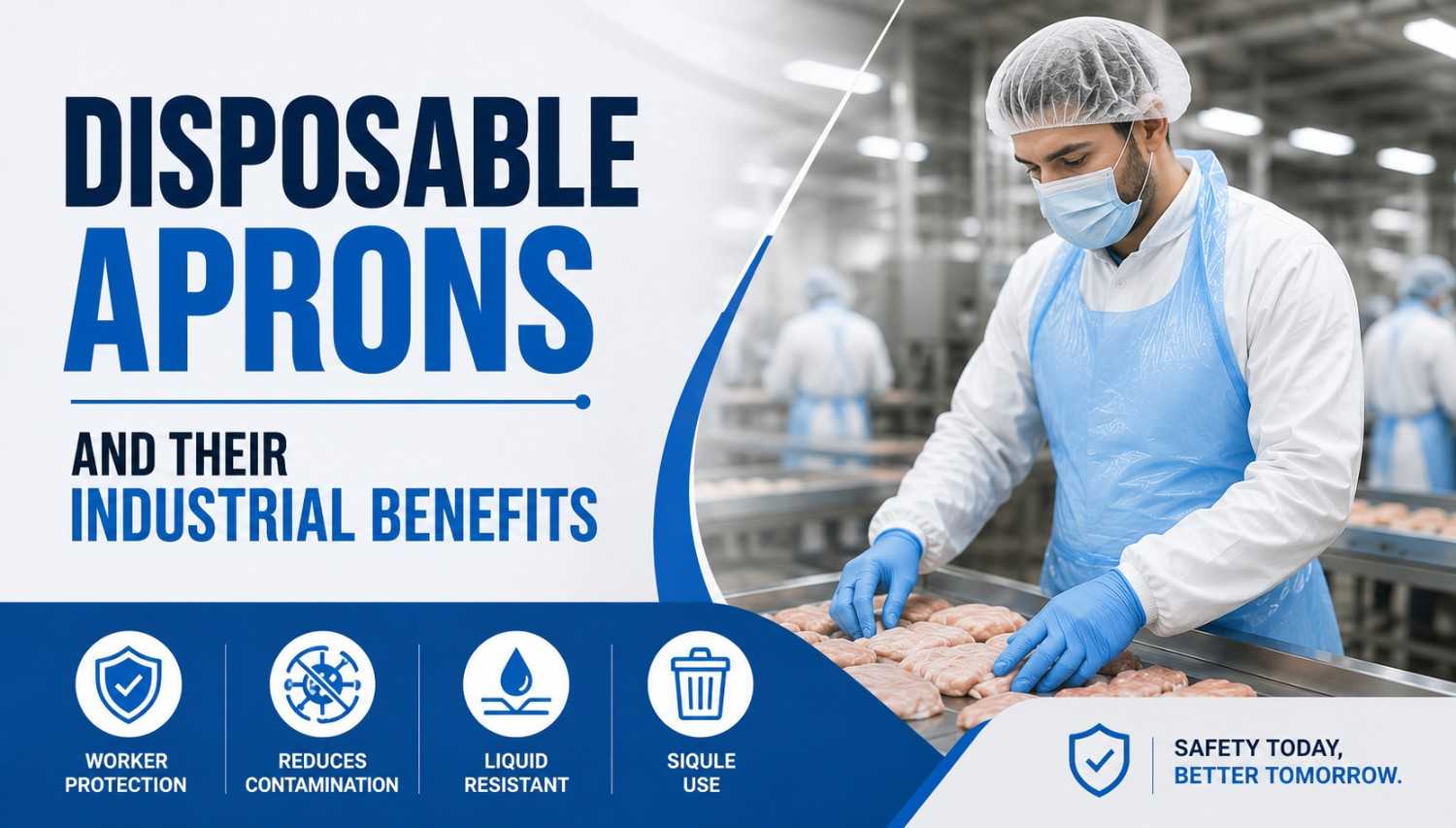
Disposable aprons are lightweight clothes that protect workers from spills, dirt, chemicals, and contamination. They help to maintain hygiene, decrease cross-contamination, increase worker safety, and save cleaning time, making them an essential aspect of many industrial workplaces.
Across industries, worker safety and hygiene are top objectives. While gloves, helmets, and safety shoes are frequently highlighted, disposable aprons are also a vital component of personal protective equipment (PPE). They create a simple yet effective barrier between workers and occupational risks.
A disposable apron protects clothing and skin from liquids, dust, grease, and other contaminants in a variety of settings, including food processing plants, hospitals, chemical factories, and manufacturing facilities. Its single-use design lowers the danger of contamination spreading between work locations.
Also Read – Is an Apron Considered PPE?
In this article, you will find out about disposable aprons, their industrial benefits, common applications, various varieties, and how to choose the best apron for your job.
What Are Disposable Aprons?
Disposable aprons are single-use safety aprons composed of lightweight plastic or polyethylene that protect workers against spills, splashes, dust, and pollutants.
Disposable aprons, unlike reusable fabric aprons, are designed to be worn only once and then discarded. This promotes cleanliness and reduces the need to wash and sanitize protective garments.
Most disposable apron plastic goods are made from:
- Polyethylene (PE
- Low Density Polyethylene (LDPE)
- High-density Polyethylene (HDPE)
- Chlorinated polyethylene (CPE
These materials are lightweight, waterproof, and inexpensive, making them appropriate for a variety of sectors.
Why Are Disposable Aprons Important in Industries?
Disposable aprons help to protect workers, promote cleanliness, and avoid contamination while lowering maintenance expenses.
Every day, industrial workers face a variety of threats. Even minor spills or dust can compromise worker safety and product quality.
Some key reasons industries employ disposable aprons are:
- Protect your garments from liquids and stains.
- Reduce cross-contamination.
- Improve workplace hygiene.
- Reduce laundry expenditures.
- Support the food safety regulations.
- Help keep production areas clean.
- Offer quick and easy protection.
Because they are affordable, firms may replace them as they become infected.
Industrial Benefits of Disposable Aprons
Disposable aprons enhance worker protection, promote hygiene, boost efficiency, and aid in the compliance with workplace safety rules.
1. Protection Against Liquids
Many industrial processes use water, oils, chemicals, cleaning agents, or food ingredients. A disposable apron forms a waterproof barrier, preventing liquids from soaking through garments. This is particularly beneficial in:
- Food processing
- Laboratories
- Cleaning operations
- Chemical Handling
2. Reduces Cross-Contamination
Cross-contamination is a significant risk in sectors such as:
- Food manufacturing
- Healthcare
- Pharmaceutical production
Using a new disposable apron for each task helps to prevent the spread of bacteria, dirt, or pollutants from one location to another.
3. Improves Workplace Hygiene
Disposable PPE promotes greater hygiene because workers replace dirty aprons rather than reusing them. This is especially crucial in situations when high sanitary hygiene standards must be met. Industries with high hygiene standards include:
- Hospitals
- Food factories
- Dairy plants
- Meat processing
- Commercial Kitchens
4. Saves Cleaning Time
Reusable aprons require:
- Washing
- Drying
- Storage Inspection
Workers can simply discard their disposable aprons and replace them with new ones when using disposable aprons. This saves time and labor.
5. Cost-Effective Protection
Although reusable aprons may last longer, they may incur recurring cleaning and maintenance expenses.
For many industrial workplaces, disposable plastic aprons are a practical and cost-effective solution, especially if contamination risks are significant.
6. Lightweight and Comfortable
Most disposable white aprons are light and comfortable to wear throughout the day. Workers may move freely without the added weight of bulky protective clothing.
7. Supports PPE Programs
Disposable aprons are frequently used along with:
- Disposable gloves
- Hair nets
- Face masks
- Safety goggles
- Shoe covers
Together, they create a complete PPE system that improves workplace safety.
Also Read – Benefits of Aprons for Hygiene & Safety
Industries That Use Disposable Aprons
Disposable aprons are often used in industries that require cleanliness, hygiene, and spill prevention.
Food Processing
Food workers wear disposable plastic aprons to avoid contamination when preparing, packaging, or handling food. Common applications include:
- Meat processing
- Seafood processing
- Dairy production
- Bakery operations.
- beverage manufacturing
Healthcare
Doctors, nurses, caregivers, and cleaning workers frequently use disposable aprons when:
- Treating patients
- Clean medical areas.
- Handling Waste
- Managing infection prevention
Pharmaceutical Industry
Pharmaceutical manufacture necessitates clean production settings. Disposable aprons help to reduce contamination during production and packaging.
Chemical Industry
Workers who handle mild chemicals, cleaning solutions, or laboratory materials frequently wear disposable aprons for splash protection. Additional chemical-resistant PPE may be necessary while handling dangerous substances.
Manufacturing
Many factories use plastic disposable aprons to protect employees from:
- Grease
- Oils
- Dust
- Paint
- Adhesives
Cleaning Services
Cleaning personnel use disposable aprons while:
- Sanitizing Facilities
- Handling Waste
- Using cleaning chemicals
Types of Disposable Aprons
Disposable aprons are available in a variety of material types, colors, and thicknesses to meet specific working requirements.
Polyethylene Disposable Aprons
The most popular type. Features include:
- Waterproof
- Lightweight
- Affordable
- Suited to food and healthcare.
Heavy-Duty Disposable Aprons
Heavy-Duty Disposable Aprons are thicker versions ideal for severe industrial tasks that require more durability and protection.
Best for: Construction, manufacturing, and automotive industries where workers require dependable protection against dirt, grease, oils, chemicals, and general occupational wear and tear.
Disposable White Aprons
Disposable white aprons are widely used in:
- Hospitals
- Laboratories
- Pharmaceutical facilities.
- Food production
The white color makes contamination simpler to detect.
Colored Disposable Aprons
Some industries use distinct apron colors like blue, green, yellow and red to identify departments or maintain hygiene.
- Food Processing & Food Manufacturing
- Healthcare & Hospitals
- Pharmaceutical Manufacturing
- Cleanroom & Electronics Manufacturing
- Laboratories & Research Facilities
- Dairy & Beverage Processing
- Meat & Poultry Processing
- Seafood Processing
How to Choose the Right Disposable Apron
Choose a disposable apron depending on workplace dangers, material, thickness, comfort, and desired level of protection.
Before making a purchase, consider:
- Type of Work
- Exposed to liquids
- Chemical resistance requirements.
- Apron’s thickness
- Length and coverage
- Comfort on lengthy shifts
- Tear Resistance
- Industry regulations
Choosing the correct apron increases both safety and productivity.
When Should You Dispose of a Plastic Disposable Apron?
A plastic disposable apron should be thrown promptly after usage, if it becomes contaminated, damaged, or while switching between work areas.
Replace the apron if:
- It contains evident tears.
- It became extremely filthy.
- It’s contaminated with biological or chemical contaminants.
- You relocate to a clean work space.
- Your workplace regulation needs a new apron for every task.
Disposable PPE should never be reused, unless the manufacturer explicitly advises otherwise.
How Should Disposable Aprons Be Disposed Of?
Dispose of disposable aprons according to your workplace waste management policies and local requirements.
General disposal methods include:
- If permissible, place non-contaminated aprons in the general garbage.
- Contaminated aprons should be disposed of as industrial, medical, or hazardous waste as needed.
- Never mix contaminated PPE and recyclable items.
- Follow your company’s waste-segregation policy.
Proper disposal promotes workplace hygiene and environmental compliance.
Where Can You Buy Disposable Aprons?
Disposable aprons are available from industrial safety vendors, personal protective equipment distributors, medical supply stores, food service suppliers, and online marketplaces.
If you are looking online for:
- Disposable aprons near me
- Where can I purchase disposable aprons?
- Where can I buy disposable aprons?
- Where Can I Buy Disposable Plastic Aprons?
- Where do I purchase disposable aprons?
You will usually locate them through:
- Local PPE vendors
- Industrial Safety Equipment Stores
- Medical supply firms
- Restaurant Supply Distributors
- Major Online Retailers
When purchasing, compare:
- Material quality.
- Thickness
- Size
- Waterproof performance.
- Pack quantity and any related certifications.
Best Practices for Using Disposable Aprons
Using disposable aprons correctly increases protection and promotes workplace hygiene.
Follow these excellent practices:
- Wear a clean apron before beginning work.
- Replace it if it is damaged or polluted.
- Avoid reusing single-use aprons.
- Keep unused aprons in a clean, dry location.
- Combine with additional PPE as needed.
- Dispose of used aprons properly.
Common Mistakes to Avoid
Avoiding basic mistakes allows disposable aprons to deliver the protection they are intended for.
Do not
- Reuse single-use aprons.
- Wear a ripped apron.
- Select the wrong thickness for the job.
- Ignore contamination between jobs.
- Aprons should be stored in regions that are unclean or moist.
- Assume that disposable aprons protect against all chemicals.
- Always match the apron to the particular workplace hazard.
Final Thoughts
Disposable aprons are a basic but effective piece of workplace PPE. They protect workers from spills, decrease pollution, promote hygiene, and assist industry in creating safer and cleaner work environments. Whether utilized in healthcare, food processing, manufacturing, or cleaning operations, selecting the correct disposable plastic aprons can boost efficiency while also promoting workplace safety and compliance. Organizations may maximize the benefits of this critical safety equipment by selecting the appropriate material, changing aprons after use, and following proper disposal policies.