

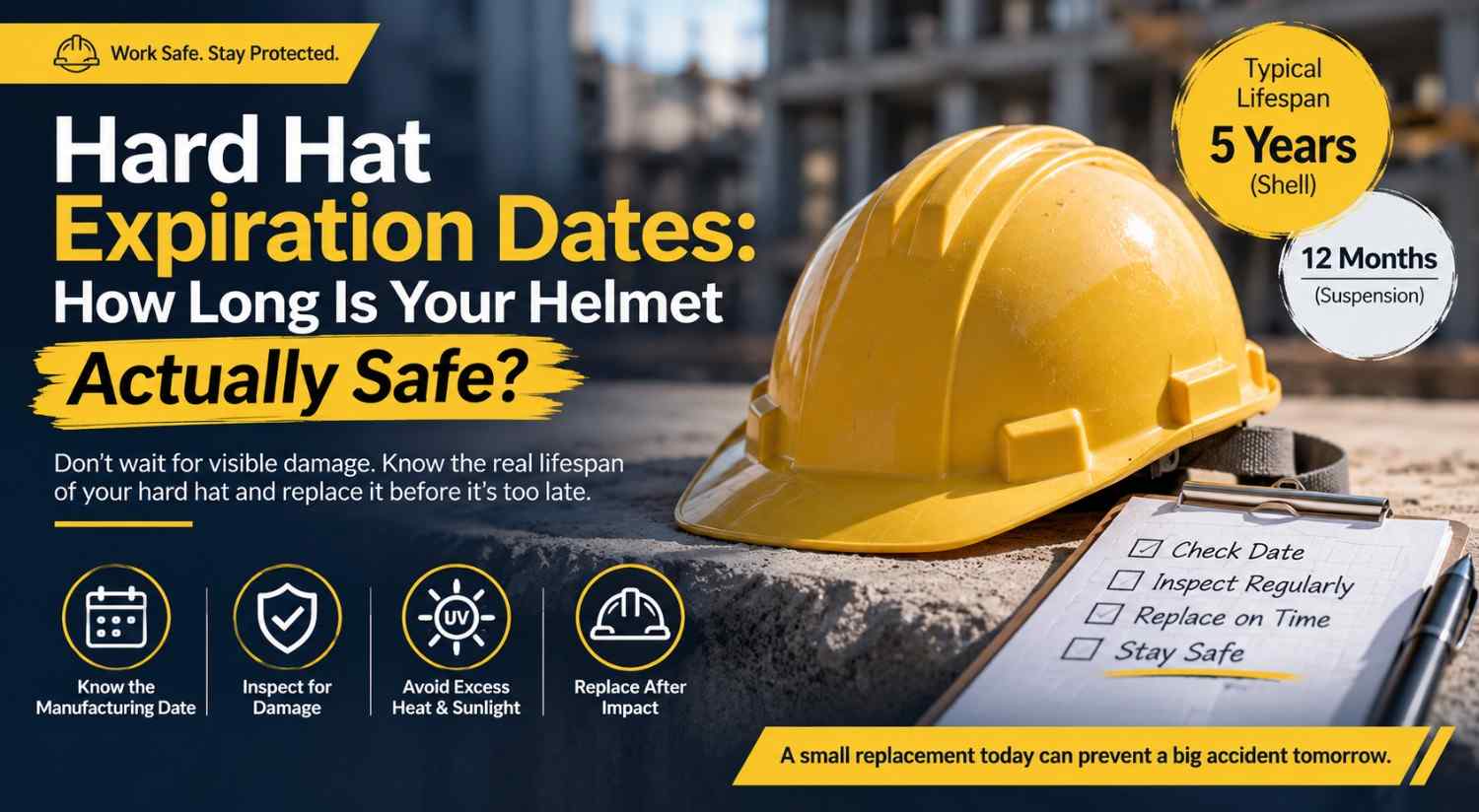
Most employees believe that as long as a hard hat looks good, it is safe. In actuality, an outdated helmet may break just when you need it most since the plastic shell gets worn out with time even in the absence of obvious damage.
Do Hard Hats Actually Expire?
Yes, Hard helmets do expire, even if they don’t have any apparent dents or cracks. The materials used to make the plastic shell, such as HDPE or ABS, are slowly broken down from the inside out by continuous exposure to heat, chemicals, and UV radiation.
Until the shell becomes brittle, this process—known as polymer degradation—is imperceptible to the naked eye. Manufacturers place a date on every hard hat rather than leave longevity to speculation because a helmet that appears flawless on the surface may lose most of its interior impact protection.
Why Do Hard Hats Break Down Over Time?
Hard helmet shells degrade due to a chemical process rather than merely wear and tear. The polymer bonds that give the plastic its strength are gradually weakened by sunlight, heat, and airborne pollutants. As a result, the shell is unable to flex and absorb impact as intended.
The most important factor is typically UV exposure. Outdoor workers expose their helmet to significantly more radiation than the material was designed for when they put it on a car dashboard or leave it in the sun for months. Hard helmets used near furnaces, welding stations, or in hot climes may need to be replaced before the typical five-year period since heat accelerates the same degradation.
A helmet that is frequently sprayed with solvents or paint thinner should be inspected more frequently than one used in a climate-controlled warehouse because chemical exposure acts differently, affecting the surface directly.
How to Find the Manufacture Date on Your Hard Hat
Look for a tiny stamped circle with an arrow pointing to a number and a dot on the inside of the shell or the underside of the brim. The manufacturing quarter and year are indicated by that dot.
The majority of brands use the ANSI standard date-wheel system, in which the year is shown by the number in the center and the quarter is indicated by the arrow. Since there is no way to determine the helmet’s actual age, accept it as unconfirmed and replace it if you are unable to locate this indication.

How Long Do Hard Hats Last?
A hard hat shell is normally safe for 5 years after it was manufactured, but the suspension inside should be updated every 12 months, regardless of how the shell looks.
Since some helmets, especially those exposed to intense sunlight or chemical fumes, require replacement sooner rather than later, always refer to the manufacturer’s label. These are broad industry standards, not universal laws. Before thinking that age is the only consideration, it’s worthwhile to review how to properly select and fit a hard hat if you are not sure if your existing headgear is even appropriate for your line of work.
Do All Hard Hat Types Expire at the Same Rate?
No, but they have the same five-year shell guideline, different hard hat kinds and classifications don’t always wear out at the same rate. How quickly a helmet actually deteriorates on the job depends on its material, coating, and intended use.
For example, Class E (electrical) hard hats depend on the shell remaining free of even minute cracks to preserve their voltage protection, therefore any surface damage should be handled as an instant replacement trigger rather than something to keep an eye on over time. Class G and Class C helmets follow the same underlying plastic degradation timetable but are more tolerant of minor cosmetic wear because they are utilized for general impact or comfort in non-electric circumstances. Small gaps in the shell of vented hard hats can become stress areas where fractures begin to form earlier than on a solid shell, therefore it’s important to keep an eye on them.
Does the Suspension Wear Out Faster Than the Shell?
Yes, compared to the exterior shell, the suspension system fails considerably more quickly. It is the component that disperses and absorbs impact force, and it is weakened long before the shell exhibits any wear due to constant perspiration, stretching, and adjustment.
Even if the shell is only a year or two old, a fractured or brittle suspension strap cannot adequately absorb a blow. This is one of the most neglected aspects of routine equipment inspections, and it has a direct impact on how well the helmet performs its primary function of lowering the risk of head injuries on the job.
Signs Your Hard Hat Needs Replacing
Regardless of age, a few physical warning indicators indicate that it’s time for a new helmet beyond the stated date:
- The shell’s surface is chalky, faded, or discolored.
- visible dents, gouges, or fissures, even tiny ones
- A suspension that is brittle, loose, or unable to maintain adjustment
- Any direct impact, even if there isn’t any obvious harm
- A date stamp that is absent or unreadable
What Happens If You Wear an Expired Hard Hat?
An expired hard hat may fail to absorb impact force in the manner intended, resulting in a significant head injury from a fall or falling object that should have been preventable.
In addition to providing a safety risk, employing outdated personal protective equipment (PPE) may put a business in violation of OSHA regulations during an inspection. This is because employers must offer functioning head protection, not simply any helmet that happens to be available.
Additionally, many site operators fail to consider the liability aspect. Workers’ compensation claims may become more complicated and the employer may come under more attention on whether appropriate PPE management procedures were followed if an employee is hurt while wearing a hard hat that was obviously past its useful life. A tiny administrative action that prevents a much larger issue later on is keeping a basic log of the dates of purchase and replacement schedules for each helmet on site.
How to Extend the Life of Your Hard Hat
A hard helmet cannot be prevented from aging, however it can be slowed down with a few easy habits:
- When not in use, store it away from intense heat and direct sunlight.
- Steer clear of resting it on car dashboards, as this might lead to early UV damage.
- Keep it away from chemical sprays, paints, and solvents.
- Rather than allowing dirt and perspiration to accumulate, wipe it down frequently.
- Instead of merely checking when something seems off, adhere to a regular PPE inspection and maintenance schedule.
Quick FAQ
If a hard hat looks good after five years, can I still wear it?
It is not advised. Once you are past the manufacturer’s claimed lifespan, visual condition alone isn’t a reliable safety signal because the shell material deteriorates from the inside out.
After one strong hit, should I get a new hard hat?
Yes. The shell’s ability to shield you in a subsequent occurrence may be diminished by invisible microfractures caused by even one major impact.
Does a hard hat’s lifespan change if it is painted or has stickers applied?
It can. It’s important to only use decals that have been approved by the manufacturer because certain paints and adhesives contain solvents that react with the shell material and speed up degradation.
Final Thoughts
The expiration date of a hard hat is an actual safety limit included into the material itself, not just a formality. Checking the date stamp and suspension condition on a regular basis, along with the rest of your gear such as bump caps and other head protection, is a little practice that ensures protection is reliable when it matters most.