

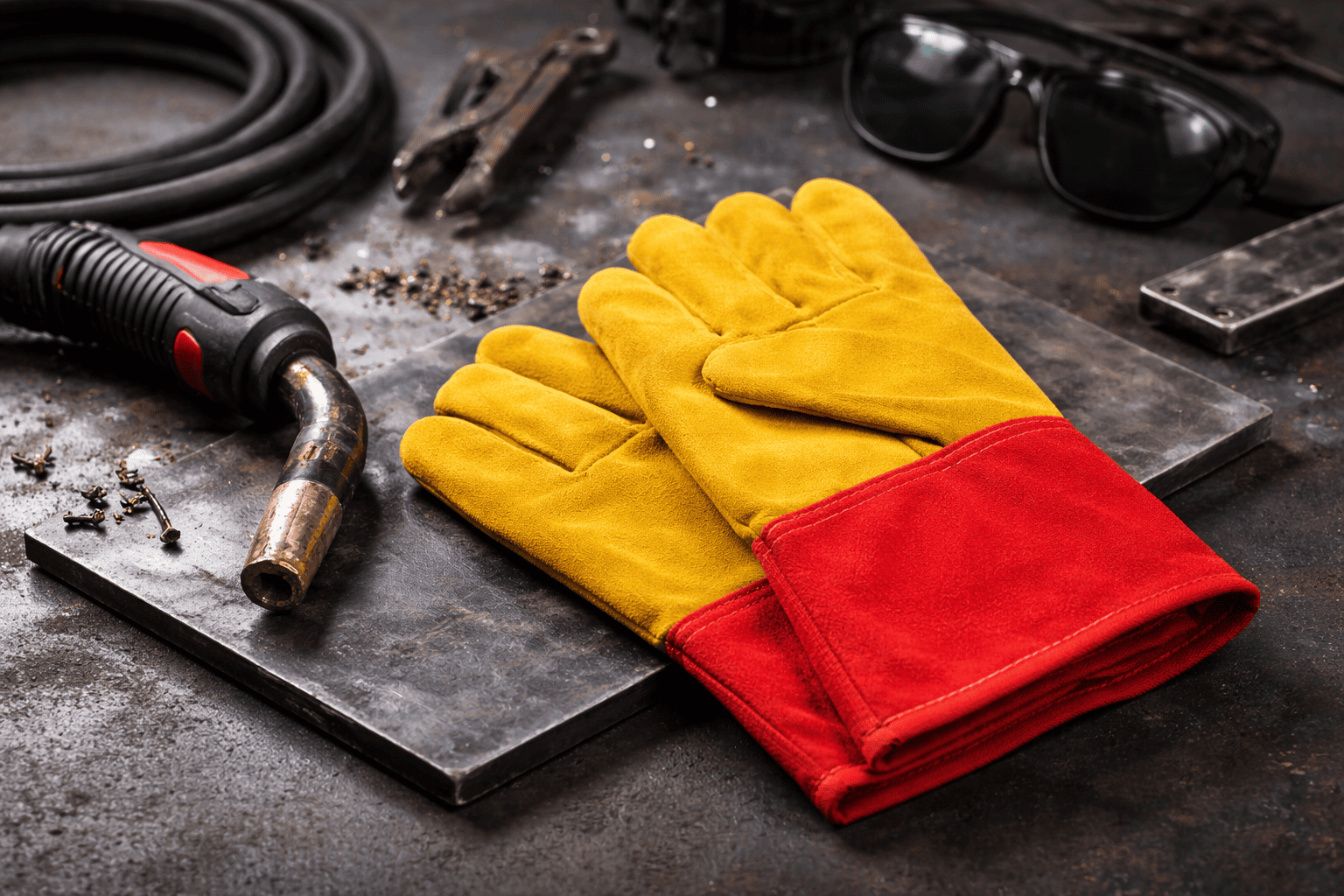
Welding gloves are vital safety equipment for every welding procedure. They keep hands safe from heat, sparks, molten metal, and sharp edges. Distinct welding procedures pose distinct risks at work. Common welding glove varieties include MIG welding gloves, TIG welding gloves, stick welding gloves, leather welding gloves, heat-resistant gloves, Kevlar-stitched gloves, and gauntlet-style gloves. Each glove type has a specific function based on the heat level and work conditions. Using the right gloves increases safety, comfort, and work quality. In this essay, we will exclusively discuss MIG welding gloves. This article covers what MIG welding gloves are, who uses them, their characteristics, applications, lifespan, maintenance, and other relevant information.
What Are MIG Welding Gloves?
MIG welding gloves are specifically built for metal inert gas welding procedures. MIG welding generates tremendous temperatures, sparks, and molten metal splashes. These gloves protect your hands from burns and injury when welding. MIG welding gloves are thicker than most other welding gloves. They use strong materials to withstand prolonged heat exposure. Welders frequently engage in MIG welding for extended periods. These gloves aid in maintaining hand safety during prolonged welding activity. MIG welding gloves continue to be focused on protection.
Key points about MIG welding gloves:
- They protect the hands from extreme heat.
- They repel sparks and molten metal.
- They are thicker than TIG gloves and suitable for extensive welding sessions.
- They prioritize safety over flexibility.
- They reduce burn damage.
- They improve grip while welding.
Key Features of MIG Welding Gloves
MIG welding gloves provide several key features for protection and endurance. These gloves are usually made of leather. Extra cushioning increases heat insulation. Reinforced stitching improves glove strength. Longer cuffs serve to protect the wrists and lower arms. These characteristics work together to ensure dependable hand protection. MIG welding gloves are designed for severe welding situations.
Main features of MIG welding gloves:
- Thick leather structure.
- High heat resistance.
- Reinforced seams for durability.
- Long cuffs provide wrist protection.
- Strong grip for tool handling.
- Resistance to sparks and spatters
- Comfortable interior lining
Uses of MIG Welding Gloves
MIG welding gloves are utilized for a variety of welding tasks. They are prevalent in fabrication shops and industries. Welders utilize them for structural welding. MIG gloves are also required while welding automotive parts. These gloves protect the hands during prolonged welding operations. They aid to minimize fatigue caused by heat exposure. MIG welding gloves promote safe and effective workplace performance.
Common uses of MIG welding gloves:
- Industrial welding jobs.
- Fabrication shop work.
- Automotive welding jobs.
- Structural metal welding.
- Heavy Metal Joining Work
- Long welding shifts.
- High-temperature welding situations
Who Can Use MIG Welding Gloves?
MIG welding gloves are suited for a variety of specialists. Skilled welders utilize them on a daily basis. Beginners can also profit from their protection. They are used by industrial personnel in production areas. Maintenance personnel may need MIG gloves for repairs. Anyone who is exposed to the heat of MIG welding should wear protective gloves. These gloves promote safe work habits among all users.
People who should use MIG welding gloves:
- Professional welders
- Industrial laborers
- Fabrication Technicians
- Automotive welders
- Metal workshop staff and welding trainees.
- Maintenance workers
Lifespan of MIG Welding Gloves
MIG welding gloves have a limited lifespan due to their use and care. Frequent welding reduces glove life. Heavy industrial use leads to accelerated wear. Proper care extends the life of good-quality gloves. Heat exposure degrades glove material over time. Regular inspection aids in detecting damage early. Replacing gloves on time promotes ongoing safety.
Factors affecting glove lifespan:
- Frequency of welding work
- Heat Exposure Levels
- Quality of glove materials
- Proper storage practices
- Cleaning and maintenance routines.
- Type of welding applications
- Handling at work
Maintenance and Care of MIG Welding Gloves
Proper maintenance extends the life of MIG welding gloves. Gloves should cool down after use. Cleaning removes dirt and metallic residue. Dry storage avoids material deterioration. Wet gloves should dry naturally. Avoid direct sunlight when drying. Regular inspections help to spot deterioration early.
Maintenance tips for MIG welding gloves:
- Allow gloves to cool after welding
- Clean them after extensive use.
- Store in a dry place.
- Avoid water soaking.
- Dry gloves naturally.
- Inspect for holes regularly.
- Replace damaged gloves soon.
Why MIG Gloves Are Important
MIG welding requires continual exposure to heat and sparks. Hands remain near to the welding arc. Without protection, injuries are more possible. MIG welding gloves serve as a safety barrier. They aid to prevent burns, blisters, and wounds. Proper gloves also boost confidence at work. Safety equipment enhances welding performance.
Conclusion
MIG welding gloves are required for safe welding procedures. They keep hands safe from heat, sparks, and molten metal. Their substantial shape is ideal for high-heat welding settings. Proper characteristics increase durability and comfort. Gloves last longer when used and maintained properly. Choosing quality MIG welding gloves improves safety and productivity. Every MIG welder should use reliable hand protection for long-term safety.
Frequently Asked Questions about MIG Glove
- How are MIG welding gloves different from TIG gloves?
MIG welding gloves are thicker and offer more heat protection than TIG gloves.
- Can beginners use MIG welding gloves?
Yes, beginners should wear MIG welding gloves to improve hand safety.
- How long can MIG welding gloves last?
The lifespan is determined by usage, heat exposure, and maintenance quality.
- Do leather MIG welding gloves perform better?
Yes, leather is highly heat resistant and durable.
- How do I know when to replace my MIG welding gloves?
Replace gloves whenever you see holes, burns, or diminished protection.