

Mold removal is more than merely wiping visible mold from surfaces. It also means protecting yourself from mold spores that may become airborne during the cleanup process. The proper PPE for mold removal reduces exposure and keeps you safe when working in mold-contaminated areas.
Mold can grow in wet environments such as basements, bathrooms, crawl spaces, ceilings, walls, and water-damaged regions. When mold is disturbed during cleaning, cutting, scraping, or removal, microscopic spores can disperse into the air. Without proper protection, these spores may come into contact with your eyes, skin, and respiratory system.
Using appropriate personal protective equipment (PPE) is one of the most crucial considerations before beginning any mold remediation process. The sort of protection required depends on the magnitude of the mold infestation, the area being cleaned, and the level of exposure.
What PPE Is Needed for Mold Removal?
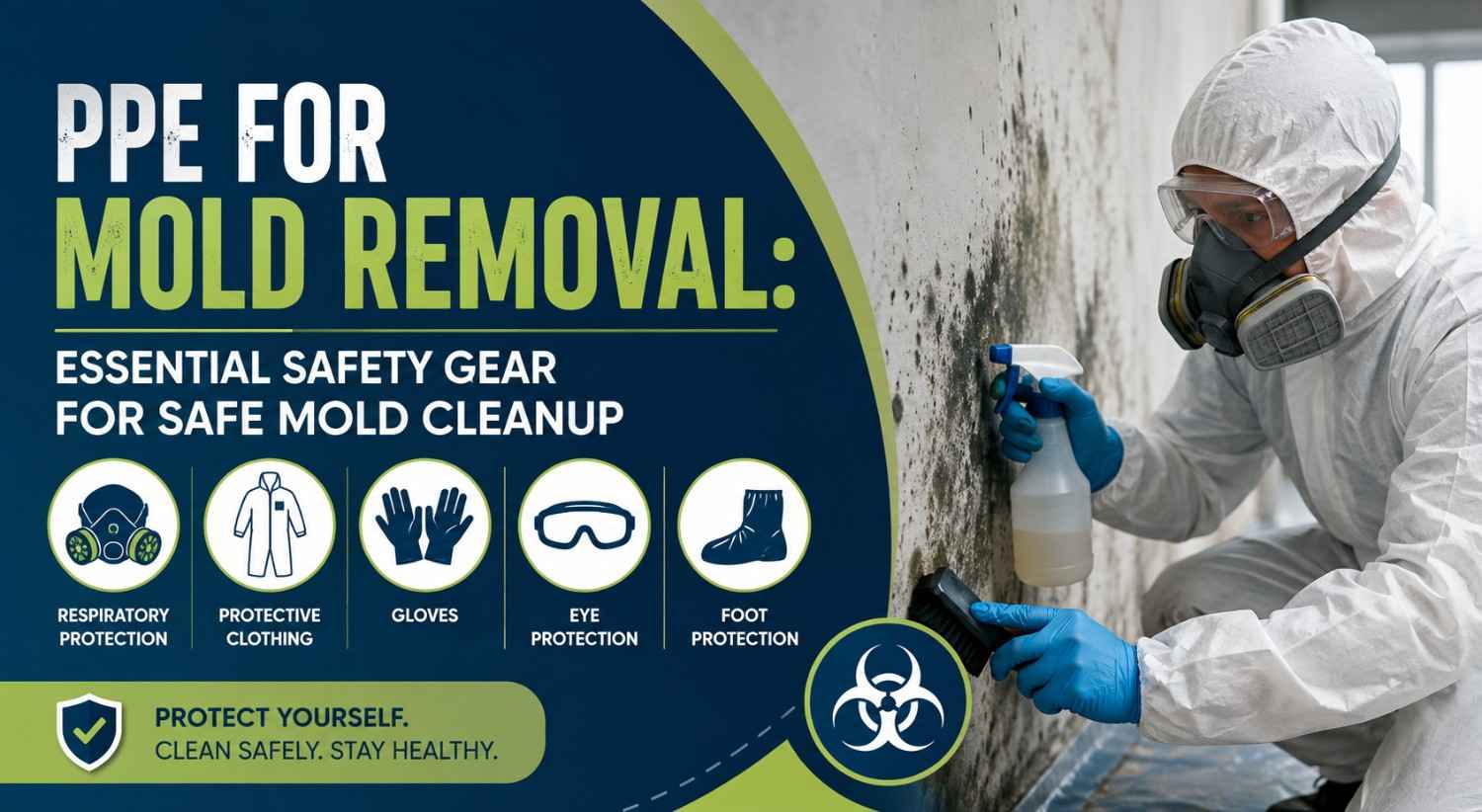
Mold removal requires respiratory protection, gloves, protective clothes, eye protection, and appropriate footwear. These devices work together to protect various portions of your body while cleaning.
A common failure people make is focusing on only wearing a mask. While respiratory protection is vital, mold remediation necessitates full-body protection since spores can adhere to clothing, skin, and hair.
The basic PPE for mold removal consists of:
- A correctly fitted respirator.
- Disposable protective coveralls
- Gloves that provide a robust barrier.
- Safety goggles or eye protection.
- Protective booties or shoe coverings
Each item plays a specific role. A respirator protects your lungs; gloves protect your hands; coveralls protect your clothing and skin; and safety goggles keep particles out of your sight.
Choosing total protection over individual things results in a safer working environment.
Why Is PPE Important During Mold Removal?
PPE is essential for mold removal because it reduces direct contact with mold spores and contaminated items. When mold is disturbed, spores move rapidly via the air and settle on nearby surfaces.
Even a minor mold remediation procedure might produce particles that are difficult to detect. Without protection, you may accidentally inhale these particles or transport them to other locations via your clothing.
Proper PPE helps with mold cleaning by:
- Reducing exposure to airborne mold spores.
- Avoiding direct skin contact with mold
- Protecting the eyes from dust and particles.
- Controlling the migration of mold particles to clean regions
For example, if someone removes mold from a wall without wearing protective equipment, spores may stick to their shirt and spread into nearby rooms. This is why adequate preparation is equally vital as the cleaning process itself.
Respiratory Protection for Mold Removal
A respirator is one of the most critical pieces of equipment for mold elimination since it helps prevent breathing airborne mold spores.
A normal fabric mask is unsuitable for mold remediation because it may not properly filter tiny particles. Mold removal needs proper breathing protection for the level of exposure.
Many cleanup cases require workers to wear respirators such as:
- N95 respirators for smaller mold removal activities.
- Half-face respirators with appropriate filters.
- Full-face respirators for high-exposure scenarios.
The respirator should correctly fit around your nose and mouth. A loose-fitting mask may allow polluted air to enter through the sides.
When dealing with greater mold problems, particularly in regions with high development, more respiratory protection may be required. The appropriate choice is determined by the amount of mold present and the nature of the work.
Protective Clothing for Mold Cleanup
During the removal process, protective equipment keeps mold spores from sticking to your body or regular clothes.
Disposable coveralls are often utilized since they provide coverage and may be wasted once the cleanup is complete. This helps to prevent mold spores from spreading to other parts of the building.
Good protective apparel should cover the following:
- Arms and Legs
- Regular clothes underneath
- Shoes and lower-body areas
Wearing regular clothing while removing mold is not recommended. Fabrics can trap mold spores, which can then spread when the apparel is moved or laundered.
For modest cleanup operations, washable protective clothes may be utilized if it can be thoroughly washed afterward. However, disposable clothing is frequently recommended in hazardous environments.
Gloves for Mold Removal Work
Gloves keep your hands safe from direct contact with mold, contaminated surfaces, and cleaners used throughout the cleanup procedure.
The best mold cleanup gloves should be strong and long enough to cover your wrists. This lowers the possibility of mold reaching unprotected flesh.
Common glove materials used for mold eradication are:
- Nitrile
- Neoprene
- Rubber
Avoid touching your face while wearing contaminated gloves. After finishing the work, gently remove the gloves and thoroughly wash your hands. Small procedures like this help to prevent the unintended spread of mold spores.
Eye Protection During Mold Cleanup
Eye protection is required because mold spores, dust, and cleaning chemicals might hurt your eyes during the removal process.
Safety goggles provide a protective barrier and are particularly beneficial for cleaning areas above your head, such as ceilings or upper walls. Good eye protection should be comfortable and compatible with a respirator. Goggles with fewer gaps offer superior protection since airborne particles have less opportunities to reach your eyes.
Many individuals focus only on protecting their lungs during mold eradication, but eye protection is just as crucial for overall safety.
Essential PPE for Black Mold Removal
PPE for black mold removal should include a respirator, protective clothing, gloves, eye protection, and proper footwear to reduce exposure during cleanup.
Black mold removal necessitates special caution because disturbing contaminated areas might spread a huge number of spores into the air. Without enough protection, these spores can spread across the surrounding region.
Before beginning black mold cleanup, it is necessary to:
- Wear complete protective equipment.
- Avoid disturbing mold in an unnecessary way.
- Keep the damaged area under control.
- Dispose of polluted things properly.
Black mold is commonly found in places with long-term moisture problems. Simply eliminating visible mold without addressing the moisture source can cause the problem to reappear.
Proper protection, paired with proper cleanup measures, produces superior results.
How to Choose the Right PPE for Mold Removal
The appropriate PPE depends on the types of mold remediation you are doing. A minor surface cleanup may require simple protection, whereas a larger remediation work needs more complex equipment.
Before selecting PPE, consider:
- The extent of the mold-affected area
- Whether materials should be eliminated.
- How much dust or debris will be generated?
- The length of time spent in the area
Cleaning a tiny bathroom surface is not the same as removing mold-damaged drywall after water damage. The second scenario necessitates greater protection since more spores can get airborne.
Using the appropriate equipment makes labor safer and more efficient.
Common Mistakes During Mold Removal
Many mold cleanup issues come because people undervalue the need for safety equipment. Incomplete protection might increase the risk of exposure.
Some common mistakes are:
- Using a basic face covering rather than appropriate respiratory protection.
- Cleaning Mold Without Gloves
- Wearing ordinary clothes while cleaning
- Touching clean surfaces with contaminated gloves.
- Removing PPE inappropriately after completing work
Proper PPE use is simple, but it demands attention. Small mistakes might cause mold spores to spread beyond the original damaged region.
How to Use PPE Properly During Mold Cleanup
Wearing PPE appropriately is equally important as choosing the right equipment. Incorrect use may diminish the level of protection.
Put on all of your protective equipment before entering a mold-affected location. Avoid making unnecessary touch with your face or personal possessions while cleaning up.
After finishing the work:
- Remove contaminated protective equipment with caution.
- Discard disposable stuff properly.
- Before storing reusable equipment, ensure that it is clean.
- Wash your hands and exposed skin thoroughly.
Following these measures helps to keep mold spores from spreading once the cleanup is completed.
When Should You Hire Professional Mold Removal Services?
Professional mold removal may be required when the problem is large, undercover, or difficult to manage.
Mold in small areas may often be removed with proper PPE and careful cleaning. However, bigger pollution necessitates specialized equipment and expertise.
You should consider seeking expert assistance when:
- Mold covers a big region.
- Mold is found inside walls or ventilation systems.
- There is considerable water damage.
- The mold keeps returning.
- The impacted area is tough to access.
Professionals use containment techniques, specialized tools, and improved safety equipment to safely manage larger mold problems.
Conclusion
Using the appropriate PPE for mold removal is a key step toward developing a safer cleanup operation. To prevent mold spore exposure, use respirators, gloves, protective clothes, and eye protection.
Whether you work on a little mold cleanup project or looking for the best PPE for black mold removal, preparing is key. Wearing appropriate protective clothing and following safe cleanup procedures will help safeguard your health and prevent mold from spreading.