

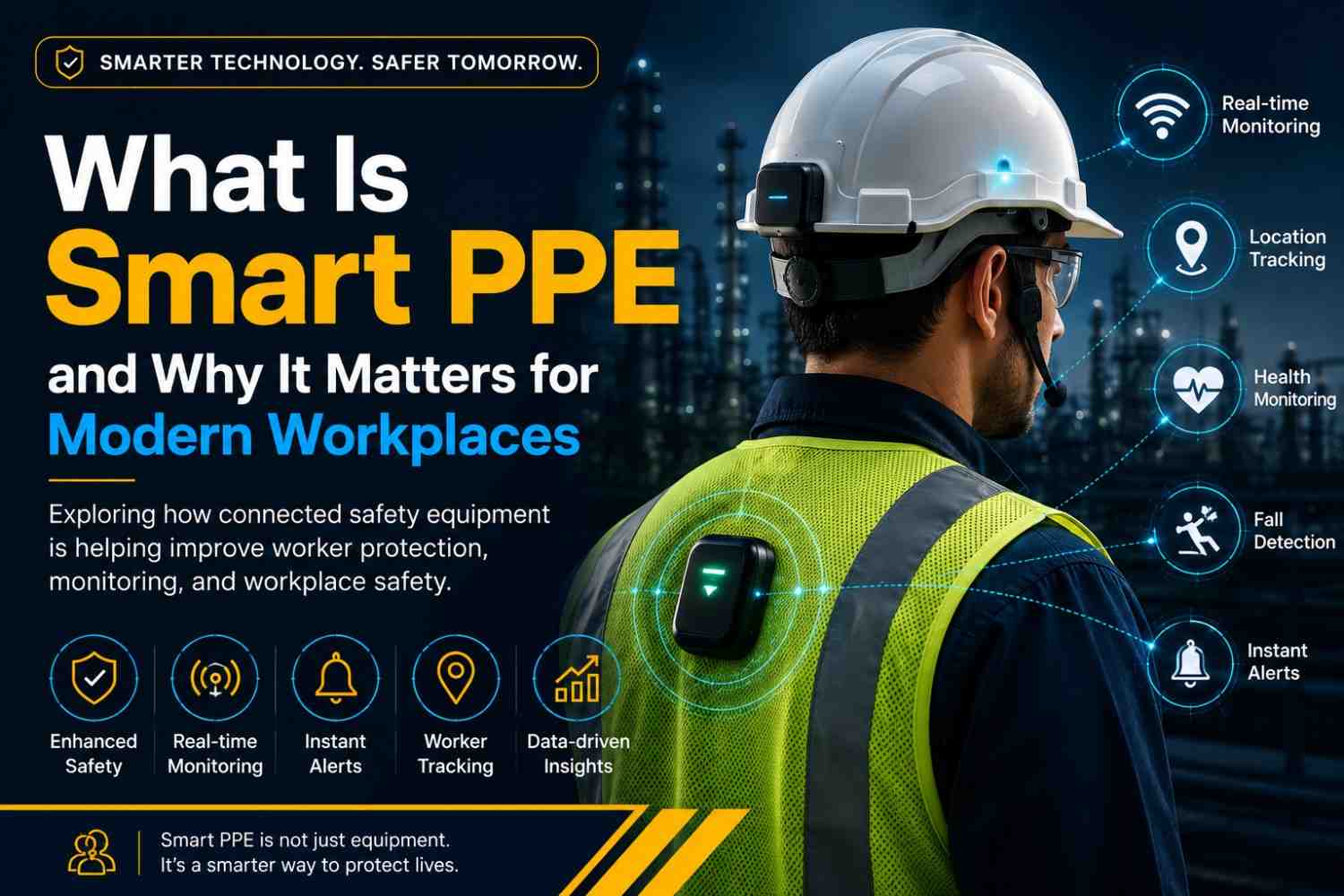
Workplace safety has always been a key priority for businesses like manufacturing, construction, oil & gas, logistics, mining, and warehousing. For many years, workers depended on traditional Personal Protective Equipment (PPE) like helmets, safety shoes, gloves, safety glasses, and protective clothes to reduce industrial hazards.
While traditional PPE is crucial, technology is influencing how organizations approach worker safety. In recent years, a new generation of safety equipment known as Smart PPE has begun to gain traction across several industries. Businesses are invest in smart safety technologies to increase worker safety, monitor workplace conditions, and prevent accidents.
In this post, you will know what Smart PPE is, how it works, and why companies all over the world are embracing it.
What Is Smart PPE?
Smart PPE is defined as personal protective equipment that incorporates technology such as sensors, communication functions, and monitoring systems.
Unlike standard PPE, smart PPE provides more than just physical protection. It can also collect and transmit data on the worker and his surroundings.
Certain smart PPE products can:
- Monitor worker movement.
- Detect hazardous gasses.
- Track the location.
- Measure the temperature.
- Send safety notifications.
- Monitor tiredness levels.
- Detect falls and mishaps.
The purpose of smart PPE is not to replace traditional safety equipment, but to improve its effectiveness through technology.
Examples of Smart PPE
Smart PPE takes several forms based on the job and safety standards.
Smart Helmets
Smart helmets look similar to regular safety helmets, but they have additional functionality like:
- Built-in sensors.
- Communication systems
- GPS tracking
- Cameras
- Temperature Monitoring
These helmets can help workers stay connected and increase their awareness in hazardous areas.
Smart Safety Vests
Smart safety vests could include:
- Location tracking
- Motion sensors
- Emergency alert systems.
If a worker falls or enters a restricted area, the system can inform supervisors.
Smart Safety Glasses
Certain safety eyewear currently include:
- Real-time information displays
- Video communication features
- Hands-free access to instructions.
These features enable workers to accomplish activities while keeping their hands free.
Smart Wearable Devices
Wearable gadgets can be affixed to clothing, helmets, and safety belts.
They may monitor:
- Heart Rate
- Body Temperature
- Worker movement
- Fatigue indicators
This data can assist identify potential dangers before an incident occurs.
Why Are Industries Adopting Smart PPE?
Many sectors are seeking solutions to increase worker safety and efficiency. Smart PPE enables enterprises to achieve both objectives.
Better Worker Protection
Traditional personal protective equipment (PPE) protects workers against physical threats. Smart PPE adds an extra layer of safety by giving real-time data.
For example, if a worker enters an area with harmful gas levels, the system can issue an urgent alert. This enables staff to respond swiftly and prevent major incidents.
Improved Hazard Detection
Many industrial accidents occur when dangers are not discovered in time. Smart PPE can continuously monitor conditions and notify workers when concerns are identified.
Examples include:
- High temperatures.
- Toxic gasses.
- Low oxygen levels.
- Unsafe movement patterns.
Early detection can help to avoid accidents before they occur.
Faster Emergency Response
In an emergency, every second counts. Emergency teams can use smart PPE to easily locate workers. For example, if a worker falls or becomes unresponsive, the system may automatically send an alarm containing location information.
This can shorten reaction time while improving outcomes.
Better Communication
Communication is essential in huge industrial sites. Some smart helmets and wearable technologies enable employees to communicate instantly with managers and team members.
This enhances coordination and safety, particularly in high-risk areas.
Reduced Workplace Accidents
Companies are constantly seeking ways to reduce workplace injuries. Smart PPE identifies harmful situations and risky behavior before they become events. Over time, this can lead to a safer workplace and fewer accidents.
Industries Using Smart PPE
Smart PPE is being used in a wide range of industries.
Construction
Falling objects, moving equipment, and working at heights are all common hazards on construction sites. Smart helmets and vests can increase worker visibility and communication.
Manufacturing
Manufacturing firms utilize smart personal protective equipment (PPE) to monitor worker safety and increase operational efficiency. Sensors can assist in identifying hazardous conditions and supporting safety measures.
Oil & Gas
The oil and gas business frequently operates in tough circumstances. Smart PPE detects dangerous gasses and monitors working conditions in remote areas.
Mining
Mining activities entail underground labor and hazardous conditions. Smart PPE enhances worker tracking and emergency response capabilities.
Warehouses and Logistics
Warehouses are increasingly technology-driven. Smart wearables can assist track worker activity and increase safety in high-traffic locations.
Benefits of Smart PPE for Employers
Smart PPE provides various advantages to enterprises.
Improved Safety Performance
Organizations can obtain a better understanding of workplace risks and take action before they materialize.
Better Compliance Support
Monitoring systems can assist firms in meeting safety regulations and documenting safety activity.
Data-Driven Decision Making
Smart PPE delivers relevant data on workplace conditions and worker safety. Companies can use this data to improve their safety procedures and identify areas for improvement.
Increased Worker Confidence
Employees frequently feel safer when enhanced safety measures are in place. A safer work environment can help to boost morale and productivity.
Challenges of Smart PPE
Although smart PPE has numerous benefits, there are certain drawbacks to consider.
Higher initial cost
Smart PPE items are typically more expensive than conventional PPE. Businesses must determine whether the long-term advantages justify the investment.
Training requirements
Workers may require training to understand how to use smart PPE properly. Proper training is necessary to ensure that the technology provides value.
Maintenance and Connectivity
Some smart personal protective equipment (PPE) solutions require software updates, charging, and network connectivity. Organizations must guarantee that these systems stay reliable.
The Future of Smart PPE
The future of workplace safety is becoming more connected. As technology advances, smart PPE is projected to become more accessible and affordable.
Future developments could include:
- More precise sensors
- Better battery life.
- Improved worker monitoring
- AI-driven safety alarms
- Improved communication features
Many experts predict that smart PPE will play a greater part in workplace safety programs in the future years.
Final Thoughts
Smart PPE is transforming how industries approach workplace safety. Businesses can increase worker safety by integrating traditional protective equipment with cutting-edge technology.
Smart PPE, which ranges from smart helmets and safety vests to wearable monitoring devices, assists enterprises in creating safer and more connected work environments.
While traditional PPE is still necessary, smart PPE provides extra capabilities that can help businesses decrease risks, increase communication, and respond more effectively to safety issues.
As industries embrace digital transformation, smart PPE is expected to play an increasingly vital role in workplace safety in 2026 and beyond.