

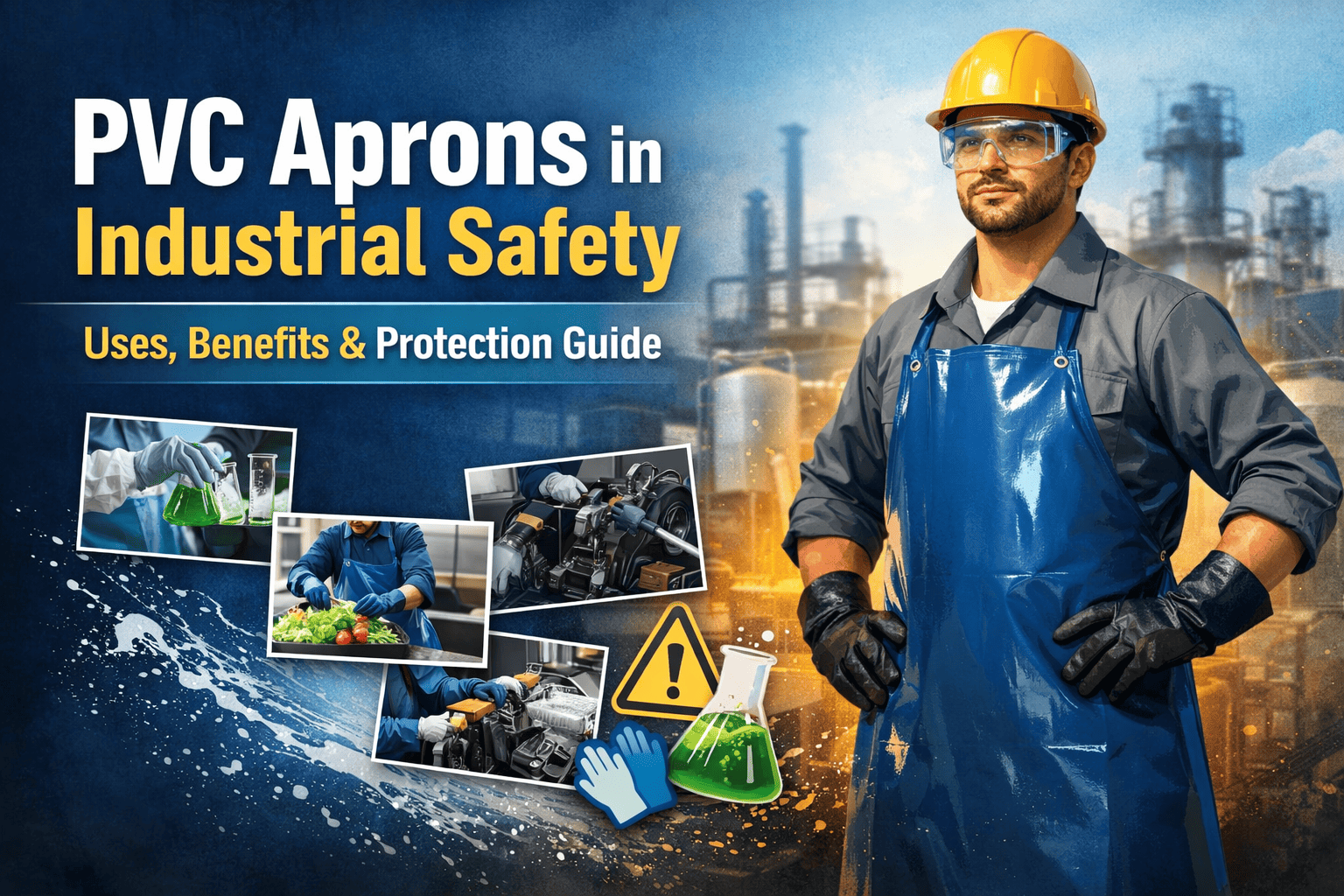
In industrial settings where workers are constantly exposed to liquids, oils, chemicals, and pollutants, personal protection equipment (PPE) is critical to preserving safety and cleanliness. Among the different protective garments used in various sectors, PVC aprons are one of the most dependable and cost-effective alternatives for front-body protection.
PVC aprons are commonly utilized in factories, food processing facilities, cleaning activities, chemical handling areas, and maintenance departments. Their durability, waterproofness, and splash resistance make them an important component of occupational safety measures.
In this blog, you will learn about PVC aprons, their benefits, applications, types, and how they contribute to workplace safety.
What Is a PVC Apron?
A PVC (Polyvinyl Chloride) apron is a protective garment designed to shield the front of the body from liquids, dirt, oils, and mild chemical splashes. These aprons, made of flexible yet robust PVC material, provide a solid barrier between workers and dangerous substances typically found in industrial situations.
PVC aprons normally cover the chest down to the knees or ankles, depending on the design, and are fastened with adjustable straps for comfort and stability while working.
Importance of PVC Aprons in Workplace Safety
Many sectors expose workers to:
- Water and Wet Surfaces
- Oil and grease splashes
- Chemical drips and spills.
- Food wastage and contamination
- Cleaning supplies and detergents
Without adequate protection, these dangers can cause skin irritation, burns, contamination, and long-term health problems.
PVC aprons play an important role in:
- Prevents liquid penetration to skin and clothing
- Reduces chemical splash risks
- Maintains hygiene standards
- Supports compliance with safety regulations
- Increases worker confidence and productivity.
They act as a basic yet effective protective layer, considerably reducing workplace injury hazards.
Key Benefits of PVC Aprons
Waterproof and Liquid Resistant
PVC is naturally impermeable, making it resistant to water, oils, and industrial liquids. This keeps workers dry and protected, even in damp settings.
Durable and Long-Lasting
PVC aprons are durable and long-lasting, withstand ripping, abrasion, and frequent use. This makes them perfect for use in harsh industrial environments where PPE must resist daily wear and cleaning.
Lightweight and Flexible
Despite their resilience, PVC aprons are lightweight and flexible, allowing workers to move freely and comfortably during their shifts.
Easy to Clean and Maintain
Most PVC aprons may be washed off or rinsed with water, saving time and promoting hygiene in areas where cleanliness is critical.
Cost-Effective PPE Option
PVC aprons, compared to many specialist protective clothing, are inexpensive while still providing adequate protection—ideal for big workforces.
Common Industrial Applications
Manufacturing Plants – Workers who work with fluids, lubricants, coolants, and cleaning chemicals rely on PVC aprons for splash protection.
Food Processing & Catering – PVC aprons promote cleanliness and prevent contamination during food preparation, washing, and processing.
Chemical Handling – PVC aprons provide adequate front-body protection against light chemical exposure and spills (stronger chemicals may necessitate specialized materials).
Cleaning and Sanitation Services – From industrial cleaners to maintenance personnel, PVC aprons protect them from chemicals, wastewater, and grime.
Automotive Workshops – PVC aprons are used by mechanics to protect themselves against oil spills, grease, and cleaning fluids.
Types of PVC Aprons
PVC aprons are available in a variety of designs to satisfy different safety requirements:
- Light-Duty PVC Aprons are ideal for food handling, cleaning, and general splash protection.
- Heavy-Duty PVC Aprons with reinforced edges are suitable for manufacturing, chemical handling, and industrial settings.
- Long PVC aprons provide ankle-length coverage for high-risk wet processes.
- Reinforced PVC Aprons designed for tough tasks that require increased durability.
How to Choose the Right PVC Apron for Industrial Use
When choosing PVC aprons, consider the following:
Nature of Hazards
Determine whether workers may encounter water, oils, chemicals, or soil. PVC is best suited for liquid splashes and moist situations.
Thickness and Durability
Thick aprons offer more protection for heavy-duty industrial work.
Coverage Area
Longer aprons provide additional protection for the legs and lower body.
Comfort and Fit
Adjustable straps and flexible material increase comfort and encourage regular use.
Cleaning Requirements
For hygiene-conscious environments, make sure the apron is easy to clean and maintain.
PVC Aprons as Part of a Complete PPE System
While PVC aprons provide good protection, they should be paired with other PPE to ensure complete workplace safety.
- Safety gloves
- Protective eyewear or face shields
- Safety boots
- Respirators (when needed)
Together, they form a comprehensive barrier to industrial dangers.
Workers should learn how to use PVC aprons properly and check them regularly for any damage.
Why PVC Aprons Are Essential for Industrial Safety Programs
Polyvinyl Chloride aprons offer a simple but effective option for protecting workers in areas where liquids and splashes are common. Their durability, waterproofing, affordability, and versatility make them a popular PPE choice across industries.
By incorporating PVC aprons into safety practices, organizations can:
✔ Reduce workplace injuries
✔ Improve hygiene standards
✔ Increase employee safety awareness
✔ Meet regulatory requirements
Conclusion
PVC aprons are an essential component of industrial safety equipment, providing dependable protection from water, oils, light chemicals, and pollutants. From manufacturing and food processing to cleaning and chemical handling, these aprons keep workers safe while remaining comfortable and cost-effective.
PVC aprons, as part of a larger PPE plan that includes several types of industrial aprons, are an essential safety solution for modern workplaces.
To gain a thorough grasp of various apron materials and their specialized industrial applications, consult our main reference on Types of Industrial Aprons and Their Uses in Workplace Safety.