

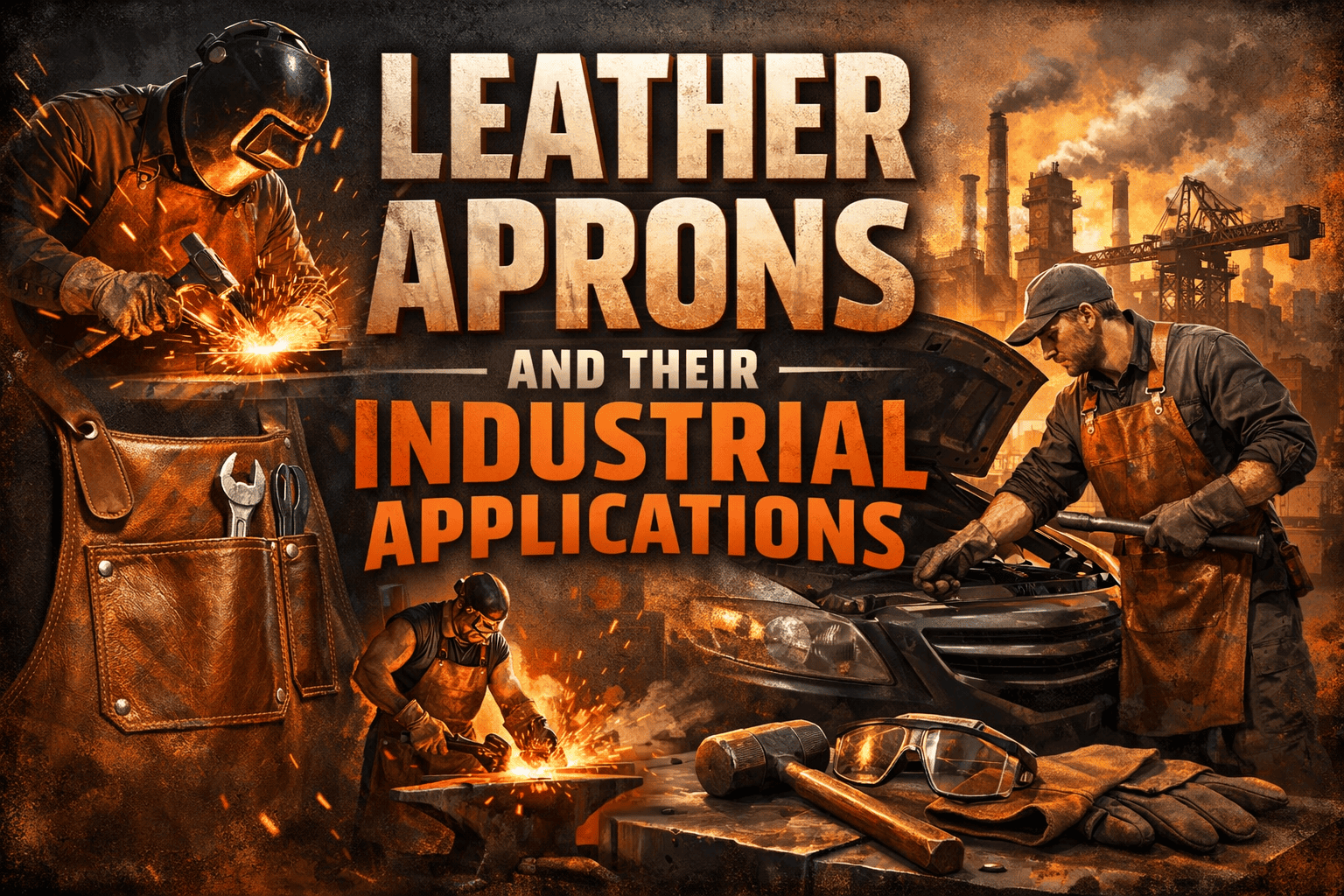
Leather aprons are one of the most durable and dependable types of industrial personal protective equipment (PPE) available today. Leather aprons, known for their durability, heat resistance, and mechanical protection, are frequently employed in a variety of industries where workers are exposed to considerable dangers from heat, sparks, sharp instruments, and abrasive surroundings. Their lengthy history in industrial safety originates from the material’s distinctive features and practical usability in tough work environments, qualities that current employers continue to value in safety equipment.
What Makes Leather an Ideal Material for Industrial Aprons?
Leather has been used for ages as a protective material, long before synthetic textiles became popular. What distinguishes leather is its combination of hardness, elasticity, and temperature resistance.
- Natural durability: Thick cowhide and other heavy leathers are naturally durable, able to bear repeated wear, abrasion, and impact without breaking or failing prematurely. This makes them ideal for locations with abrasive materials or demanding physical jobs.
- Heat resistance: Leather is naturally resistant to mild heat and can withstand sparks and splatter — frequently without burning or degrading quickly — which is essential for welders and metal workers.
- Mechanical protection: Leather acts as a physical barrier against sharp tools, flying debris, and abrasive machinery, reducing cuts, punctures, and surface injuries.
These properties make leather aprons a better alternative when other fabrics (such as cotton or PVC) may not provide adequate protective performance.
You May Like – PVC Aprons USes and benefits in Industrial Safety
Primary Industrial Uses of Leather Aprons
Leather aprons are most typically encountered in heavy-duty industrial environments where exposure to heat, sparks, molten metals, or sharp items is expected. Some of the primary application areas are:
1. Welding and Metal Fabrication
One of the most common applications for leather aprons is in welding shops, fabrication factories, and foundries. Welders are continually exposed to high temperatures, molten metal splashes, and hot sparks, all of which can result in severe burns. Leather aprons protect the entire body and legs from radiant heat and splatter.
- Prevent burns caused by misdirected sparks or molten metal droplets.
- Leather is more resistant to charring than many other textiles, extending the life of your garment.
To ensure maximum coverage and protection in various welding settings, full-length leather aprons are combined with other PPE such as gloves, helmets, and sleeves.
2. Metalworking and Machine Shops
Beyond welding, leather aprons are helpful in metalworking and machining situations where workers handle lathes, grinders, and drill presses.
- Leather provides protection from sharp metal edges and flying chips.
- It protects against accidental contact with tools or equipment that may otherwise snag or rip softer textiles.
- Aprons frequently have reinforced pockets or loops for properly keeping tools, eliminating the need for workers to reach into their pants pockets, which can be dangerous.
Leather aprons are a popular choice in many fabrication plants due to their mechanical protection and usability.
3. Construction and Heavy Industry
Leather aprons are also common in the construction, assembly, and heavy industries. Workers work with abrasive materials, heavy hardware, and power tools. They serve to:
- Reduce abrasion injuries from rough surfaces and debris.
- Provide a protective barrier when lifting or carrying things that may otherwise cut through conventional workwear.
- Provide a tough outer layer that does not wear out soon, even with daily hard use.
Durability and endurance are crucial in this case, as construction jobs frequently include unanticipated risks that might wear out less durable materials.
4. Blacksmithing and Forging
Leather aprons have long been used as a kind of protection in traditional crafts such as blacksmithing. Blacksmiths use open flames, hot iron, and hammering implements, all of which require a material that
- Resistant to repeated heat exposure.
- Create a strong protective barrier between the body and tools, sparks, or hot metal.
Although this use overlaps with metal manufacturing, the artisanal aspect of blacksmithing frequently necessitates a tailored fit, thicker material, and meticulous artistry in apron design.
5. Automotive and Mechanical Work
Leather aprons are not just for hot conditions. Technicians in the automotive and mechanical industries use them to protect themselves from oil, grease, and chemical exposure when working on engines and heavy components. Leather’s resistance to wear and punctures makes it an ideal choice for these jobs, and incorporated pockets allow for quick storage of small tools and parts during repair work.
Design Features that Enhance Safety and Usability
Modern industrial aprons are more than just weighty pieces of material. Design aspects commonly include:
Adjustable straps: Provide a secure and comfortable fit for workers of varying sizes.
Tool pockets and loops: For securely storing important tools while keeping hands free and organized on the job.
Reinforced stitching: Typically made using heat-resistant thread (such as Kevlar) for greater strength and burn resistance.
Full-coverage length: Some aprons extend past the knees to provide extra protection for legs in high-risk areas.
These enhancements improve worker safety and productivity by encouraging constant apron use, which is essential for an effective PPE program.
Maintenance, Longevity, and Cost Considerations
Leather aprons are often more expensive to purchase than cloth or PVC counterparts due to material costs and craftsmanship. However, their durability frequently compensates the expense.
- They may be cleaned with a moist cloth or a mild cleaner and, with careful care, can endure for several years, even with heavy use.
- Regular wear examinations help to ensure long-term performance.
- Damaged aprons should be replaced immediately to eliminate gaps in protection.
Employers should incorporate leather apron maintenance into their overall PPE inspection procedures to improve worker safety and gear performance.
Conclusion
Leather aprons remain an essential component of industrial safety in environments where heat, sparks, sharp instruments, and heavy materials are a constant hazard. These aprons provide important protection for welding and metal production, as well as construction, mechanics, and traditional smithing. They combine durability, heat resistance, and functional design. Leather aprons are used as part of a comprehensive PPE plan, assist in decreasing workplace injuries, improve safety compliance, and promote a safer, more productive workforce.