

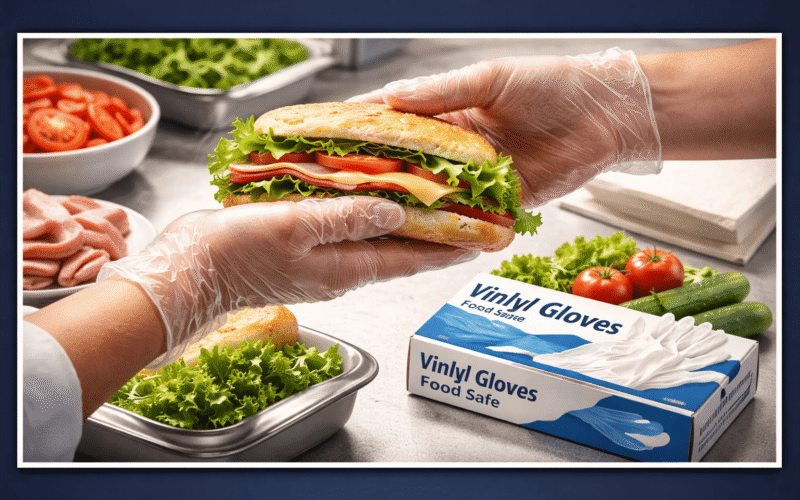
When preparing, cooking, or serving food, you want to make sure your gloves are food-safe. Vinyl gloves are among the most popular disposable gloves used in kitchens and food service. But are vinyl gloves food-safe? To put it simply, vinyl gloves can be food safe, but only under certain conditions. In this article, we will discuss food safety basics, how vinyl gloves function, when to wear them, the risks associated, and how they compare to other gloves such as nitrile and latex. We also provide simple advice on selecting the proper glove for certain food duties.
What Are Vinyl Gloves?
Vinyl gloves are disposable gloves composed of polyvinyl chloride (PVC) plastic. They are lighter, devoid of latex, and less expensive than other forms of gloves. Vinyl gloves are widely used in a variety of contexts, particularly those that require frequent replacement. They are commonly used in food preparation, cafeterias, schools, and fast-food restaurants because they serve to provide a barrier between hands and food.
Vinyl gloves, unlike nitrile or latex gloves, do not contain rubber. This indicates they are non-elastic and do not stretch significantly. They’re easier to put on, but the fit is looser and less flexible.
Can Vinyl Gloves Be Used for Food?
Yes, vinyl gloves can be used for food contact if they meet food safety regulations. In the United States, the FDA authorizes vinyl gloves that fulfill specific quality standards to be used in direct contact with food. Vinyl gloves labeled food safe can be used for many kitchen jobs.
However, not all vinyl gloves are created equally. Some low-cost vinyl gloves may include plastic components that could contaminate food, particularly when handling fatty or hot foods. For this reason, it is critical to select gloves that are clearly labeled as food handling or FDA-compliant gloves.
Vinyl gloves can be food-safe if they are labeled as such.
- They follow FDA requirements.
- They are replaced frequently and utilized properly.
When Are Vinyl Gloves Safe to Use?
Vinyl gloves are effective in certain food preparation conditions. Here are some common food chores when vinyl gloves are appropriate:
Good Uses for Vinyl Gloves
- Handling Ready Foods, such as salads, sandwiches, and fruits
- Serving cold foods or beverage garnishes
- Short, low-risk chores, such as packaging bread or bakery items.
- Times when gloves need to be replaced frequently and promptly
The risk is lower since there is no hard cutting, raw meat handling, or long glove use. Vinyl gloves are simple to put on and remove, lowering the chance of cross-contamination while switching between food kinds.
Risks and Limitations of Vinyl Gloves
While vinyl gloves can be food-safe, you should be aware of the following limitations:
- Lower Barrier Protection
Vinyl gloves are thinner and more likely to tear than nitrile or latex gloves. This means that small holes can emerge during food handling, allowing bacteria to slip through.
- Chemical and Oil Exposure
Some vinyl gloves are more susceptible to oils, fats, and some cleaning agents. When these compounds react with vinyl, the material may degrade, raising the danger of contamination.
- A loose fit
Vinyl gloves fit looser on the hand and have less traction than nitrile or latex. This can make jobs like cutting, slicing, and precise food preparation more difficult and unsafe.
- Additives and Leaching Concerns
Some vinyl gloves may contain softening agents such as phthalates. Under some conditions, these compounds can leach into food, particularly fatty and spicy foods.
Because of these concerns, vinyl gloves should not be used for high-risk food handling, such as working with raw meat, poultry, or fish.
Best Practices for Using Vinyl Gloves Safely
To ensure vinyl gloves stay food safe, follow these guidelines:
Key Safety Tips:
- Always use gloves that are clearly labeled as food safe or FDA compliant.
- Replace gloves frequently, especially after handling raw foods.
- Avoid using vinyl gloves when handling hot, oily, or fatty foods.
- Avoid powdered gloves because they can increase contamination risk.
- If your gloves tear or get damaged, throw them away immediately.
When it comes to preventing food contamination, keeping hands clean and changing gloves frequently is just as important as choosing the right glove type.
How Vinyl Gloves Compare to Other Gloves
Understanding glove differences allows you to make smarter decisions. Here’s a brief comparison of vinyl to other common gloves:
Vinyl vs. Nitrile vs. Latex
Vinyl gloves are commonly used for basic food handling, although nitrile and latex gloves provide greater barrier protection and durability. Nitrile is often regarded as the greatest all-around food safety glove due to its fit, strength, and tear resistance.
Here is a quick comparison:
- Vinyl: Cost-effective and suitable for low-risk tasks
- Nitrile provides excellent protection and is suited for most culinary tasks.
- Latex: Good fit and comfort, but might cause allergies.
Are There Food Safety Standards for Vinyl Gloves?
Yes, disposable gloves used for food contact must comply with FDA food safety regulations in the United States. These standards assist ensure that gloves are safe for direct contact with foods such as produce, meats, and baked goods. Before purchasing vinyl gloves for food tasks, always check the packaging for claims such as “FDA food contact compliant“.
Final Thoughts: Are Vinyl Really Gloves Food Safe?
In short, vinyl gloves can be food safe, but only under certain situations and when carefully selected. They are suitable for light, low-risk food duties as well as jobs that require frequent glove changes. Stronger gloves, such as nitrile, are a safer option for high-risk food preparation, particularly with raw meats or oily dishes.
