

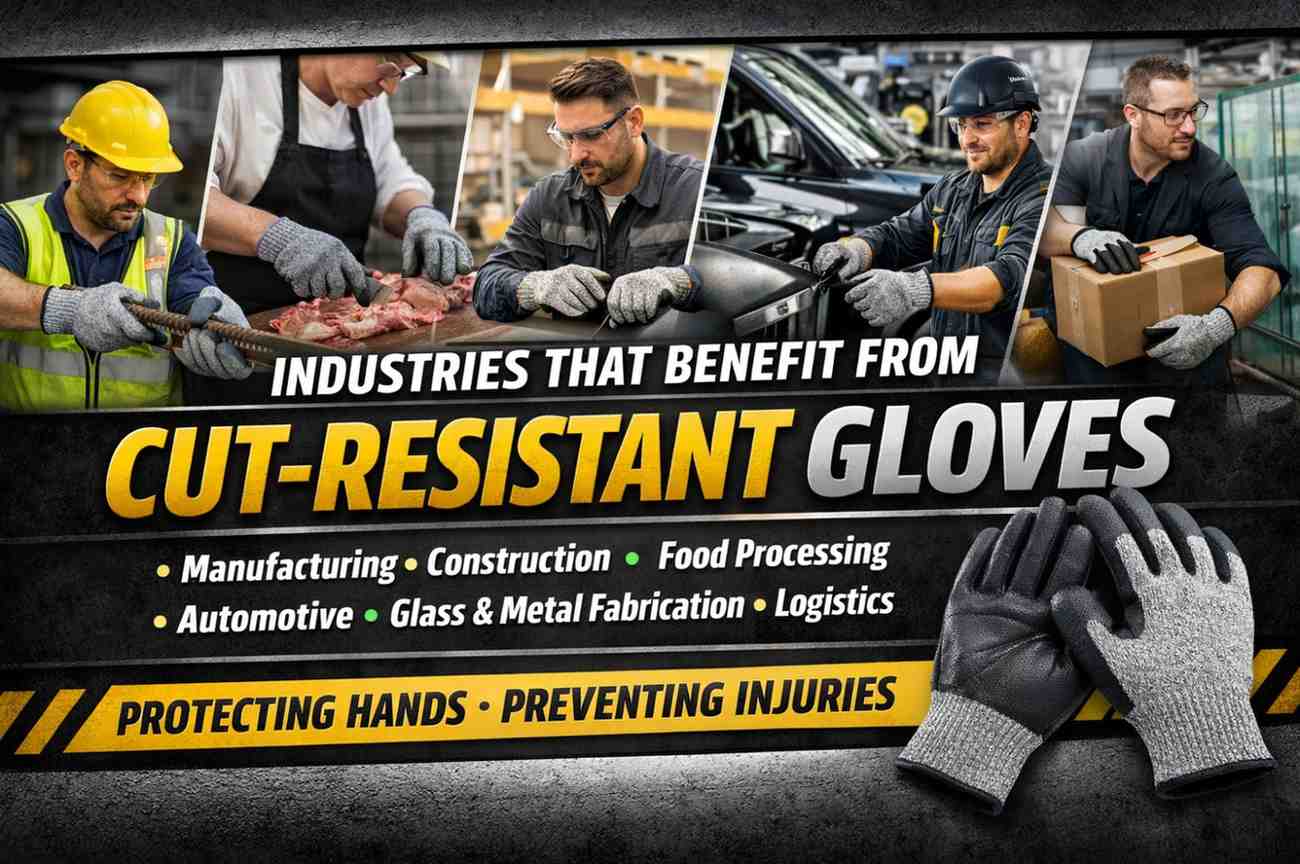
Workplace safety has become a primary focus in many businesses, particularly where sharp instruments, heavy machinery, and dangerous materials are present. Among the many protective options available today, cut-resistant gloves are a must-have piece of personal protective equipment. Not only can they help to reduce injuries, but they also boost productivity and employee confidence.
In this article, we use our knowledge to investigate which sectors benefit the most from cut-resistant gloves, as well as walk you through the awareness, consideration, and decision stages of the customer journey.
Understanding Cut-Resistant Gloves and Their Importance
To begin, cut-resistant gloves are specifically designed to keep hands safe from cuts, abrasions, and punctures. Normally, they are composed of high-performance materials like Kevlar, Dyneema, or steel mesh. As a result, they provide varied amounts of protection based on the work environment.
Furthermore, industrial hand injuries occur more frequently than many people believe. According to safety research, hands account for a considerable share of occupational injuries. As a result, firms must take proactive preventive steps.
Why Are Cut-Resistant Gloves Important?
- They reduce job injuries dramatically.
- They improve workers’ confidence and efficiency.
- They ensure compliance with the safety rules.
- They reduce long-term costs associated with accidents.
Furthermore, organizations that prioritize safety tend to have higher employee retention rates. As a result, investing in protective equipment is more than just compliance; it is also about developing a strong staff.
Industries That Benefit the Most from Cut Resistant Gloves
Now we have established the significance, let’s look at industries where cut-resistant gloves are not only useful but critical.
1. Manufacturing Industry
First and foremost, the manufacturing industry is strongly reliant on machines and sharp tools. Workers regularly handle metal sheets, glass, and cutting tools. As a result, there is a significant danger of hand injury.
So, cut-resistant gloves are extensively used to:
- Avoid cuts from sharp edges.
- Improve grip when manipulating materials.
- Ensure an unbroken workflow.
2. Construction Industry
Similarly, construction workers work with harsh materials including steel rods, glass, and pointy trash. Because of this, hand protection is essential.
Furthermore, gloves help in:
- Handling large and sharp objects carefully.
- reducing accidents on-site.
- Increasing overall productivity.
3. Food Processing Industry
Cut-resistant gloves are also widely used in the food business. Workers frequently utilize knives and slicing machines to cut meat, vegetables, and other products.
Consequently, these gloves:
- Supports hygienic and food-safe handling
- Prevents accidental cuts during food preparation
- Ensures safety without compromising efficiency
4. Automotive Industry
Furthermore, the automobile industry requires workers to assemble parts, handle sharp components, and use tools. As a result, personnel are continually exposed to possible threats.
Cut-resistant gloves helping in:
- Protecting from sharp metal parts
- Providing improved grip during assembly
- Reducing downtime from injuries
5. Glass and Metal Fabrication
Not surprisingly, companies dealing with glass and metal demand the highest level of security. Workers routinely handle sharp and delicate materials.
Therefore, these gloves:
- Reduce the danger of severe cuts.
- Improve handling precision.
- Improve workplace safety requirements.
6. Warehousing and Logistics
Finally, warehouses and logistics facilities profit greatly. Workers frequently handle packaging materials, cutters, and sharp-edged items.
As a result:
- Injuries are reduced during loading and unloading.
- Better grip leads to increased efficiency.
- Safety compliance is ensured.
Choosing the Right Cut-Resistant Gloves
At this point, you may be wondering, which gloves should I choose? The solution depends on your specific requirements. However, certain things must always be considered.
Key Factors to Consider
Cut Resistance Level
Different gloves provide varying levels of protection (ANSI/EN standards). Therefore, choose based on your risk level.
Material
Kevlar gives heat resistance, whereas Dyneema provides lightweight comfort. That’s why material selection is important.
Comfort and Fit
If gloves are uncomfortable, employees may avoid wearing them. Hence Proper fit is very essential for comfort and safety.
Grip and Flexibility
Precision is essential in many sectors. Gloves should be flexible without compromising safety.
Durability
Gloves that last longer save money on replacements. As a result, investing in high-quality items pays off.
Why Investing in Quality Gloves Matters
While cheaper choices may appear appealing, they frequently fail to provide enough protection. In contrast, high-quality cut-resistant gloves ensure durability, comfort, and safety.
Furthermore, fewer injuries indicate:
- Lower medical costs.
- Reduced downtime.
- Increased employee morale.
As a result, investing in the correct gloves is a forever good and long-term business option.
Final Thoughts
Finally, cut-resistant gloves are essential in many industries, including manufacturing, construction, food processing, automotive, and logistics. While the hazards may change, the necessity for protection is constant.
Occupational safety should never be sacrificed. Businesses that choose the correct protective gear might not only avoid injuries but enhance overall efficiency and output.
If your industry uses sharp tools or hazardous materials, now is the time to invest in the proper safety protocols. After all, prevention is always much better compared to treating them.