

Industrial workers often spend 8 to 12 hours a day standing or walking on unyielding concrete factory floors. While back pain, knee strain, and sore feet are commonly accepted as “part of the job,” the root cause of these ailments often lies in a specific, overlooked biomechanical mechanism: the instability of the subtalar joint.
To prevent chronic fatigue and debilitating pain, factory employees and safety managers must shift their focus from simple cushioning to structural foot stabilization. Understanding the biomechanics of the subtalar joint is key to choosing the right footwear inserts for industrial environments.
The Biomechanics of Standing Fatigue
Concrete is one of the worst surfaces for the human body. Unlike soil or turf, concrete absorbs virtually none of the energy generated when a foot strikes the ground. Instead, that impact force is reflected directly back up the skeletal system, causing micro-trauma to the muscles, joints, and ligaments of the lower extremities.
When standing for long hours, the muscles that support the arches of the feet—specifically the tibialis posterior—eventually fatigue. As these muscles tire, the foot begins to collapse inward under the body’s weight. This motion occurs primarily at the subtalar joint, which is located directly below the ankle joint.
The subtalar joint is responsible for the inversion (turning inward) and eversion (turning outward) of the foot. It acts as a biomechanical steering wheel. When the subtalar joint is unstable or allowed to pronate excessively (roll inward), it triggers a destructive chain reaction up the body.
The Kinetic Chain: How Foot Instability Affects the Body
Foot fatigue is rarely isolated to the feet. Because the human skeleton operates as a closed kinetic chain, instability at the foundation alters the alignment of every joint above it:
- Over-Pronation: As the arch collapses and the subtalar joint rolls inward, the lower leg (tibia) is forced to rotate internally.
- Knee and Hip Strain: This internal rotation of the tibia misaligns the knee joint, putting uneven pressure on the meniscus and surrounding tendons. This rotation continues up to the femur, tilting the pelvis forward.
- Lower Back Pain: A tilted pelvis increases lumbar lordosis (the inward curve of the lower back), compressing the spinal discs and placing heavy strain on the lower back muscles.
For a factory worker, this means that standing on an unstable foundation for hours translates directly to joint wear-and-tear, chronic fatigue, and long-term absenteeism.
Cushioning vs. Structure: The Footwear Fallacy
The most common response to foot fatigue is to buy shoes with thick, soft memory foam or gel insoles. While this feels comfortable for the first thirty minutes, soft cushioning actually exacerbates joint instability.
Plush foam compresses completely under the weight of an active worker, providing zero structural support. More importantly, soft surfaces decrease proprioception—the brain’s ability to sense the foot’s position and adjust posture. Walking on overly soft insoles is like walking on sand; the stabilizer muscles of the foot must work twice as hard to maintain balance, leading to faster muscular fatigue.
To stabilize the subtalar joint, a footwear insert must provide structural resistance.
Key Features of Effective Industrial Insoles
When selecting supportive footwear inserts for work boots or safety shoes, look for the following biomechanical features:
1. Rigid Nylon-Core Support
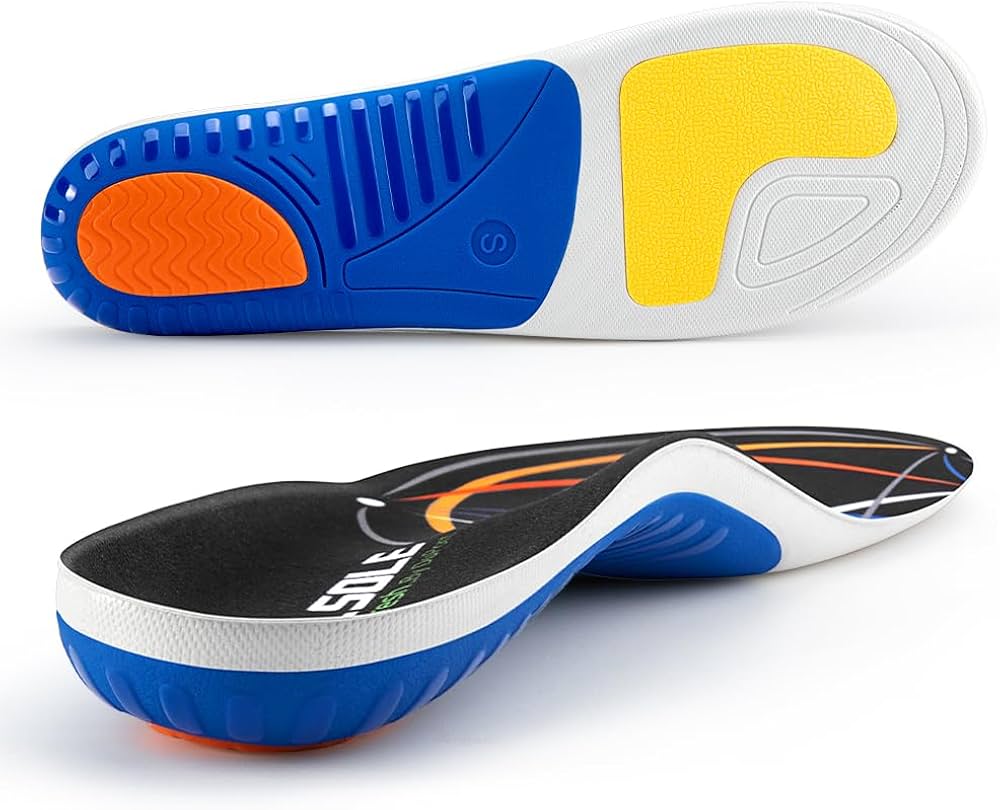
Unlike soft foam, a supportive insert utilizes a Nylon-core support structure. Rigid or semi-rigid nylon provides a durable arch archway that does not collapse under high loads. This structure holds the arch in a neutral position, preventing the subtalar joint from rolling inward and maintaining proper skeletal alignment.
2. Deep Heel Cup
A deep, contoured heel cup is essential for stabilizing the calcaneus (heel bone). By wrapping around the heel, the cup prevents lateral movement, locks the heel in place, and ensures the foot’s natural fat pad remains positioned directly under the heel bone for natural shock absorption.
3. Balanced Cushioning and Impact Absorption
While structure is primary, high-durability cushioning is still necessary to absorb the repetitive impact of walking on hard concrete. High-density EVA foam or specialized PU materials should be used to damp vibrations without compromising the rigid arch support.
Workers looking to protect their joint health should seek specialized anti fatigue shoe inserts engineered specifically for the weight loads and motion patterns of industrial work.
Integrating Supportive Insoles into Safety Footwear
Most industrial safety boots (steel-toe or composite-toe) are built with wide toe boxes and deep interiors to accommodate heavy socks and protective elements. This makes them ideal candidates for aftermarket inserts.
When upgrading your work boots, keep these steps in mind:
- Remove the Factory Insole: Always pull out the thin, flat foam insert that came with the boot before inserting the new orthotic. Stacking them will crowd the foot, causing blisters or pressure points.
- Allow a Transition Period: If you are new to rigid arch supports, your feet will need time to adapt. Wear them for 2 to 3 hours on the first day, gradually increasing the duration by an hour each day until you can comfortably wear them for a full shift.
- Monitor Wear: High-quality work insoles typically last between 6 to 12 months in an active industrial environment. If you begin to feel old back or knee aches returning, it is likely time to replace the inserts.
Conclusion
Preventing worker fatigue on the factory floor requires looking beyond simple cushioning. By stabilizing the subtalar joint and locking the heel in place, structured insoles correct alignment from the ground up, reducing muscle fatigue and preventing chronic joint pain. For industrial employees, upgrading to structured footwear support is not a luxury—it is a critical investment in long-term health and career longevity.